Proudly serving Mesa, Gilbert, Chandler, Tempe, Scottsdale, Queen Creek & surrounding areasCall or Text 24/7: 480-319-7553
Aerial drone view of suburban neighborhoods and desert landscaping in Mesa, AZ.

Gym & Home Gym Rubber Flooring in Tempe, AZ for Fitness Rooms & Commercial Spaces

Mesa Rubber Flooring installs gym and home gym rubber flooring throughout Tempe, AZ. We fit garage floors and rolled rubber surfaces to the equipment, traffic, and layout of each space. Our services also include rubber tiles, commercial and industrial flooring, playground surfacing, poured-in-place surfaces, anti-fatigue flooring, and repairs or replacement.

Tempe's summer temperatures routinely push past 110°F, making heat and sun exposure part of flooring selection. Heavy weights, worn seams, and moisture beneath older concrete slabs create different demands from room to room. We inspect the subfloor and match material thickness and density to how you train or work. A free flooring consultation gives you a chance to review those choices before ordering.

We work around the ASU campus corridor, Mill Avenue District, Kiwanis Park, South Tempe, Rio Salado Parkway, and Tempe Town Lake. With roughly 180,587 residents and an active Arizona State University community, Tempe has home gyms, multifamily fitness centers, and training facilities with very different flooring needs.

★ ★ ★ ★ ★4.9/5 Customer Rating - 19 Years of Flooring Experience - 1,000+ Flooring Projects Completed - Licensed, Bonded & Insured - Residential & Commercial Flooring
Flooring Options

Rubber Flooring Services in Tempe, AZ

A garage slab under a squat rack needs a different floor assembly from a studio or playground. We supply rolls, tiles, mats, and poured surfaces, with material selection, subfloor preparation, seam work, and edge transitions included in project planning.

Gym & Home Gym Rubber Flooring

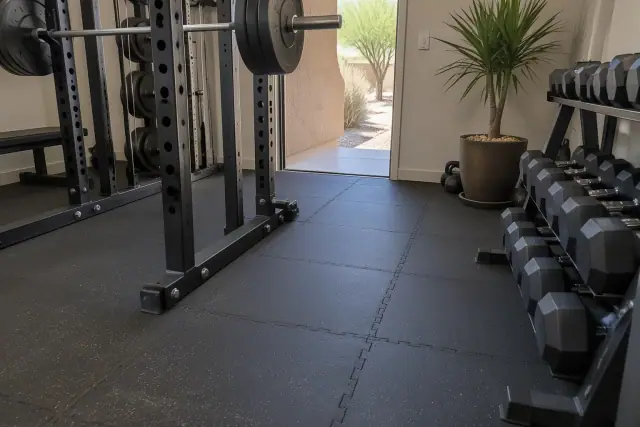
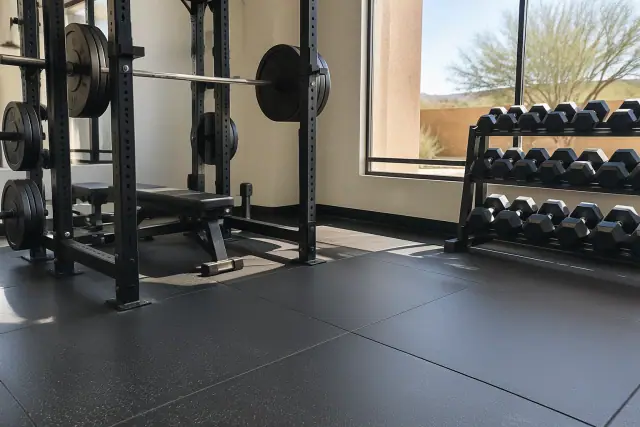
Rubber flooring installed under heavy barbell racks in a Tempe, AZ home gym with a doorway view.

Protect your subfloor and reduce impact noise with rubber selected for bodyweight training, cardio, or weightlifting. Gym rolls range from 3/8-inch to 3/4-inch thick, with seams fitted on-site for a continuous workout surface. Explore Service »

Explore Service

Garage Rubber Flooring

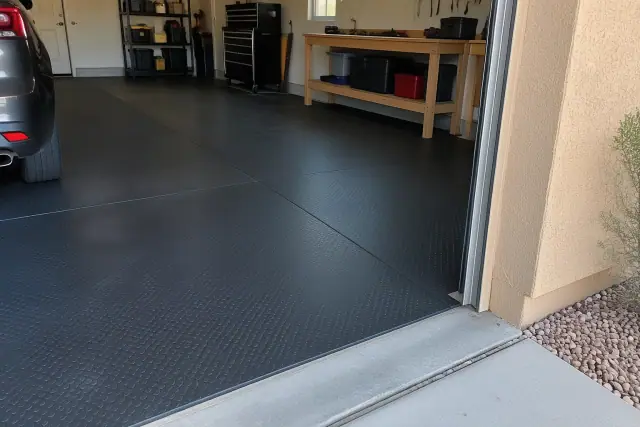
Heavy-duty rubber flooring installed in a residential garage in Tempe, AZ.

Turn a garage into a gym or workshop with rolled rubber, interlocking tiles, or heavy-duty mats. We size the floor for your equipment and address exposed slab areas, edge transitions, and tracked-in monsoon water. Explore Service »

Explore Service

Rolled Rubber Flooring

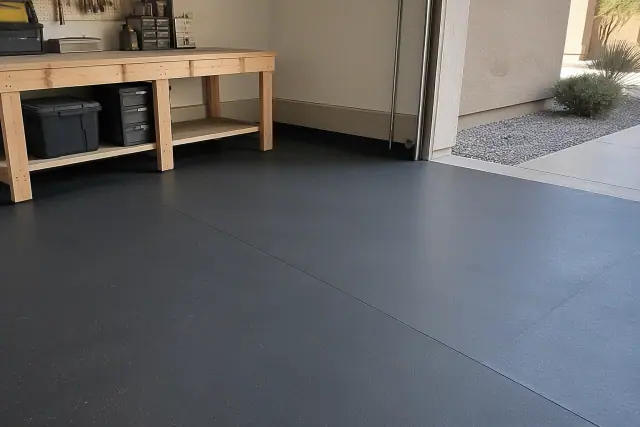
Rolled rubber flooring installed on a concrete garage floor in Tempe, AZ.

Rolls up to 4 feet wide reduce the number of seams across large workout spaces. We trim and secure them with adhesive or double-sided tape according to the subfloor and installation needs. Explore Service »

Explore Service

Rubber Floor Tile Installation

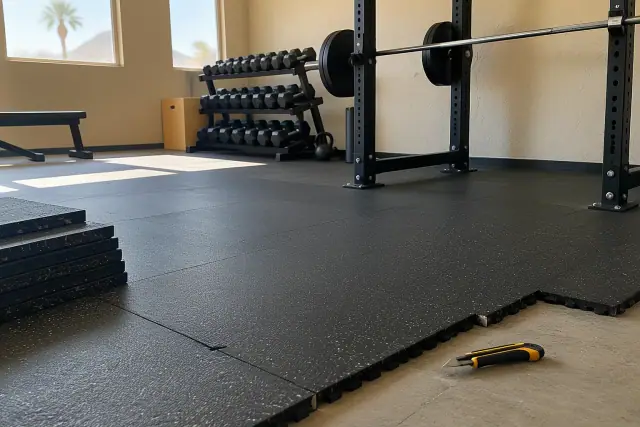
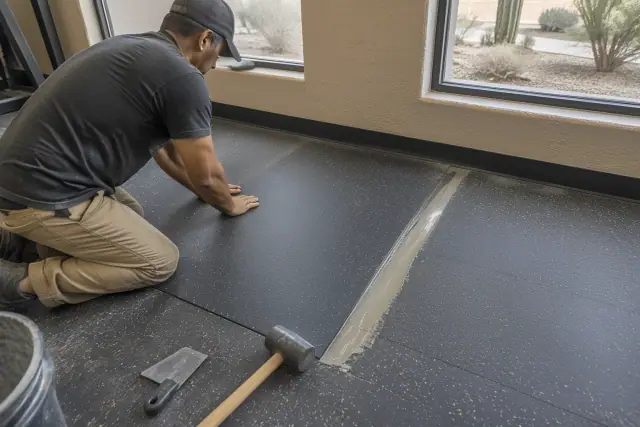
Contractor installing interlocking rubber floor tiles in Tempe, AZ.

Choose interlocking or glue-down tiles for modular weight rooms, cardio zones, and multi-use studios. Options range from 1/4-inch fitness-grade tiles to 3/4-inch heavy-duty tiles, with color-blocked layouts and individual replacement where wear is concentrated.

Commercial Rubber Flooring

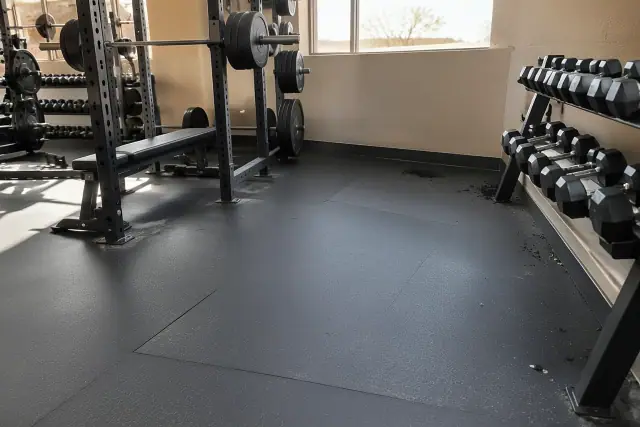
Commercial rubber flooring installed under heavy weight racks in a Tempe, AZ gym.

Fitness centers, therapy clinics, and training facilities need flooring matched to daily foot traffic and equipment loads. We plan rolled or poured surfaces around weightlifting areas, turf-sled lanes, doorway transitions, and the facility schedule.

Playground Rubber Surfacing

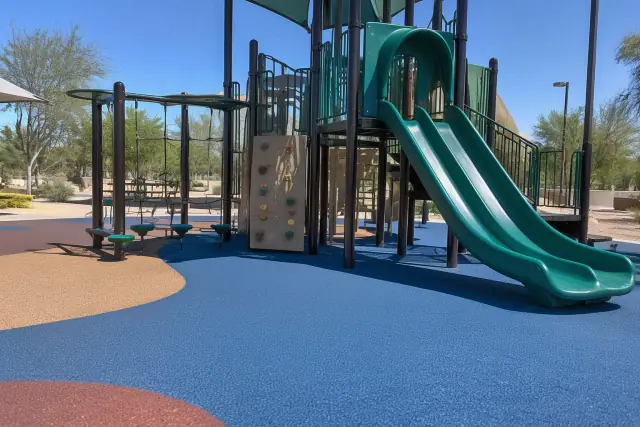
Seamless rubber safety surfacing beneath a playground climbing structure in Tempe, AZ.

Playground rubber surfacing uses a poured assembly with thickness selected for the required critical fall height. We plan accessible transitions and sun exposure alongside the play area layout and color pattern.

Poured-in-Place Rubber Flooring

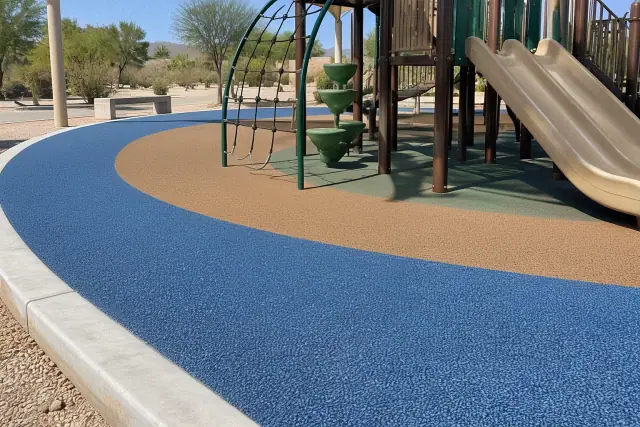
Poured-in-place rubber safety flooring with textured aggregate matrix in Tempe, AZ.

EPDM granules mixed with polyurethane binder create a seamless surface formed on-site. Poured-in-place rubber suits therapy spaces and other areas where a continuous finish and wheelchair-accessible transitions matter.

Industrial Rubber Flooring

Thick industrial rubber flooring installed in Tempe, AZ, with tight seams and scattered scraps.

Warehouses and industrial workstations need rubber flooring chosen for daily use and standing areas. We review the layout and recommend mats or rolled surfaces with suitable cushioning and slip-resistant texture.

Anti-Fatigue Rubber Flooring

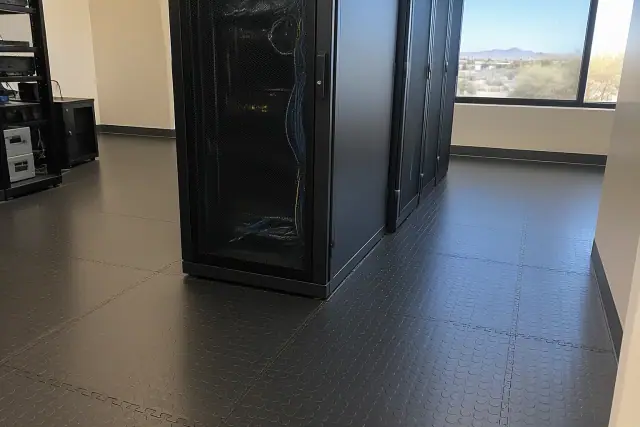
Anti-fatigue rubber flooring installed around server racks in a Tempe, AZ office.

Closed-cell or molded rubber cushioning helps reduce strain during long standing shifts. Anti-fatigue mats and rolled surfaces suit retail counters and workstations, with placement and edges planned to reduce trip concerns.

Rubber Flooring Repair & Replacement

Technician repairing commercial sheet rubber flooring with an adhesive seam in Tempe, AZ.

We re-adhere lifted seams, patch punctures, and replace damaged tiles when the surrounding floor remains usable. For widespread wear, we remove the old material, inspect the subfloor, and install flooring matched to current use.

Material Selection

Choose Rubber Flooring for Your Space

Start with equipment weight, expected drops, and the condition of the floor underneath. Then compare thickness, material composition, seam layout, and whether the surface needs to move with you.

Match Thickness to Training

General home workout rooms often use 3/8-inch rolled rubber, while dedicated weight rooms may need 1/2-inch to 3/4-inch material. CrossFit drop zones can call for 3/4-inch to 1-inch rubber or stall-mat-grade layers under lifting platforms.

Plan for Moving or Reconfiguration

Interlocking tiles install without adhesive and can be lifted and reinstalled elsewhere. We offer 20mm and 3/4-inch puzzle-style tiles for home gyms and light commercial spaces where equipment layouts may change.

Compare Rubber Composition

SBR, or styrene-butadiene rubber, is available in rolls and tiles; EPDM color-fleck blends add visual variety. Virgin rubber is an option where odor and off-gassing are concerns, while density and durometer help guide the choice for actual use.

Check the Subfloor First

Cracks, unevenness, and moisture can affect the bond beneath a new surface. Older Tempe slabs need particular attention to moisture intrusion before adhesive is applied, even in a dry climate.

Account for Sun Exposure

Outdoor-facing garages and playgrounds need material selection that accounts for direct sun. UV-stabilized rubber compounds help resist the fading and brittleness that untreated rubber can develop after Arizona summers.

Compare the Complete Installed Scope

Home gym rubber flooring typically costs $3 to $12 per square foot installed, depending on grade and thickness. Commercial projects generally range from $4 to $17 per square foot installed; written quotes detail material, labor, edge trim, and transition strips.

Tempe Flooring Concerns

Common Rubber Flooring Problems

Curled edges, separated seams, and worn lifting areas can point to different causes. We inspect the affected material and the slab beneath it to determine whether a localized repair, preparation work, or replacement makes sense.

Request a Floor Assessment

Separated Seams and Curling Edges

Poor trimming or a weak adhesive bond can let edges lift under foot traffic. An unsuitable installation may show seam failure within a year or two; we inspect the bond and re-adhere repairable areas.

Moisture Beneath the Rubber

Efflorescence and moisture vapor transmission can signal slab conditions that need attention before installation. A missing or inadequate vapor barrier is a concern on some older slabs, so preparation starts below the visible floor.

Impact Wear in Lifting Zones

Repeated barbell drops can wear thin flooring and damage the concrete underneath. We assess the equipment and drop zones before recommending thicker rubber, platform layers, or replacement of worn sections.

Sun-Faded or Brittle Surfaces

Untreated mats can dry out and fade where garage doors or outdoor layouts expose them to sun. We review exposure and material condition before selecting replacement rubber for those areas.

Noise Transfer Near Other Rooms

Weight drops and training activity can transmit noise through a building, especially in multifamily fitness spaces near ASU. Shock-absorbing rubber helps reduce impact transfer, with thickness selected for the training load.

Worn Tiles and Localized Punctures

A damaged tile or punctured section does not always require a new floor throughout the room. When adjacent material is sound, we can replace individual tiles or patch worn spots without disturbing the entire surface.

Local Installation Support

Why Choose Mesa Rubber Flooring in Tempe, AZ

We work directly with homeowners, gym owners, facility managers, and general contractors across the East Valley. For projects spanning Tempe and Scottsdale, AZ , we coordinate around equipment and tenant schedules while checking each property's floor conditions.

Licensed and Insured Contractor

Mesa Rubber Flooring is a licensed and insured flooring contractor serving Tempe and the greater Phoenix metro. We carry the required Arizona Registrar of Contractors licensing and handle City of Tempe Building Safety Division permits when a commercial project requires them.

Material Supply and Installation Together

We source SBR rolls and tiles, EPDM blends, and poured-in-place components directly through flooring suppliers. Consultation samples let you compare texture and finish before ordering, with one point of contact for material selection and installation.

Commercial Scheduling and Handover

We coordinate around business hours where possible, including early mornings, overnight work, or scheduled closures. Old flooring and job debris are removed, and we walk the finished surface with you to address any installation concerns.

From Walkthrough to Finish

Our Rubber Flooring Installation Process

We move from an on-site assessment to a written scope, subfloor preparation, and a finished-floor walkthrough. Most residential home gym installations take a single day; larger commercial or poured-in-place projects may take several days depending on square footage and cure time.

01.

Measure the Space and Equipment Layout

We measure the room and discuss racks, free weights, cardio machines, and daily use. Existing cracks, unevenness, and access around equipment help define the installation scope.

02.

Select Material and Confirm the Quote

Compare rubber samples, thickness, density, and finish before material is ordered. The written quote covers material, labor, edge trim, and any transition strips the layout needs.

03.

Inspect and Prepare the Subfloor

We check concrete for moisture and efflorescence, then grind or patch where needed. Preparing the slab before adhesion helps the finished floor sit evenly and bond properly.

04.

Dry-Lay and Align the Flooring

Rolls or tiles are positioned before final fixing so seams and pattern direction can be checked. We confirm the fit around walls and equipment areas, then trim and secure the selected surface.

05.

Finish Edges or Cure the Pour

We complete seam work and transitions for rolls and tiles. For poured surfaces, EPDM granules and polyurethane binder are mixed on-site, troweled to the specified thickness, and left to cure fully before foot traffic.

06.

Clean Up and Walk the Floor

We remove old flooring, packaging, and installation debris. A final walkthrough checks the finished surface with you, and we address installation issues before leaving the site.

Flooring Benefits

Rubber Flooring for Everyday Use

Case Study 1: Home gyms: A fitted rubber surface cushions training and protects the subfloor beneath racks, dumbbells, and cardio equipment. Layouts can suit a spare bedroom, backyard casita, or full three-car garage gym.

Case Study 2: Commercial fitness spaces: Material chosen for equipment loads and foot traffic supports weight rooms, class studios, and training zones. Continuous rolls reduce seams, while modular tiles allow replacement where wear is concentrated.

Case Study 3: Playgrounds and therapy spaces: Poured rubber provides a continuous finish with transitions planned for wheelchair access. Playground thickness follows the required critical fall height, and colors can be incorporated into the pour.

Plan Your Flooring

Schedule a Free Rubber Flooring Consultation

Tell us about your Tempe gym, garage, commercial facility, or playground project. We'll walk the space, discuss suitable materials, and provide a written quote based on its size and use.

Flooring Questions

Rubber Flooring FAQs for Tempe, AZ

Find answers about material choices, installation costs, repairs, and local project planning. Your equipment, subfloor, and daily use guide the final recommendation.

Call Our Experts

Mesa Rubber Flooring supplies and installs gym flooring directly, so material selection and installation stay with one contractor. We source rolled rubber, tiles, and poured-in-place components and bring samples to your consultation. Supply and installation are available in Tempe and the surrounding Phoenix metro.

Thickness, material grade, floor size, and preparation needs determine the installed cost. Basic 3/8-inch rolled rubber for a smaller home gym may cost around $230 to $380 for material alone. Commercial poured or synthetic composite installations can reach $17 per square foot installed, depending on complexity. We provide a written quote after the walkthrough.

For general strength training and cardio, we recommend 3/8-inch to 1/2-inch rolled rubber, with 3/4-inch material under dedicated Olympic lifting platforms. Rolls create a more continuous surface with fewer seams than tiles. Interlocking tiles suit spaces where the flooring may need to be moved later.

Professional installation addresses subfloor moisture, equipment loads, and seam fit before they become problems. We prepare the slab and secure seams according to the selected material and installation method. Properly installed rubber flooring can last 10 to 20 years with basic maintenance, while poor preparation can cause early failure.

Most residential installations are completed within a single day, while larger commercial and poured-in-place jobs may take several days. Square footage, preparation, and cure time affect the schedule. Straightforward home projects can often be scheduled within the same week, with timing confirmed for the project.

Yes, localized seam separation, punctures, and worn tiles can often be repaired if the surrounding floor remains sound. We inspect the damage before recommending a patch, re-adhesion, or tile replacement. Most repair visits are completed the same day once we are on-site and have assessed the damage.

The slab needs an inspection for cracks, unevenness, and moisture before flooring is selected or bonded. On older Tempe concrete, we check for efflorescence and moisture vapor transmission. Grinding or patching may be needed before dry-laying the material.

Maricopa County's concentrated monsoon season runs from June through September. Tracked-in water and changes in moisture conditions make surface choice and subfloor checks relevant to garage and commercial projects. We consider those conditions alongside the equipment load and sun exposure.

Rolled rubber provides a continuous surface with fewer seams, making it useful for larger gym floors. Interlocking tiles fit together without adhesive and can be removed and reinstalled. Modular tiles also make it easier to replace an individual worn area.

Yes, we coordinate around equipment, tenant schedules, and phased commercial build-outs. Early mornings, overnight work, or scheduled closures may be options where practical. The installation plan accounts for daily operations and any cure time before reopening the area.

Daily traffic, equipment weight, slip resistance, and doorway transitions all inform the material choice. We account for relevant ASTM standards, including ASTM E648 testing, and project requirements for commercial occupancy. Permit needs are reviewed through the City of Tempe Building Safety Division when applicable.

Yes, poured-in-place rubber uses EPDM granules and polyurethane binder to form a seamless surface. For playgrounds, thickness is selected for the required critical fall height. Therapy spaces and playground layouts also need careful planning for accessible transitions and full curing before use.

Yes, we offer recycled rubber flooring sourced from reclaimed tire rubber. It performs comparably to virgin rubber for most home gym applications. Material selection also considers odor concerns, appearance, equipment loads, and room use.

We serve all of Tempe, including areas around Arizona State University, Downtown Tempe, Mill Avenue, South Tempe, Tempe Town Lake, and Papago Park. Our service area also includes Mesa, Chandler, Scottsdale, Gilbert, and Phoenix. For a project farther out, call to discuss the location and scope.

A change to heavier lifting or CrossFit-style training may call for thicker rubber in drop zones even if the rest of the floor remains usable. Extensive wear or repeated failures can make full replacement more practical than ongoing patching. We inspect the current surface and subfloor, then include old-material removal in the upgrade scope.