Proudly serving Mesa, Gilbert, Chandler, Tempe, Scottsdale, Queen Creek & surrounding areasCall or Text 24/7: 480-319-7553
Aerial drone view of suburban neighborhoods and desert landscaping in Mesa, AZ.

Industrial Rubber Flooring Installation in Mesa, AZ for Warehouses & Facilities

Mesa Rubber Flooring installs industrial rubber flooring for warehouses, manufacturing spaces, and commercial properties in Mesa, AZ. We offer rolled rubber flooring, rubber floor tiles, and poured-in-place surfaces matched to each application. Our services also include commercial gym, home gym, garage, playground, and anti-fatigue rubber flooring, along with repair and replacement.

Mesa industrial properties put concrete floors through heavy equipment traffic and July temperatures that can push past 115 degrees. Caliche-heavy soil and monsoon humidity swings also make slab moisture a concern for adhesive installations. We test concrete before installation and select the flooring method around the moisture readings, traffic loads, and budget. Contact us to discuss the condition of your floor and the work it needs to support.

From the Elliot Road Technology Corridor to warehouse floors near Falcon Field, preparation matters as much as the surface material. We assess slab condition, seams, and equipment use before recommending an installation approach.

Mesa Rubber Flooring installs industrial rubber flooring in Mesa and nearby Tempe, Chandler, Gilbert, Queen Creek, and Apache Junction.

★ ★ ★ ★ ★4.9/5 Customer Rating · 19 Years of Flooring Experience · 1,000+ Flooring Projects Completed · Licensed, Bonded & Insured · Residential & Commercial Flooring

Industrial Rubber Flooring Options & Benefits

What Is Industrial Rubber Flooring?

Industrial rubber flooring is a resilient surface selected for repeated foot traffic, equipment loads, and impact. Rolls, tiles, and poured-in-place surfaces suit different layouts, so the right choice starts with how the space is used.

Material choices include vulcanized rubber sheet goods, recycled SBR (styrene-butadiene rubber) granules bound with polyurethane, and virgin EPDM rubber. We match the composition to the application and budget instead of treating every rubber floor as interchangeable.

The floor underneath also affects performance. Clean, properly prepared concrete supports the installation, while moisture, old sealers, and substrate damage need attention before rubber is laid.

Benefits of Rubber in Working Spaces

Rubber brings cushioning and practical maintenance benefits to warehouses, gyms, schools, and other busy spaces. The material, thickness, and installation method determine how those benefits fit your floor.

  • Cushions impact from dropped tools and gym equipment.
  • Provides a slip-resistant surface where moisture is tracked indoors.
  • Offers cushioning for employees who stand through full shifts.
  • Absorbs impact noise in multi-tenant buildings and home gyms.
  • Helps reduce vibration transfer compared with bare concrete.
  • Supports routine cleaning with neutral pH products.
  • Maintains its finish without routine waxing.
  • Allows localized replacement when a tile installation has isolated damage.
Applications and Repairs

Industrial Rubber Flooring Services

We install and repair rubber floors for industrial, commercial, and residential use. Each application calls for a different balance of impact absorption, standing comfort, seam layout, and equipment support.

Warehouse and Manufacturing Flooring

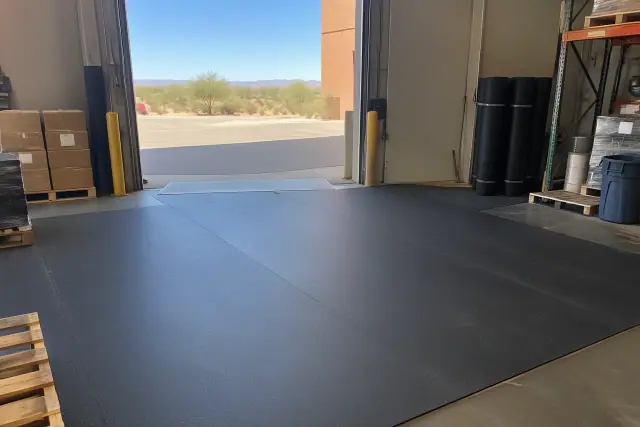
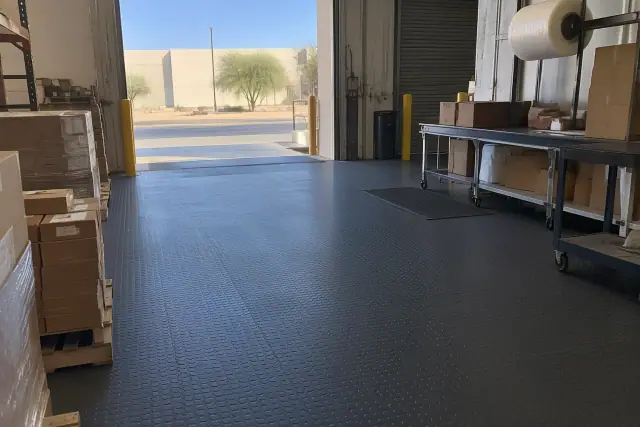
Industrial rubber flooring installed at a distribution warehouse in Mesa, AZ.

Warehouse aisles, loading areas, and manufacturing floors need rubber selected for their actual traffic. We review forklift and pallet-jack use alongside equipment loads, then choose the grade, thickness, and installation method. High-traffic industrial areas generally call for a full-spread urethane adhesive installation.

Request Estimate

Anti-Fatigue Flooring for Work Areas

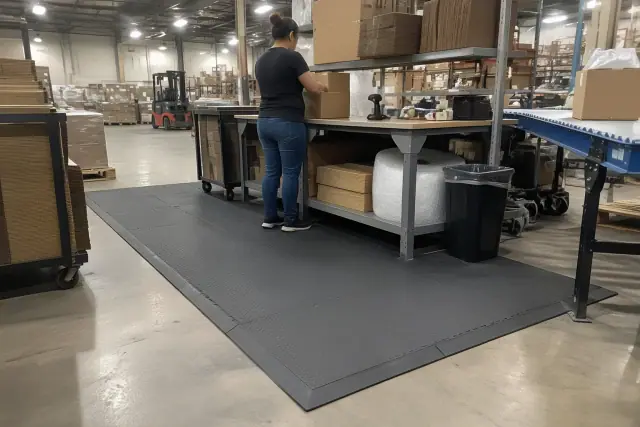
Interlocking heavy-duty industrial rubber flooring installed at a packing station in Mesa, AZ.

Employees standing on concrete through full shifts need a more forgiving surface underfoot. Anti-fatigue rubber flooring adds cushioning in warehouse work areas, medical facilities, and kitchens. We match the flooring to the work area and the demands placed on it.

Request Estimate

Commercial Gym and CrossFit Flooring

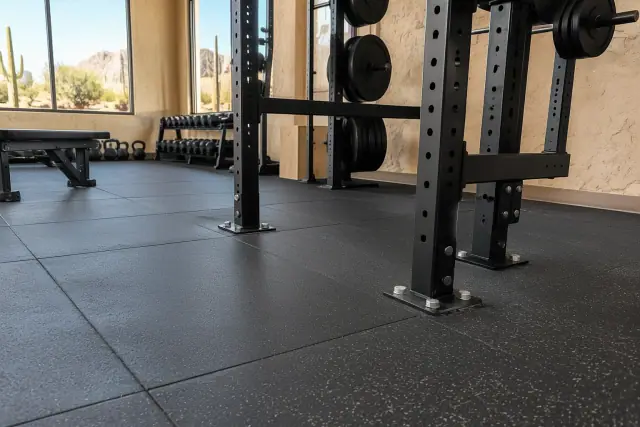
Heavy-duty rubber flooring installed around a weight rack in a fitness facility in Mesa, AZ.

Busy gyms put floors through thousands of foot-strikes a week as well as dropped weights. Cardio zones typically use 3/8 inch to 3/4 inch rubber, while weightlifting platforms use 3/4 inch to 1 inch. CrossFit lifting areas typically need at least 3/4 inch, with designated platforms sometimes layered to 1.5 inches for repeated barbell impact.

Request Estimate

Home Gym and Garage Rubber Flooring

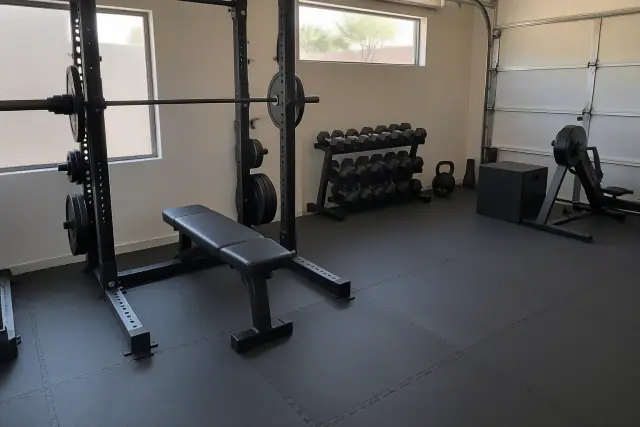
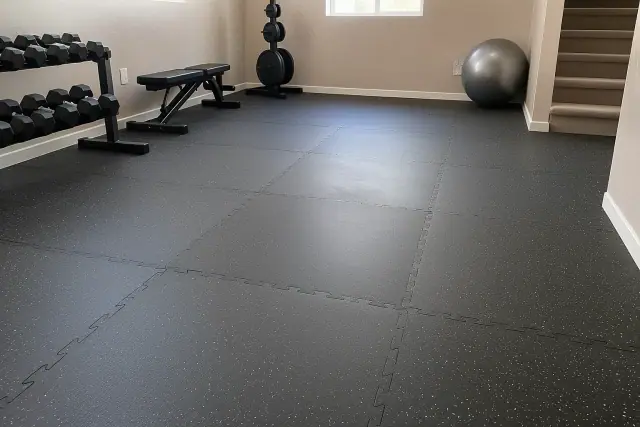
Interlocking rubber flooring installed in a residential home gym in Mesa, AZ.

Garages, casitas, and spare rooms need flooring matched to the workout and equipment. General home workouts typically use 3/8 inch rubber, with 1/2 inch to 3/4 inch under racks and platforms. We prepare the subfloor, cut around fixtures, and finish seams, using rolls or interlocking tiles where appropriate.

Request Estimate

Playground Rubber Surfacing

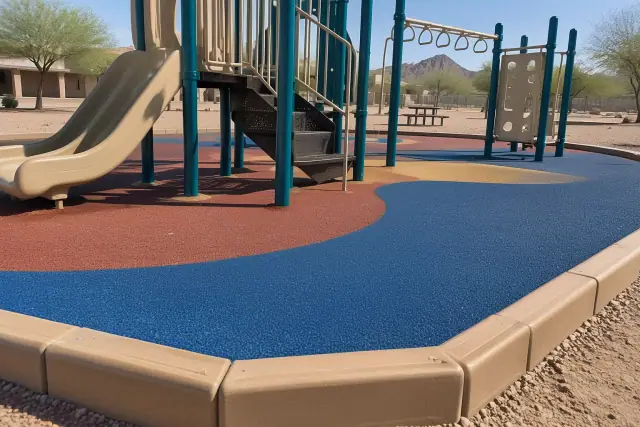
Playground rubber surfacing around steel play equipment at a school yard in Mesa, AZ.

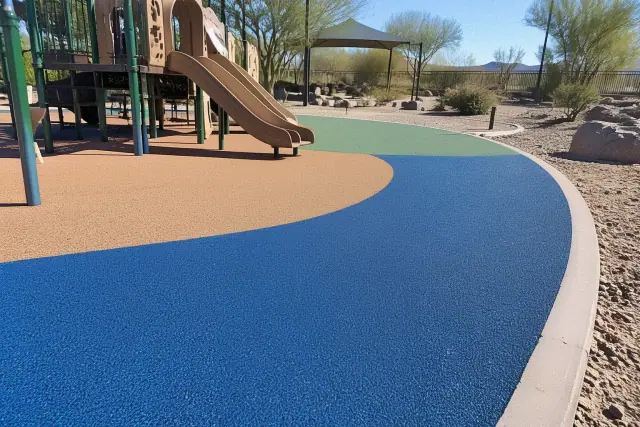
Poured-in-place playground surfacing uses EPDM granules and a polyurethane binder for a continuous surface. At parks and school playgrounds, we size the surfacing to the critical fall height of nearby equipment. The installation requirements include ASTM F1292 for shock attenuation and ASTM F1951 for accessibility under the Americans with Disabilities Act.

Request Estimate

Rubber Flooring Repair and Replacement

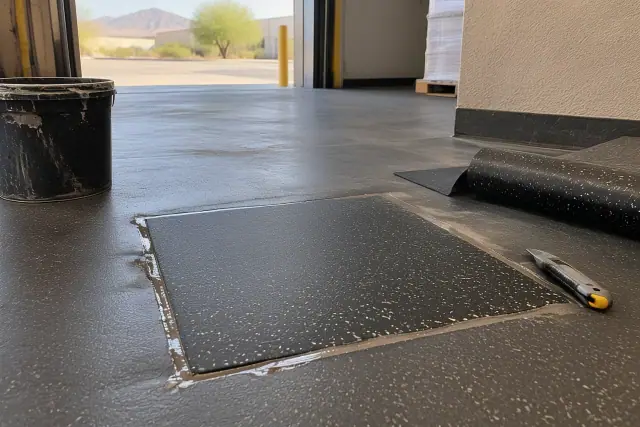
Technician repairing industrial rubber sheet flooring in a Mesa, AZ commercial facility.

We assess separated seams, curling edges, and localized adhesive failure before recommending repair or replacement. Deep cleaning, reseaming, and recoloring can extend usable life by several years when the floor remains suitable for restoration. For damage beyond spot repair, we remove the old material, retest the slab, and prepare it for new flooring.

Request Estimate
Surface Choices

Rubber Flooring Materials and Formats

Compare the format with the room layout, expected wear, and need for future repairs. Sheet goods limit seams, modular tiles allow sectional replacement, and poured surfaces support custom shapes and colors.

Rolled rubber flooring installed at an industrial warehouse packing station in Mesa, AZ.

Rolled Rubber Flooring

Rolled rubber covers large areas with fewer seams than small modular pieces. It suits warehouse floors, weight rooms, and loading areas when the grade and installation method match the load.

  • Wide sheets typically measure 4 feet by up to 50 feet.
  • Stocked rolled goods range from 3/16 inch to 3/4 inch thick.
  • Full-spread adhesive supports demanding traffic conditions.
  • Loose-lay installation suits appropriate lower-traffic spaces.
  • Roll layout and seam placement are planned around the floor area.
Request Estimate
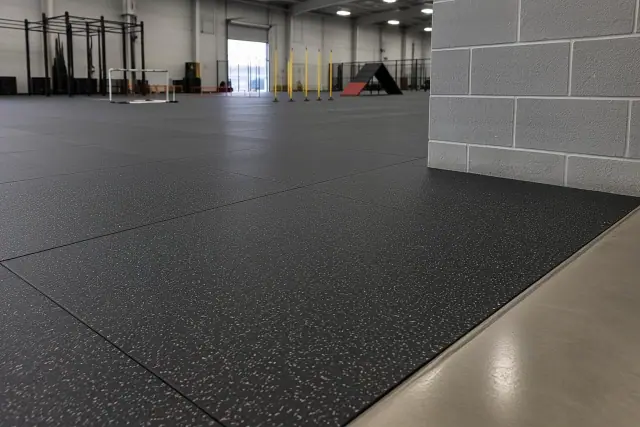
Glue-down rubber floor tiles installed on a concrete foundation at an indoor sports facility in Mesa, AZ.

Glue-Down Rubber Floor Tiles

Modular rubber tiles make sense where individual sections may need replacement later. Glue-down installation combines a tile layout with an adhesive bond selected for the slab and traffic.

  • Common tile sizes include 20x20 inch and 24x24 inch.
  • Damaged sections can be replaced without removing the entire floor.
  • Color matching supports branded commercial interiors.
  • Patterned layouts suit school gym floors.
  • Prepared concrete and sound seams support the installation.
Request Estimate
Interlocking rubber tiles installed on a residential basement floor in Mesa, AZ.

Interlocking Rubber Tiles

Interlocking tiles offer a modular option for garages and home gyms without an adhesive curing stage. We evaluate the room and equipment use before choosing this format.

  • Interlocking edges join adjacent tiles.
  • Smaller workout rooms can use a sectional layout.
  • Garage installations can avoid adhesive cure time.
  • Individual tile replacement supports localized repairs.
  • A full three-car garage can be installed in a single day where conditions allow.
Request Estimate
Poured-in-place rubber flooring at a recreation park play structure in Mesa, AZ.

Poured-In-Place Rubber

On-site mixing and troweling create a continuous rubber surface shaped to the project. This format suits playground safety surfacing and custom spaces where a seamless finish matters.

  • EPDM granules are combined with a polyurethane binder.
  • The material is mixed and troweled on-site.
  • Custom colors and logos can be incorporated.
  • Transitions can be formed to meet accessibility needs.
  • Installation planning includes mixing and curing time.
Request Estimate
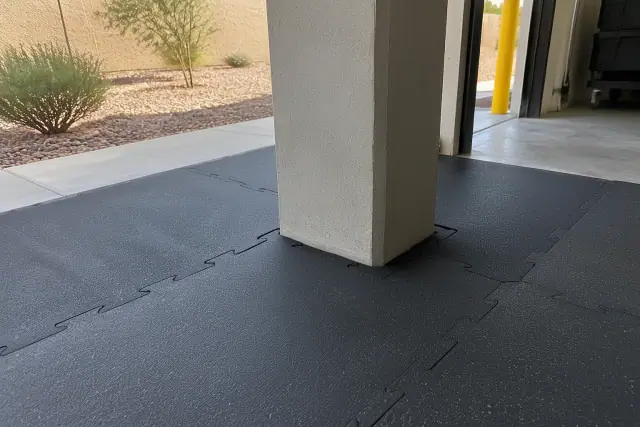
Completed industrial rubber flooring installation around a concrete column in Mesa, AZ.

Heavy-Duty Rubber for Impact Zones

Heavy-duty flooring is selected around concentrated impact and equipment use. Thickness alone does not determine the choice; material grade, slab preparation, and the installation method also matter.

  • Vulcanized rubber sheet goods are among the available material choices.
  • Recycled SBR options use polyurethane-bound rubber granules.
  • Virgin EPDM is selected where the application calls for it.
  • Dedicated lifting zones need impact protection matched to use.
  • Industrial traffic and equipment loads guide adhesive selection.
Request Estimate
Material and Site Fit

Choose Rubber Flooring for Your Site

The right floor depends on what happens above and below it. We connect traffic requirements with moisture testing, local heat exposure, and the preparation needed for a reliable installation.

Moisture Testing Before Installation

We test moisture vapor emission on concrete substrates before installation and evaluate surface pH. Those findings help identify slab conditions that could undermine an adhesive bond. Preparation follows ASTM F710 rather than relying on a floor that merely looks dry.

Flooring Selected for Mesa Conditions

Heat exposure, monsoon moisture, and the condition of local slab-on-grade construction shape our recommendations. We select adhesive and seam techniques with those conditions in mind and allow for rubber thermal movement. Garage slabs can exceed 140 degrees in summer, making material selection especially important.

Licensed and Insured Contractors

Mesa Rubber Flooring holds licensing through the Arizona Registrar of Contractors and carries the insurance required for commercial bid work. On commercial projects that require permits, we work through the City of Mesa Building Safety Division. Our installation experience includes residential rooms and commercial floors across the East Valley.

Inspect the Existing Floor

Address Rubber Flooring Problems Before Installation

A new surface should follow an assessment of the existing floor. We inspect for moisture intrusion, adhesive breakdown, and substrate cracking so the recommendation addresses the cause of damage as well as the visible symptoms.

Request Assessment

Moisture Beneath the Surface

Trapped moisture can lead to adhesive failure and conditions that allow mold beneath rubber. Older or insufficiently dried slabs need assessment before covering. Moisture testing and appropriate barrier or adhesive choices help address that risk.

Separating Seams

Open seams leave gaps where moisture and debris can collect beneath the floor. We inspect the joint and adhesive condition before recommending reseaming or localized replacement. Installation includes a seam treatment suited to the selected material.

Curling Edges and Loose Sections

Edges that lift or sections that lose their bond often need more than surface cleaning. We check the adhesive and substrate before planning a repair. Sound transitions and properly finished edges are part of the installation approach.

Insufficient Impact Protection

A floor chosen for light use may be poorly matched to repeated barbell drops or demanding equipment loads. Dedicated impact zones need a grade and thickness selected for that activity. We assess the use of each zone before recommending heavy-duty rubber.

Standing Fatigue on Concrete

Bare concrete can be uncomfortable for employees who remain at a workstation through long shifts. Anti-fatigue rubber adds cushioning beneath those work areas. The selection should account for the standing task and surrounding traffic.

Oil and Sunlight Exposure

Certain oils, solvents, and prolonged direct sunlight can damage rubber that is unsuited to the exposure. Garage doors and loading dock openings make these conditions relevant when assessing a floor. We consider material grade and exposure before recommending repair or replacement.

From Slab to Surface

Our Rubber Flooring Installation Process

We follow a sequence from site assessment to finished seams and transitions. Floor area, slab condition, traffic, and installation method guide the work at each stage.

01.

Measure the Space and Review Use

We measure the area, review slab age and condition, and discuss the traffic and equipment the floor will carry. Existing damage and moisture concerns are identified before quoting. This establishes the scope for preparation and material selection.

02.

Test Moisture and Surface pH

Concrete evaluation includes moisture vapor emission and surface pH testing. Readings help determine whether the slab is ready for the proposed installation. Active moisture problems need attention before the flooring is covered.

03.

Prepare the Concrete Surface

We grind or shot-blast as needed to remove existing sealers, paint, and laitance from the concrete. Substrate cracks and other damage are evaluated as part of preparation. The goal is a clean, suitable surface for the selected flooring method.

04.

Select the Installation Method

Traffic load, moisture readings, and budget guide the choice between full-spread adhesive, loose-lay flooring, and poured-in-place application. Material grade and thickness are matched to the intended use. The decision also accounts for the amount of preparation and seam work required.

05.

Place the Rubber Flooring

We lay rolls or tiles, or mix and trowel the poured material on-site. Cutting around fixtures and setting the layout are part of fitting the surface to the room. Adhesive installation and poured applications are planned around their curing requirements.

06.

Finish Seams and Transitions

We weld or tape seams as appropriate for the material, then finish exposed edges with transition strips or cove base. Proper seam work limits gaps where debris and moisture can collect. Expansion allowances account for rubber movement with temperature changes.

Plan Your Flooring Project

Request an Industrial Rubber Flooring Estimate

Tell us about your floor area, equipment, traffic, and any existing damage. A site assessment lets us account for slab preparation, material thickness, seam work, and removal needs in the quote. Contact Mesa Rubber Flooring to plan an installation, repair, or replacement.

Materials, Costs, and Care

Industrial Rubber Flooring FAQs

Compare the practical details before choosing a rubber floor, from concrete preparation and thickness to installed cost and ongoing care.

Call About Your Floor

New rubber, especially recycled material, can have an odor that fades over several weeks with ventilation. It is heavy, can cost more upfront than vinyl or laminate, and dark colors may show dust. Certain solvents, oils, and prolonged sunlight can damage grades that are not suited to those exposures. We help choose the grade and color with those tradeoffs in mind.

Rubber thickness ranges from 1/8 inch for light residential use to around 3 inches for specialized Olympic lifting platforms and playground fall zones. Most commercial gym and industrial applications use 3/4 inch to 1 inch where that level of impact protection is needed. Thicker installations are often stacked or layered rather than supplied as one sheet, so the choice should follow the actual load and impact requirements.

Mold can develop beneath rubber when moisture is trapped against the subfloor. Rubber does not feed mold, but inadequate slab drying, missing moisture protection, or poor seams can leave damp conditions underneath. We test the concrete and select appropriate adhesive and, where needed, a moisture barrier membrane to help prevent those conditions.

Yes, when the concrete is clean, level, cured, and free of excess moisture. Surface preparation may include grinding or shot-blasting to remove sealers and laitance before adhesive application. Suitable loose-lay rolls and tiles can also sit directly on concrete in lower-traffic spaces, while active moisture problems or significant cracking need attention first.

Quality rubber flooring can last 20 years or more with proper installation and routine care, compared with 5 to 10 years for many alternatives. Some epoxy floors in high-traffic industrial settings need recoating every 5 to 7 years. Material grade, thickness, and slab preparation affect service life, and forklift traffic creates more wear than a home gym used a few hours a week.

Most installations over sound, dry concrete do not need underlayment because rubber already provides cushioning and sound dampening. Additional layers may be relevant for sound isolation between floors or where moisture protection is required. Uneven substrates need evaluation and preparation; we assess those conditions during the site visit.

Typical installed costs are $2.50 to $6.00 per square foot for rolled rubber in 3/16 inch to 1/2 inch thicknesses and $4.00 to $9.00 for rubber floor tiles. Poured-in-place rubber typically costs $9.00 to $16.00 per square foot installed, while industrial heavy-duty rubber runs $6.00 to $12.00. Thickness, material composition, color customization, removal, and subfloor preparation affect the quote. Larger warehouse orders can lower per-square-foot costs compared with small residential projects.

Routine cleaning typically uses a neutral pH cleaner and a damp mop. Larger commercial floors can be maintained with an auto-scrubber, and rubber does not require waxing. Avoid cleaning products containing solvents or oils that could damage the selected rubber.

Most residential spaces can have subfloor preparation, fitting, and seam work completed in a single visit. Interlocking flooring avoids adhesive cure time, while poured-in-place work includes on-site mixing and curing. The schedule for a larger industrial floor depends on its preparation needs, layout, and installation method.

High-traffic industrial floors generally use full-spread urethane adhesive for a firm bond. Loose-lay rolls or tiles can suit lower-traffic spaces such as home gyms. We choose the method after reviewing the traffic load, moisture readings, equipment use, and budget.

Separated seams, curled edges, or localized bond failure may be repairable when the surrounding floor remains serviceable. We inspect for moisture intrusion, adhesive breakdown, and substrate cracking before deciding. Extensive damage or a floor beyond its useful life may call for removal, renewed slab preparation, and replacement.

We work with recycled SBR granules bound with polyurethane, virgin EPDM rubber, and vulcanized sheet goods. Selection depends on the application and budget, including impact demands, exposure, and the desired appearance. Recycled rubber can have a noticeable initial odor, while EPDM granules are used in poured surfaces with custom colors.

Mesa Rubber Flooring serves Mesa and the East Valley, including Tempe, Chandler, Gilbert, Queen Creek, and Apache Junction. Our projects range from individual home gyms to commercial and warehouse floors. Contact us with the property location and intended use to discuss the work.