Proudly serving Mesa, Gilbert, Chandler, Tempe, Scottsdale, Queen Creek & surrounding areasCall or Text 24/7: 480-319-7553
Aerial drone view of suburban neighborhoods and desert landscaping in Mesa, AZ.

Anti-Fatigue Rubber Flooring in Mesa, AZ for Standing Workstations & Workshops

Mesa Rubber Flooring installs anti-fatigue rubber flooring for standing workstations, shops, and commercial spaces in Mesa, AZ. We also install gym and home gym rubber flooring, garage rubber flooring, and commercial rubber surfaces. Our work includes rolled rubber, interlocking tiles, poured-in-place surfacing, and flooring repair and replacement. We match each surface to the way people stand, move, and use equipment in the room.

An eight-hour shift on bare concrete can leave feet, knees, and the lower back feeling worn out. That hard surface is familiar in Mesa garages, warehouses, and kitchens, including workspaces around the Falcon Field industrial corridor. We assess standing duration, spills, and cart traffic before choosing the rubber's density and thickness. Arizona heat and sun exposure also guide our material selection.

Our installers measure around equipment, check doorway clearances, and plan secure seams and tapered edges. Call to arrange a measurement and quote for your workspace.

Mesa Rubber Flooring installs anti-fatigue rubber flooring in Mesa and nearby Gilbert, Chandler, Tempe, Apache Junction, and Queen Creek.

★ ★ ★ ★ ★4.9/5 Customer Rating · 19 Years of Flooring Experience · 1,000+ Flooring Projects Completed · Licensed, Bonded & Insured · Residential & Commercial Flooring

Anti-Fatigue Flooring Options & Benefits

What Is Anti-Fatigue Rubber Flooring?

Anti-fatigue rubber flooring adds a cushioned surface between your feet and a hard slab. Its slight flex under body weight encourages small postural movements during standing work.

The right surface balances cushioning with stability. Rubber that is too soft can make standing feel unsteady, while a very firm surface may offer little improvement over concrete.

We size matting for cashier stations, assembly lines, standing desks, and home workshops. Material density, texture, and edge design matter alongside thickness, especially where wheeled equipment crosses a standing area.

Benefits of a Properly Fitted Rubber Surface

A useful floor has to work with the whole room, from the standing position to the doorway. Professional fitting helps keep the cushioning, traction, and transitions suited to daily use.

  • Cushioning underfoot during extended standing
  • Impact absorption beneath dropped tools or weights
  • Protection for concrete subfloors beneath gym equipment
  • Reduced noise transfer from training areas
  • Surface textures selected for footwear and spills
  • Beveled edges at workstation perimeters
  • Replaceable tiles for localized damage
  • Recycled rubber options for sustainability goals
Flooring for Daily Use

Rubber Flooring Installation & Repair

Standing comfort is the starting point, but a kitchen, gym, and warehouse need different specifications. We install rubber flooring for each setting and repair existing surfaces when localized work can address the wear.

Anti-Fatigue Workstation Flooring

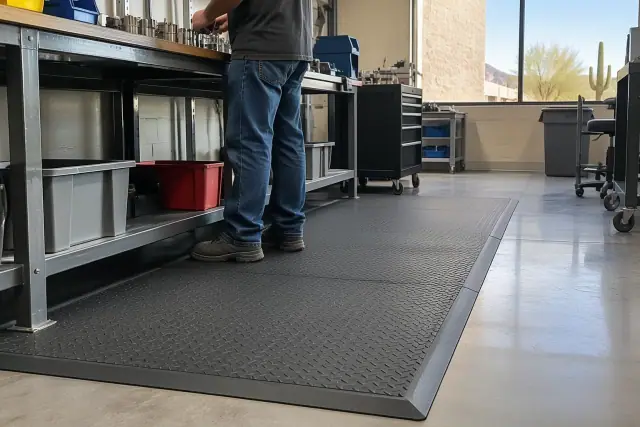
Anti-fatigue rubber flooring with interlocking seams at a manufacturing facility in Mesa, AZ.

We fit comfort matting around packing benches, inspection lines, retail counters, and standing desks. For employees who stay in one position for hours, we select cushioning that supports standing without creating a soft, unstable surface.

Request Estimate

Gym and Home Gym Rubber Flooring

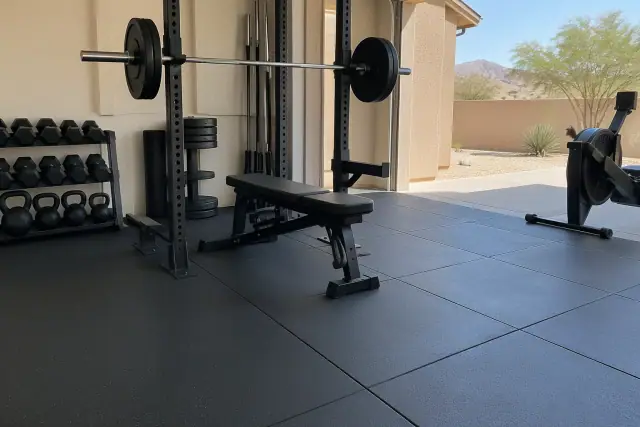
Rubber gym flooring with barbell racks installed outside a home in Mesa, AZ.

Commercial studios and home fitness rooms need impact absorption and protection beneath equipment. Rolled rubber options run from 3/8 inch to 3/4 inch depending on use; weight rooms typically need 1/2 inch to 3/4 inch, while home gyms usually use 3/8 inch to 1/2 inch rolls or tiles.

Request Estimate

Garage and Workshop Rubber Flooring

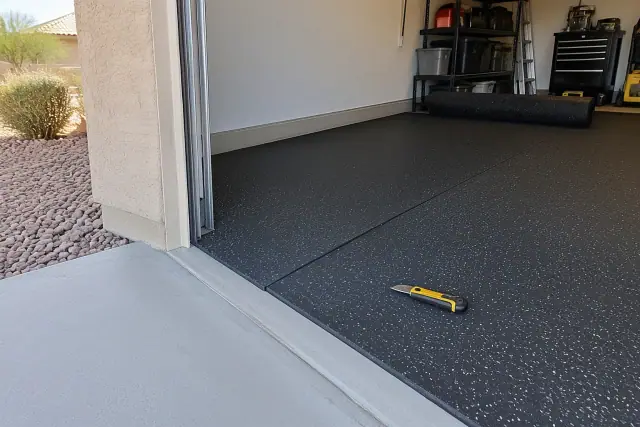
Heavy-duty rubber flooring installation in a residential garage in Mesa, AZ.

Mesa garages face dropped tools, tire tracking, and 115-degree summer surface temperatures. We acclimate rubber before installation and plan around benches and equipment, with diamond plate finishes available for an industrial shop-floor appearance.

Request Estimate

Commercial Kitchen and Bar Matting

Anti-fatigue rubber flooring installed in a Mesa, AZ commercial kitchen and bar.

Food prep areas, dish pits, and bar stations need matting selected for water, grease, and repeated spills. We install textured, drainable rubber surfaces and low-profile beveled edges to support standing staff and practical cleaning.

Request Estimate

Industrial and Warehouse Rubber Flooring

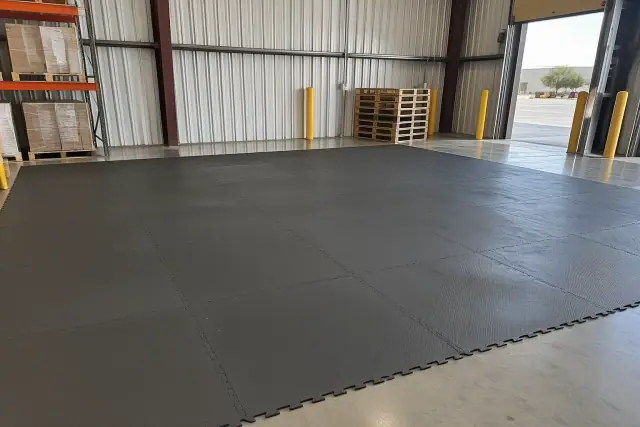
Anti-fatigue industrial rubber flooring installed in a warehouse in Mesa, AZ.

Assembly and distribution floors need rubber matched to oil, chemical exposure, rolling carts, and loading. We specify thicker, higher-durometer material where the use calls for it, including demanding work areas near US-60 and the Phoenix-Mesa Gateway Airport corridor.

Request Estimate

Rubber Flooring Repair and Replacement

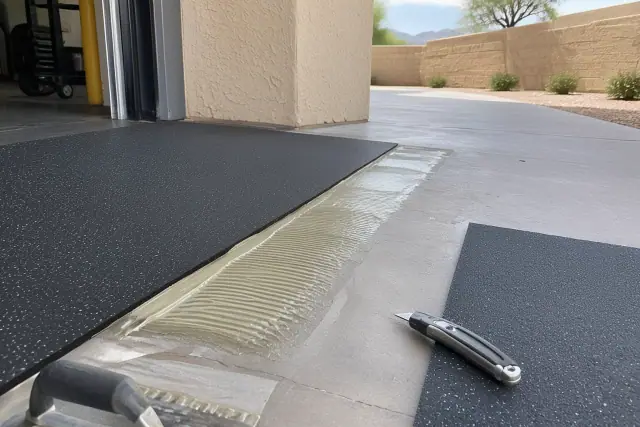
Contractor repairing anti-fatigue rubber flooring with fresh adhesive and a utility knife at an industrial facility in Mesa

We repair lifted seams, replace damaged tiles, and re-adhere sections that have released during heat cycling. Checking compression set helps identify matting that has lost its rebound so replacement focuses on worn areas.

Request Estimate
Compare Your Surface Options

Rubber Flooring Formats & Materials

Choose the format around room size, cleaning needs, and whether the layout may change. We work with recycled SBR rubber, nitrile blends, foam-rubber composites, and UV-stabilized EPDM surfaces for different exposures.

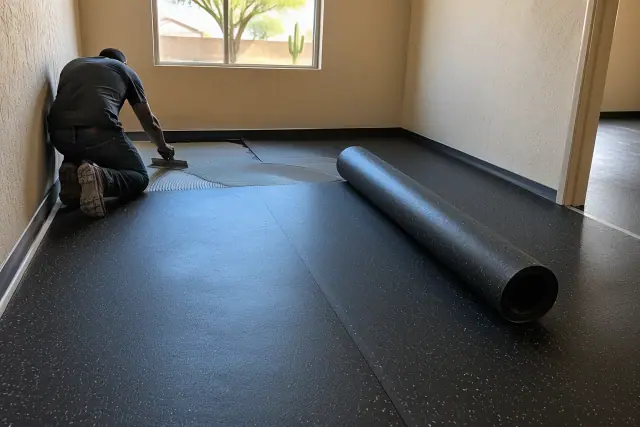
Glue-down rolled rubber anti-fatigue flooring installation in Mesa, AZ, showing visible adhesive seams.

Glue-Down Rolled Rubber

Rolled rubber creates broad coverage with fewer seams across gyms, warehouses, and factory work areas. We can fit rolls to irregular room shapes, including older buildings around Main Street and Country Club Drive.

  • Broad coverage for large floor areas
  • Fewer joints where dirt can collect
  • Thickness selected for equipment and activity
  • Custom fitting around irregular room layouts
  • Glue-down installation for the planned floor layout
Request Estimate
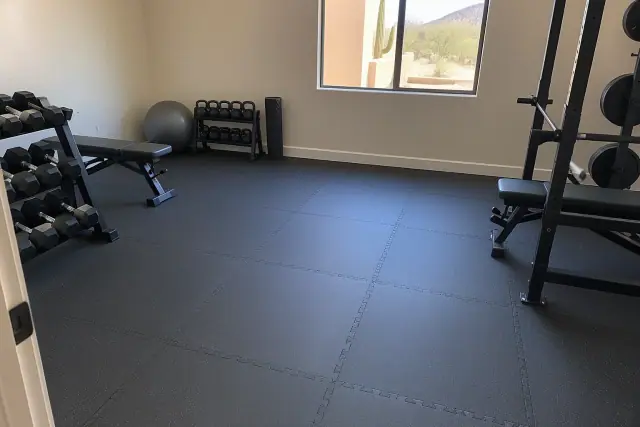
Interlocking rubber tiles installed in a residential basement home gym in Mesa, AZ.

Interlocking Rubber Tiles

Modular tiles suit spaces that may need reconfiguration, expansion, or individual replacements. Most tiles run 18 to 22 pounds each, allowing crews to handle them in tight spaces without heavy equipment.

  • Individual replacement of damaged tiles
  • Layouts that can be expanded later
  • Modular coverage for changing equipment positions
  • Options for weight rooms and home workshops
  • Installation access suited to confined rooms
Request Estimate
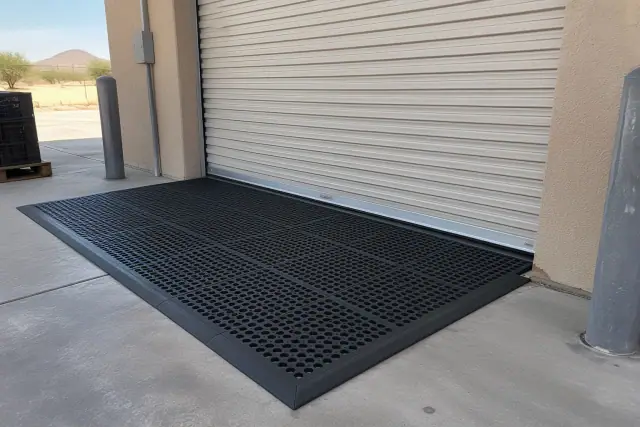
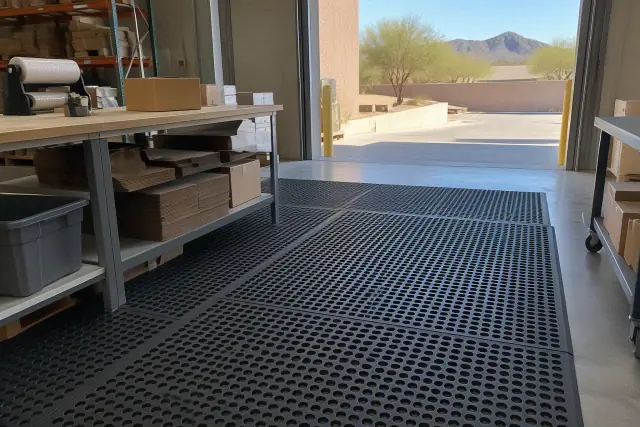
Drainable nitrile rubber matting on a warehouse floor in Mesa, AZ, showing perforated drainage holes.

Drainable Nitrile Rubber Matting

Nitrile rubber is an option for wet, greasy, or chemical-exposed workstations. We match the compound to the actual spill exposure and use drainable designs where liquid would otherwise collect underfoot.

  • Grease-resistant options for food prep stations
  • Raised surfaces that let liquid pass through
  • Textured footing around sinks and dish pits
  • Tapered transitions around mat perimeters
  • Material selection based on actual floor exposures
Request Estimate
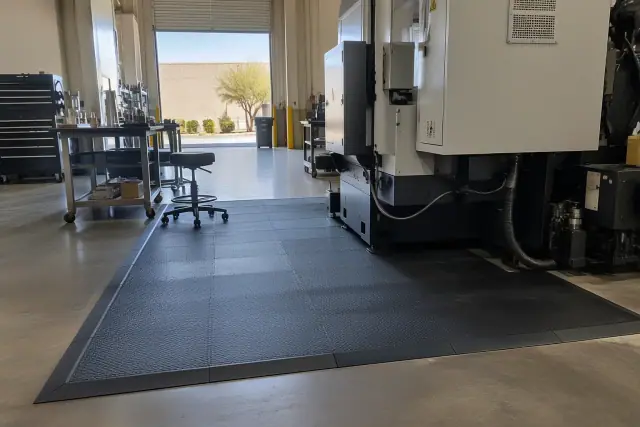
Interlocked anti-fatigue rubber flooring tiles with beveled safety edges in a manufacturing facility in Mesa, AZ.

Rubber Cushioning for Dry Standing Areas

Foam-rubber hybrids suit dry office and standing desk applications, while closed-cell rubber provides resilient cushioning for sustained workstation use. We compare rebound and density so the surface stays supportive rather than excessively soft.

  • Options for dry standing desk areas
  • Cushioning matched to standing duration
  • Closed-cell rubber for repeated compression
  • Density selected for standing stability
  • Texture chosen for the footwear in use
Request Estimate
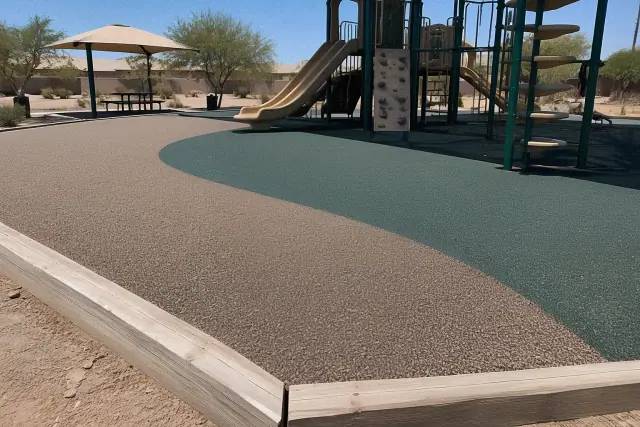
Poured-in-place rubber flooring and border timbers at a neighborhood park in Mesa, AZ.

Poured-in-Place and EPDM Surfaces

Poured-in-place rubber is mixed and troweled on site for seamless coverage in playgrounds, therapy rooms, and commercial lobbies. UV-stabilized EPDM top layers are an option where sun exposure affects material selection.

  • Seamless coverage across the planned area
  • Custom-colored surface options
  • On-site mixing and troweling
  • UV-stabilized material for sun-exposed areas
  • Playground specifications matched to equipment fall height
Request Estimate
Finding the Right Fit

Choose Rubber Flooring for Your Workspace

Flooring selection begins with what happens in the space. We compare standing time, footwear, moisture, chemical contact, and traffic so cushioning and durability fit the job.

Materials Matched to Exposure

We compare recycled SBR, nitrile, and EPDM according to where the floor will be used. A dry standing desk, greasy prep station, and sun-exposed doorway each place different demands on rubber.

Planning for Mesa Heat

Material acclimation and sun exposure deserve attention before rubber goes down. We account for Arizona conditions when choosing compounds and installation methods, including garage workshops in Dobson Ranch and Red Mountain.

Precise Fitting Around Equipment

We measure the usable floor area, allow for doorway swing, and fit around equipment positions. Seams, tapered edges, and surface selection are part of the installation plan rather than details left until the end.

Comfort, Traction, and Wear

Address Common Rubber Flooring Problems

An uncomfortable mat may have the wrong density, while a loose edge may need refitting or repair. We check the cause of the problem before recommending a different material or replacing the floor.

Request a Flooring Assessment

Long Hours on Hard Concrete

Standing at a fixed bench or counter on bare concrete can feel punishing over a full shift. We fit cushioned rubber to the actual standing area, with density chosen to balance underfoot comfort and stability.

Flattened or Overly Soft Mats

Foam alternatives can flatten within months under repeated loading, while excessive softness can make standing less stable. We assess rebound and compression set to distinguish worn cushioning from a poor material match.

Water, Grease, and Debris Underfoot

Spills and dry warehouse dust create different traction challenges. Ribbed, waffle, and pebbled textures change drainage and grip, while drainable matting helps keep liquid from pooling on the standing surface.

Curled Edges and Lifted Seams

A raised edge can catch shoes or interrupt cart movement. We repair lifted seams, re-adhere released sections, and fit tapered edging at commercial mat transitions to reduce abrupt lips.

Wear From Carts and Heavy Loading

Rolling carts, forklift traffic, and repeated loading can demand firmer rubber than a stationary standing mat. We examine the traffic pattern and wear before specifying the thickness and durometer for industrial areas.

Rubber Exposed to Heat and Sun

Outdoor rubber can fade or stiffen, and some light-colored compounds can yellow in strong sunlight. We select UV-stabilized EPDM where appropriate and account for heat cycling when evaluating adhesion and damaged sections.

From Measurement to Installation

Our Rubber Flooring Installation Process

We move from measuring the workspace to selecting the material, fitting the surface, and checking the finished installation. Each step accounts for how the floor will be used and maintained.

01.

Measure the Space and Standing Areas

We measure the room, workstation positions, and equipment layout. Doorway swing and walking routes help determine where flooring should end and where transitions need attention.

02.

Review Spills, Footwear, and Traffic

We ask how long people stand and check whether water, grease, chemicals, or dry dust reach the floor. Work boots, bare feet, rolling carts, and forklifts all affect the surface specification.

03.

Select Material, Thickness, and Texture

We compare compounds, durometer ratings, and cushioning for the intended use. Coin, hammered, and diamond plate textures offer different underfoot feel, so the choice follows the room's needs.

04.

Plan the Layout and Acclimate Rubber

We match the installation method to the substrate and lay out rolls or tiles around the equipment. Acclimating material to local conditions helps avoid buckling and gaps after installation.

05.

Fit, Secure, and Finish the Surface

Our installers fit interlocking tiles, secure glue-down rolls, or trowel poured-in-place rubber as specified. We finish seams and tapered edges with attention to doorways and workstation perimeters.

06.

Check Performance and Ongoing Wear

We check the fitted surface and confirm slip ratings before finishing the job. For industrial flooring, we inspect wear patterns annually and assess lost rebound, loose seams, and tile damage when planning repairs.

Plan a More Comfortable Workspace

Request an Anti-Fatigue Flooring Quote

Tell us where people stand, what reaches the floor, and whether carts or equipment cross the area. Mesa Rubber Flooring can measure your workspace and recommend a material and installation approach for the job.

Rubber Flooring Questions

Anti-Fatigue Rubber Flooring FAQs

Compare thickness, materials, upkeep, and installation choices before selecting a standing surface for your Mesa property.

Call About Your Flooring

Rubber flooring generally runs $2.00 to $6.00 per square foot depending on thickness and material grade, so its upfront cost can exceed vinyl or leaving concrete bare. A noticeable rubber odor can occur during the first few days and fades with ventilation. Some light-colored compounds can yellow in strong sun, and heavy rolls are difficult to move once installed. We discuss those tradeoffs during the estimate.

A mat that is too thick or too soft can interfere with stable footing or cart movement. Untapered edges can create a trip hazard, and trapped moisture or debris makes regular cleaning important. Cheaper foam mats can lose cushioning within a year or two of daily use, so material and density deserve attention before purchase.

For most standing workstations, 1/2 inch to 3/4 inch provides a balance of cushioning and stability. Around 3/8 inch can suit light-duty areas with brief standing periods, while full-shift industrial stations generally call for 3/4 inch mats or layered options. We review standing duration and floor exposure before recommending a thickness.

The choice depends on the environment. Nitrile rubber suits wet, greasy, or chemical-exposed stations, while foam-rubber hybrids are an option for dry offices and standing desks. Textured rubber with beveled edges suits demanding work areas, and interlocking tiles help where the layout may change.

Rolled rubber offers broad coverage with fewer seams, which is useful in larger gyms and work areas. Interlocking tiles allow individual replacement and changes to the layout. The better fit depends on room shape, equipment positions, and how often the area may be reconfigured.

Heat cycling can contribute to released adhesive sections, while direct sun can fade or stiffen unsuitable rubber. We acclimate material before installation and consider UV-stabilized EPDM for sun-exposed or window-adjacent areas. Outdoor installations need material selection that accounts for those exposures.

Rubber flooring can last 10 to 20 years with proper maintenance. Actual condition depends on loading, cleaning, heat, and UV exposure. Loss of rebound, separated seams, and damaged tiles help determine whether repair or replacement is appropriate.

Yes, localized work can address some floor damage. We can replace individual tiles, repair lifted seams, and re-adhere sections that have released from the substrate. We check the remaining rubber's condition before recommending how much work is needed.

Look for a rubber compound suited to grease and moisture, a drainable surface, and beveled edges. Raised matting lets liquid pass through instead of collecting on the standing surface. Regular cleaning beneath the mats remains important because drainage does not remove trapped debris.

Traffic needs to be part of the specification before installation. A soft standing mat may be unsuitable for a route used by loaded carts or forklifts, while industrial areas may need thicker, higher-durometer rubber. We also consider tapered transitions where wheels cross mat edges.

Rubber can absorb dropped-weight impact, protect the subfloor beneath equipment, and dampen noise transfer. The flooring specification should follow the activities and loads in the room. A bodyweight training area and a space for repeated plate drops may need different thicknesses.

Clean debris from the surface and beneath removable mats, paying attention to damp areas around laundry equipment or evaporative cooler condensation. Check edges, seams, and cushioning for changes over time. Released sections or localized tile damage should be assessed before the problem spreads.

Yes, we install anti-fatigue and commercial rubber flooring in Gilbert, Chandler, Tempe, Apache Junction, and Queen Creek as well as Mesa. Call to discuss the workspace, intended use, and measurement for your East Valley project.