Proudly serving Mesa, Gilbert, Chandler, Tempe, Scottsdale, Queen Creek & surrounding areasCall or Text 24/7: 480-319-7553
Aerial drone view of suburban neighborhoods and desert landscaping in Mesa, AZ.

Gym & Home Gym Rubber Flooring in Phoenix, AZ for Homes & Training Facilities

Mesa Rubber Flooring installs gym and home gym rubber flooring throughout Phoenix, AZ. We also fit garage floors, rolled rubber, interlocking tiles, and commercial training surfaces. Our crews match the material to your equipment, room layout, and daily use. From an Arcadia garage gym to a Deer Valley CrossFit facility, we handle preparation, installation, and repairs.

Desert heat, direct sunlight, and low humidity affect flooring adhesives, seams, and curing. Moisture rising through a concrete slab can also loosen a floor that looks sound on the surface. We check the subfloor and select adhesives according to the flooring manufacturer's specifications. An on-site visit lets us explain the preparation and material choices before you commit.

Tell us what equipment you use and where the floor is going. We can walk your space, discuss samples, and provide an itemized quote that accounts for preparation and installation.

★ ★ ★ ★ ★4.9/5 Customer Rating - 19 Years of Flooring Experience - 1,000+ Flooring Projects Completed - Licensed, Bonded & Insured - Residential & Commercial Flooring
Rubber Flooring Services

Rubber Flooring Options for Phoenix, AZ

Choose a surface for the way your room works: lifting weights, parking equipment, standing at a workstation, or running group classes. We install rolled rubber, tile, and poured-in-place surfaces, with thickness and preparation matched to the use of the space.

Gym & Home Gym Rubber Flooring
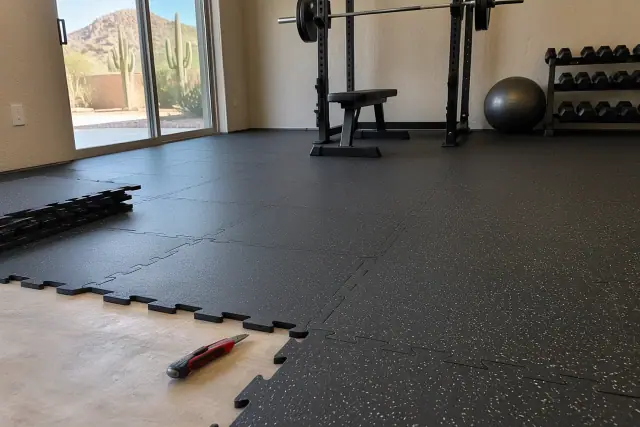
Interlocking rubber gym flooring installed in Phoenix, AZ, showing fitted tiles and clean edge trims.

Protect weight rooms and home gyms with rubber selected for dropped plates, cardio equipment, and foot traffic. Commercial and semi-commercial training areas commonly use 3/8 inch to 1/2 inch rolled stock or tile; residential rooms usually use 1/4 inch to 1/2 inch material, with denser flooring at heavy lifting zones.

Explore Service
Garage Rubber Flooring

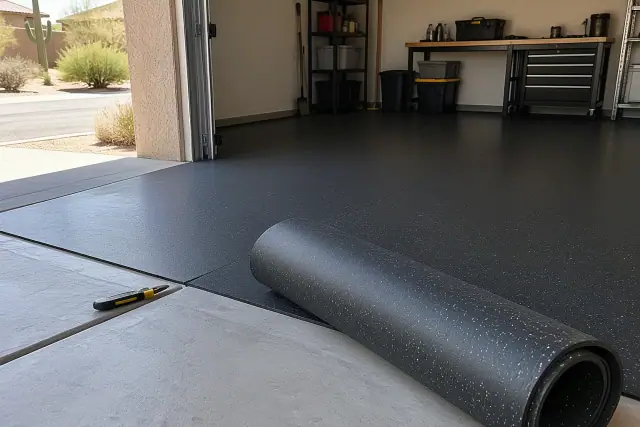
Heavy-duty rubber flooring covering a concrete garage floor and workbench area in Phoenix, AZ.

Fit rolled rubber or interlocking tile around garage doors, columns, and workout equipment. We account for slab expansion and contraction, choose suitable adhesives, and finish exposed edges with transitions suited to an unconditioned garage.

Explore Service

Rolled Rubber Flooring

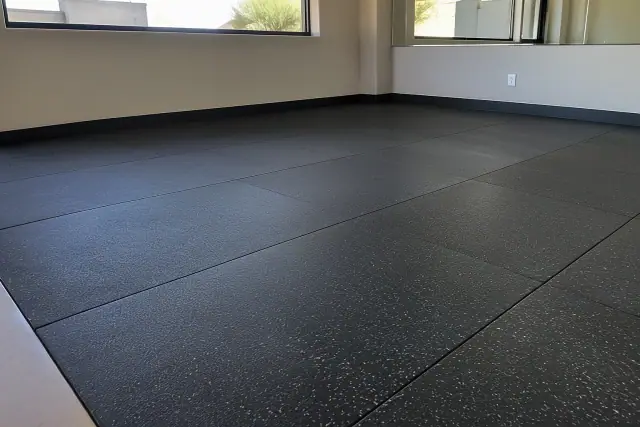
Rolled rubber flooring installed in a commercial gym in Phoenix, AZ.

Cover large, open training floors with rolled rubber to reduce the number of seams. We handle cutting, manufacturer-specified seam treatment, transition strips, and wall base trim, with thickness and color selected for your layout.

Explore Service

Rubber Floor Tile Installation

Rubber floor tile installation in a residential basement exercise space in Phoenix, AZ.

Choose interlocking puzzle-style or peel-and-stick rubber tiles for home studios and rooms that may be rearranged. Tile gauge and density follow the activity in the room, while individual worn sections can be replaced more easily than a continuous floor.

Commercial Rubber Flooring

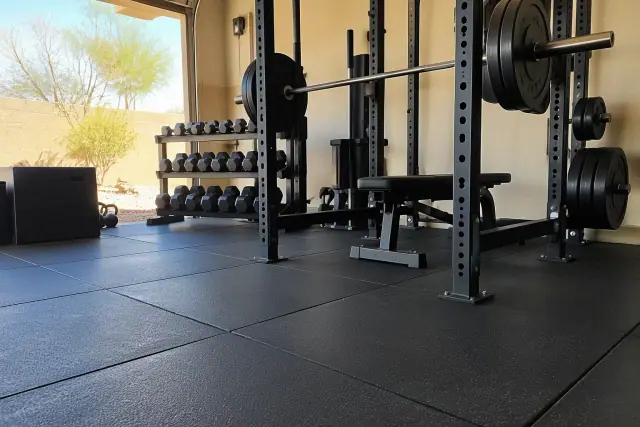
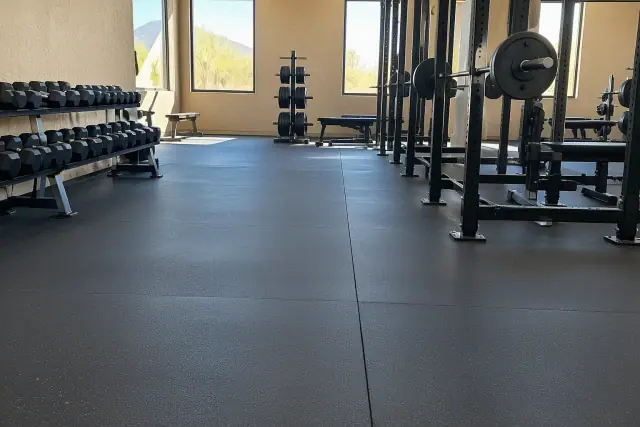
Commercial rubber flooring installed under barbell racks in Phoenix, AZ.

Outfit fitness centers, personal training studios, hotel gyms, and corporate wellness rooms with commercial-grade rubber. We coordinate access and scheduling with facility managers and general contractors, including freight elevator arrangements and material ordering for color zones or logo inlays.

Playground Rubber Surfacing

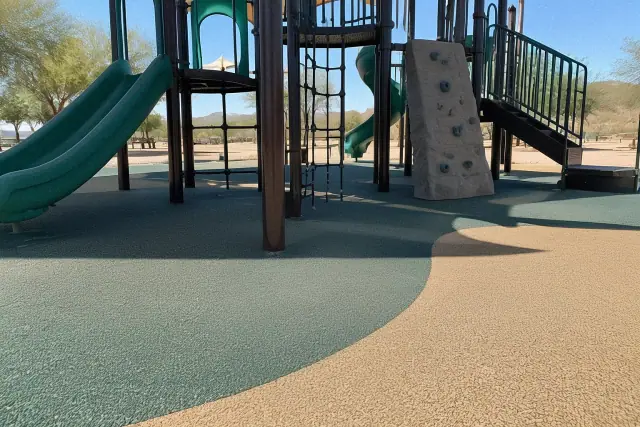
Poured-in-place rubber safety surfacing beneath a playground in Phoenix, AZ.

Create a continuous playground surface using poured-in-place rubber granules and binder. We plan preparation, finishing, and curing around the installation so the surface has time to cure before children use it.

Poured-in-Place Rubber Flooring

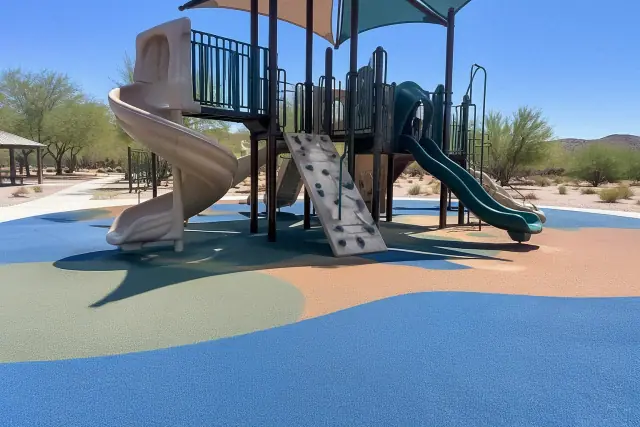
Poured-in-place rubber safety flooring beneath a playground structure in Phoenix, AZ.

Use troweled rubber granules mixed with a polyurethane binder for seamless therapy spaces and specialty commercial areas. We account for Phoenix's dry conditions during curing and schedule buffer days before the finished surface receives traffic.

Industrial Rubber Flooring

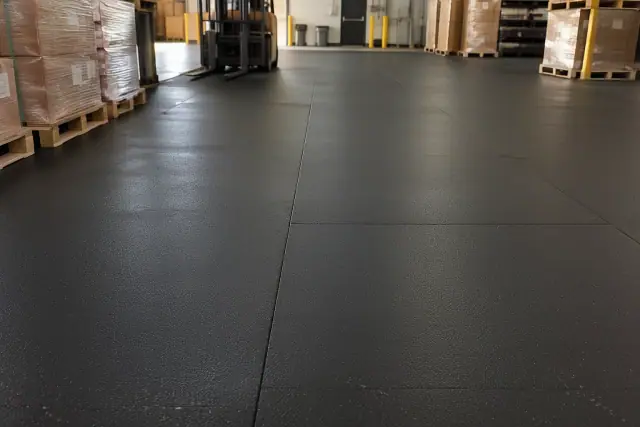
Industrial rubber flooring installation in a Phoenix, AZ warehouse with aligned black rubber seams.

Match rubber flooring to warehouse and industrial work areas by considering equipment movement and exposure to oils or chemicals. Workstation layouts, assembly lines, and forklift traffic all affect the material selection.

Anti-Fatigue Rubber Flooring

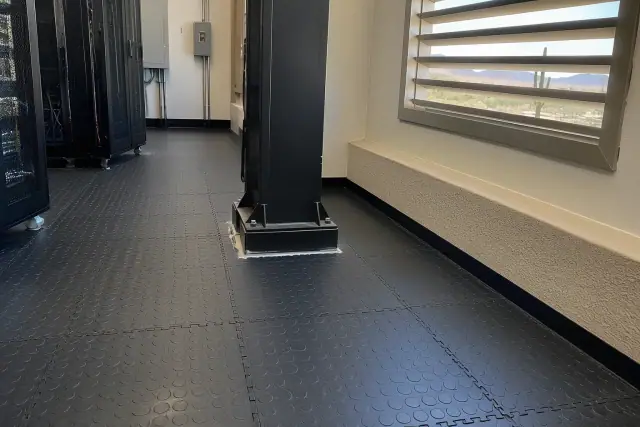
Anti-fatigue rubber flooring installed in a Phoenix, AZ server room.

Add beveled-edge matting or rolled anti-fatigue flooring where employees spend long shifts standing. We size the surface to workstations, checkout counters, and assembly lines, and consider the substances it will encounter during use.

Rubber Flooring Repair & Replacement

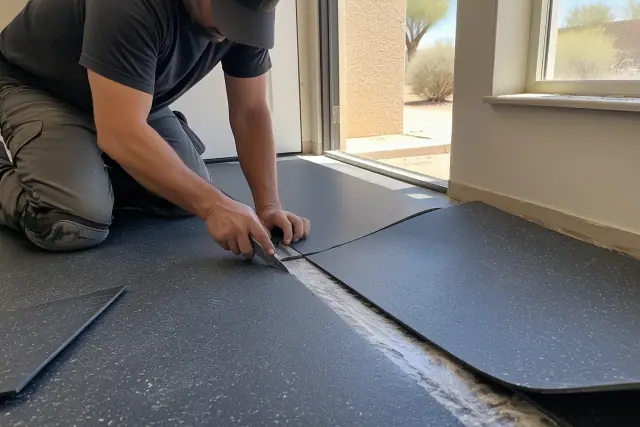
Technician repairing sheet rubber flooring with a utility knife in Phoenix, AZ.

Address lifting seams, curled tile corners, bubbling, and worn spots under equipment. We inspect the cause, match replacement sections as closely as possible, and re-seam rolled material when appropriate; full replacements include removal and attention to the exposed subfloor.

Choose Your Floor

How to Choose Rubber Flooring

Start with equipment loads, the room's environment, and the amount of preparation your slab needs. Most Phoenix gym projects use flooring between 3/8 inch and 3/4 inch thick, with heavier drop zones sometimes requiring 1 inch or laminated stall-mat construction. Format, maintenance, and replacement needs help narrow the choice.

Match Thickness to Training

General strength and cardio areas often work well with 3/8 inch rubber. Dedicated barbell platforms may need 3/4 inch to 1 inch material or rubber layered over plywood, while commercial free-weight zones often use 1/2 inch or greater. Plan heavier protection where weights actually land.

Choose Rolls or Replaceable Tiles

Rolled rubber suits open rooms where fewer seams matter, and it generally installs faster across a large floor. Interlocking tiles suit smaller spaces, future layout changes, and sectional replacement. Compare room shape and likely wear before choosing a format.

Check Heat and Sun Exposure

A climate-controlled studio and an uncooled garage place different demands on rubber and adhesive. Tell us about direct sunlight, open garage doors, and seasonal temperature swings so we can account for exposure during material selection and installation.

Compare Material and Preparation Costs

Light-use home gym flooring options run about $2 to $4 per square foot, while premium virgin rubber and thicker material run $7 to $12 per square foot. These material choices differ from the total installed cost. Moisture work, removal, room access, and finishing details also affect the project quote.

Plan for Daily Cleaning

Commercial class areas need a floor suited to frequent mopping and disinfecting. Check that cleaning products are rubber-compatible, and use neutral pH cleaner for routine damp mopping. Walk-off mats help limit the grit tracked onto the surface.

Consider Noise and Future Changes

Rubber helps reduce impact noise in shared-floor condos and townhomes, including spaces in Central Phoenix and Tempe. Consider where weights will be used and whether equipment may move later. Replaceable tiles can be useful when one part of a room receives heavier wear.

Flooring Wear and Damage

Common Rubber Flooring Problems

A gap, soft bubble, or moving edge can point to a problem beneath the surface. We inspect the material, seam condition, and slab before recommending a repair or replacement. Catching isolated damage early can keep the work focused on the affected area.

Request Floor Inspection

Lifting Seams and Curled Edges

Repeated temperature changes can stress seams in garages and other unconditioned rooms. Separated heat welds and curled tile corners need inspection before the gap grows. We check whether re-seaming or sectional replacement will address the damage.

Bubbling from Slab Moisture

Vapor coming through slab-on-grade concrete can weaken the adhesive and lift the rubber within months. Older slabs without adequate vapor protection can develop bond failures within the first year. Testing before installation helps identify moisture issues that need attention.

Wear Under Racks and Treadmills

Repeated impact and concentrated equipment loads can wear through an under-specified floor. We inspect those areas and compare the existing thickness with the activity above it. Tile floors may allow a worn section to be replaced while surrounding material stays in place.

Dust and Grit Abrasion

Tracked-in desert dust can act like sandpaper beneath shoes and equipment wheels. Sweep or vacuum regularly, and place walk-off mats at entry points to reduce grit. These simple steps help preserve the surface finish in busy rooms.

Sunlight and Surface Fading

Direct UV exposure through windows or near open exterior areas can accelerate fading and rubber degradation. Window film or shade can reduce prolonged exposure. Inspect nearby seams and edges as part of routine garage floor care.

Damage from Harsh Cleaners

Solvents and some industrial disinfectants can damage rubber compounds or binders. Confirm product compatibility before starting a commercial cleaning routine. Neutral pH cleaner and damp mopping are the routine care approach we recommend.

Our Installation Approach

Why Choose Mesa Rubber Flooring

We match the floor to its setting, prepare the slab, and explain the material's care requirements at handover. Our work covers residential garages, commercial fitness spaces, and industrial work areas throughout the Valley. If your planning includes both Phoenix and Fountain Hills, AZ , assess each property's concrete condition and equipment layout before comparing flooring options.

On-Site Layout and Slab Checks

We measure the actual space, including columns, garage doors, and HVAC returns that affect cutting and layout. Our crews work across the Phoenix metro, from Camelback Corridor fitness studios to garages in Ahwatukee and Desert Ridge. The site visit makes those details part of the quote.

Tools for Accurate Seams and Cuts

Large rubber rolls need careful handling and consistent alignment. We use seam rollers and, for compatible compounds, heat-welding equipment to finish the floor according to manufacturer specifications. Planning color lots and patterns helps keep large rooms consistent.

Care Guidance and Workmanship Support

Every completed installation includes a walkthrough with care advice for the material used. We address issues that stem from our workmanship and provide periodic inspections for commercial accounts. Ongoing attention to edges, seams, and cleaning helps identify wear early.

From Measurement to Handover

Our Rubber Flooring Installation Process

The work starts with the room and its concrete base, then moves through material selection, preparation, fitting, and care guidance. Most residential and small commercial jobs finish in one to two days. Larger training facilities or multi-room buildouts can take a week or more, depending on size and material lead times.

01.

Measure the Room and Inspect the Slab

We visit the site to measure square footage, examine the subfloor, and test concrete moisture. Equipment positions, doorway access, columns, and other obstructions help establish the layout and scope.

02.

Select Material and Confirm the Quote

We recommend thickness, format, and color based on training style and expected traffic. Samples and an itemized quote help you review the material, preparation, and installation work before it begins.

03.

Remove Old Flooring and Prepare Concrete

We remove existing flooring when the job requires it and address the subfloor exposed during removal. Grinding, patching, or leveling creates the base needed for the selected rubber and adhesive.

04.

Dry-Lay the Floor and Check Alignment

We position material before adhesive or tape goes down to check seams, pattern, and cuts. For interlocking tile, we verify alignment across the room so the finished layout stays consistent.

05.

Install Rubber and Finish Transitions

We use the specified adhesive or tape and heat-weld or tape rolled seams as the product requires. Transition strips and edge trim finish the installation, while poured-in-place surfaces receive their planned curing time.

06.

Clear the Site and Review Care

We haul away removed flooring, adhesive residue, and packaging included in the work. The final walkthrough covers cleaning and maintenance for the installed material, including seams and edges to monitor over time.

Flooring for Different Spaces

Rubber Flooring for Homes and Facilities

Case Study 1: Garage gyms: Divide the space by activity, using suitable protection under a lifting rack and a practical surface for cardio or stretching. Recycled rubber provides a budget-conscious option, while tile allows later changes to the room.

Case Study 2: Commercial training floors: Combine thicker lifting zones with thinner cardio and stretching areas to allocate material where it is needed. Color zoning can distinguish activities, and doorway transitions need attention during the buildout.

Case Study 3: Standing work areas: Size anti-fatigue flooring to the station and consider the oils, chemicals, or equipment it may encounter. Beveled edges and a layout suited to the workspace help make the surface practical for daily use.

Plan Your Flooring Project

Schedule a Rubber Flooring Consultation

Share your room size, equipment plans, and any problems with the existing floor. Mesa Rubber Flooring can inspect the space, discuss suitable materials, and prepare an itemized estimate for your Phoenix project.

Materials, Installation, and Care

Rubber Flooring FAQs for Phoenix, AZ

Find answers about buying rubber flooring, choosing thickness, installation costs, and maintaining a floor in desert conditions. An on-site assessment helps apply these choices to your room.

Call Our Experts

Mesa Rubber Flooring supplies and installs commercial-grade rolled rubber, interlocking tile, and poured-in-place flooring. During an on-site visit, we can review samples and match materials to your subfloor, equipment, and traffic. Preparation and disposal of old flooring can be included in the project.

For general strength training, cardio, and bodyweight exercise, 3/8 inch interlocking tile or rolled rubber is a common choice. Dedicated barbell platforms may need 3/4 inch to 1 inch material or a rubber-over-plywood build. The right choice also depends on garage temperatures, room layout, and whether you want to replace individual sections later.

Installed gym rubber flooring typically runs $3 to $12 per square foot, depending on thickness, format, and subfloor condition. Moisture work, grinding, custom color zoning, removal, and access can affect the total. We provide an itemized quote after measuring the space.

Material alone generally ranges from around $2 per square foot for basic recycled rubber tile up to $12 to $18 per square foot for premium virgin rubber or specialty colored tile. Thickness is a major factor, from 1/4 inch material through 3/4 inch to 1 inch platform-grade rubber. Adhesive, seam treatment, and subfloor preparation also need to be considered in the project budget.

Most home gym installations complete in a single day. Residential and small commercial jobs more broadly often take one to two days, while larger facilities can take a week or more. Size, preparation, and material lead times affect the schedule.

A dry climate does not prevent moisture vapor from moving through a concrete slab. Elevated moisture can weaken adhesive bonds and cause bubbling or lifting. We test the concrete before installation and account for the subfloor condition during preparation.

We install rolled rubber and interlocking tile in Phoenix garages, accounting for seasonal temperature swings. Adhesive selection, slab condition, and edge transitions need particular attention in an unconditioned room. Direct sunlight and existing seam movement are useful details to discuss during the visit.

Isolated damage can often be repaired section by section, especially with tile flooring. We match the existing color and thickness as closely as possible and check the cause of the failure. Rolled rubber may also be re-seamed where compatible welds have separated.

Rolled and tile rubber flooring typically performs well for 10 to 20 years with proper care. Poured-in-place systems can run 15 to 20 years before resurfacing is needed, depending on traffic and maintenance. Cleaning habits, exposure, and concentrated equipment wear affect service life.

Sweep or vacuum to remove grit, then damp mop with a neutral pH cleaner. Avoid harsh solvents and confirm that any disinfectant is compatible with the rubber. Walk-off mats at entries help reduce the dust carried into the room.

Designated lifting platforms commonly use 3/4 inch to 1 inch rolled rubber or laminated tile for repeated impact. Thinner rolled rubber can serve open training areas where loads are lower. We use the equipment layout and training activities to plan the material zones.

Poured-in-place flooring combines rubber granules with a polyurethane binder to form a continuous surface. We use it for playgrounds, therapy spaces, and specialty commercial applications. Installation includes a curing period and buffer days before the surface receives traffic.

We coordinate with facility managers, property management, and general contractors, including access arrangements such as freight elevator scheduling. Work can be arranged around business hours when possible. The scope of the tenant improvement may also affect local review and the installation schedule.

Our crews travel throughout the Valley for residential, commercial, and industrial projects, including Scottsdale, Tempe, Mesa, Chandler, Glendale, Peoria, and Surprise. Phoenix work includes Arcadia, Deer Valley, Central Phoenix, Ahwatukee, and Desert Ridge. Contact us with the property's location and project details to arrange an assessment.

Start with the area where employees stand and the substances or equipment the floor will encounter. We install beveled-edge matting and rolled anti-fatigue flooring for workstations, checkout counters, and assembly lines. Oils, chemicals, and forklift traffic affect which material is suitable.