Proudly serving Mesa, Gilbert, Chandler, Tempe, Scottsdale, Queen Creek & surrounding areasCall or Text 24/7: 480-319-7553
Aerial drone view of suburban neighborhoods and desert landscaping in Mesa, AZ.

Mesa Rubber Flooring: Gym, Home Gym Rubber Flooring, Garage Rubber Flooring in Mesa, AZ

Mesa Rubber Flooring installs rubber floors for homes and businesses in Mesa, AZ. We fit gym and home gym rubber flooring to the way you train, from cardio equipment to free weights. Our garage rubber flooring handles parking and workshop use, while rolled rubber flooring covers larger workout and work areas with fewer seams. We also install modular tiles, commercial floors, and outdoor rubber surfacing, and repair or replace worn flooring.

Mesa's desert heat, windblown dust, and monsoon moisture make floor preparation especially important. We test concrete slabs for moisture and prepare the substrate before installing rubber. Material thickness and fastening methods are matched to the equipment and traffic each floor will carry. Contact us for a site assessment and written estimate before choosing your floor.

Our licensed and insured team works across Mesa and the East Valley. Manufacturer-trained installers handle interlocking tile, rolled sheet goods, and poured-in-place rubber surfaces.

★ ★ ★ ★ ★4.9/5 Customer Rating · 19 Years of Flooring Experience · 1,000+ Flooring Projects Completed · Licensed, Bonded & Insured · Residential & Commercial Flooring

Prepared for Your Floor

Written Estimates
Rubber Floor Installation
Licensed and Insured
Serving Mesa
Rubber Flooring Services

Rubber Flooring for Every Space

Choose a floor for how the room is used: weight training, daily parking, busy retail traffic, or outdoor play. We install rubber sheet flooring, mats, and interlocking tiles, with preparation and material selection tailored to each surface.

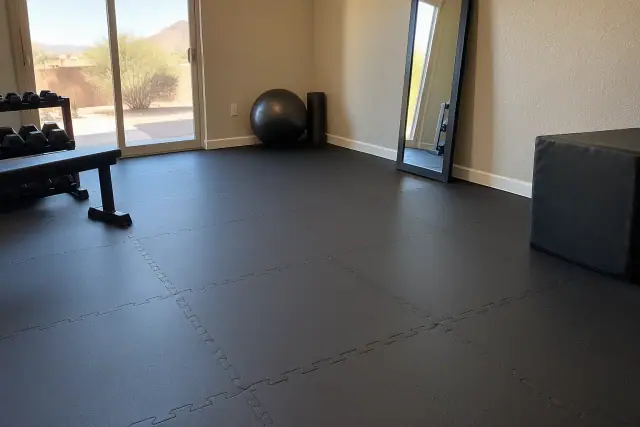
Gym & Home Gym Rubber Flooring
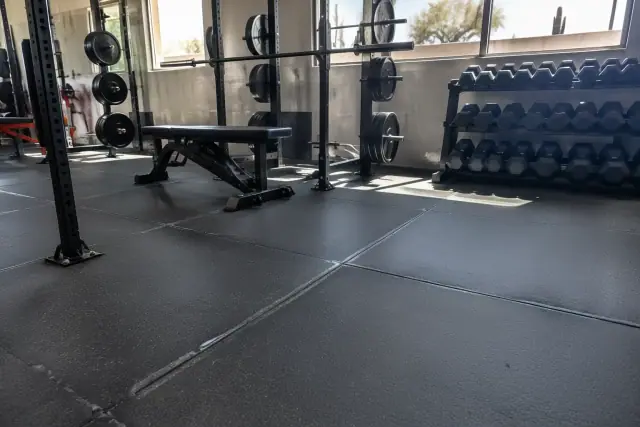
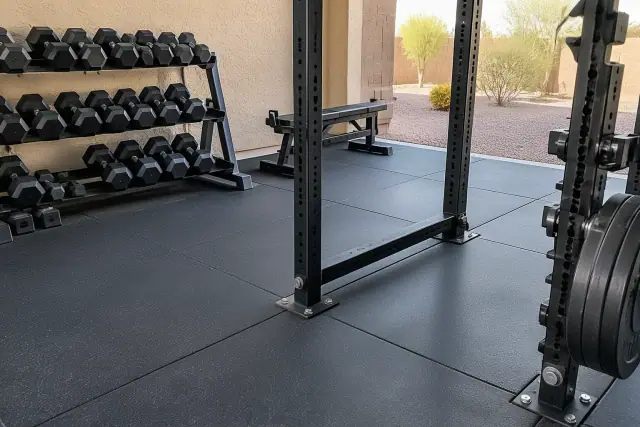
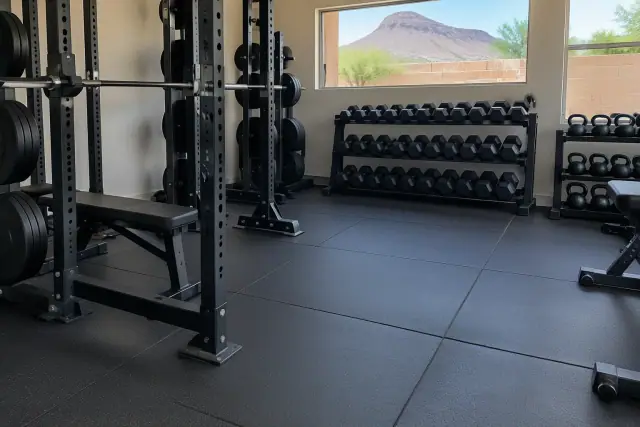
Thick rubber flooring installed under heavy gym equipment in Mesa, AZ.

Home gyms get interlocking tiles or rolls matched to lifting and cardio use. Commercial gyms and CrossFit spaces near Riverview and Superstition Springs use heavy-gauge rolled rubber for demanding training areas. Explore Service

Explore Service
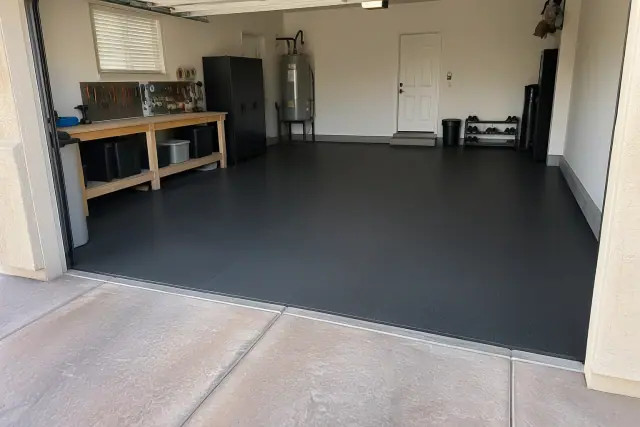
Garage Rubber Flooring

Heavy-duty garage rubber flooring installed in Mesa, AZ, with tight mat seams along the concrete wall.

Vehicle-rated interlocking tiles support daily parking, jack stands, and rolling toolboxes. Our garage rubber flooring resists petroleum stains and cleans with standard degreasers, helping manage motor oil and tire marks. Explore Service

Explore Service
Rolled Rubber Flooring

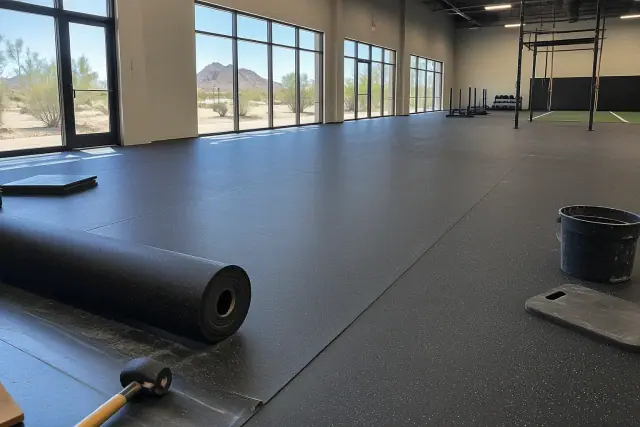
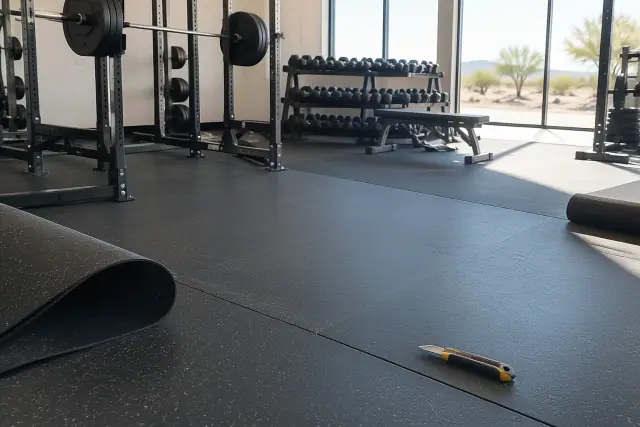
Black rolled rubber flooring installed in a Mesa, AZ gym with a utility knife on the surface.

Rolls up to 4 feet wide cover weight rooms, hallways, and large work areas with fewer seams than tile. We double-cut seams and use full-spread adhesive to keep the flooring flat under equipment and foot traffic. Explore Service

Explore Service
Rubber Floor Tile Installation

Rubber floor tile installation in a commercial fitness weightlifting zone in Mesa, AZ.

Modular tiles let you replace damaged sections or reconfigure a changing space. Choose solid, color-flecked, or beveled-edge finishes for gyms, showrooms, and playrooms.

Commercial Rubber Flooring

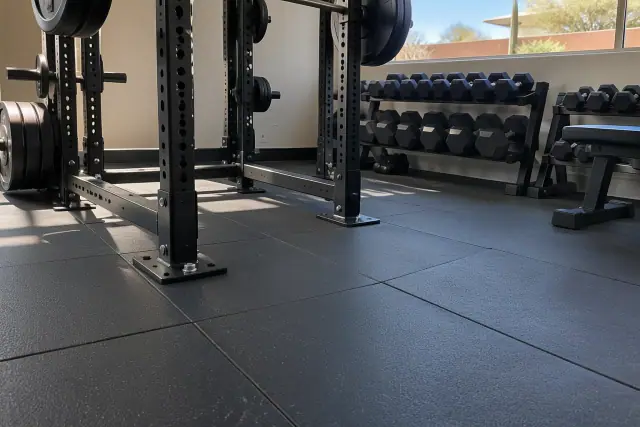
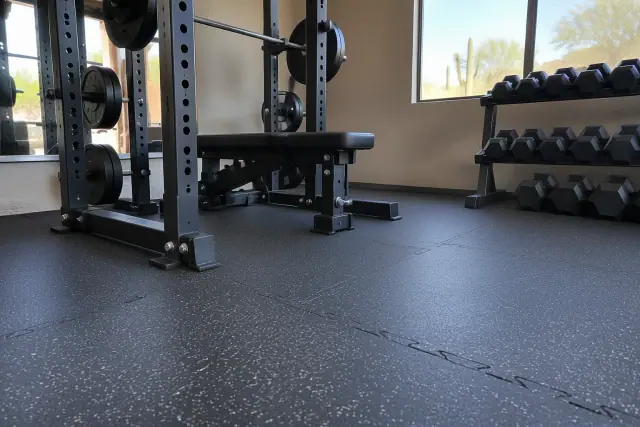
Commercial rubber flooring installed under heavy barbell racks in Mesa, AZ.

Retail spaces along Main Street and in the Fiesta District need floors that handle carts and heavy foot traffic. Rubber also helps dampen impact noise in office lobbies and break rooms.

Playground Rubber Surfacing

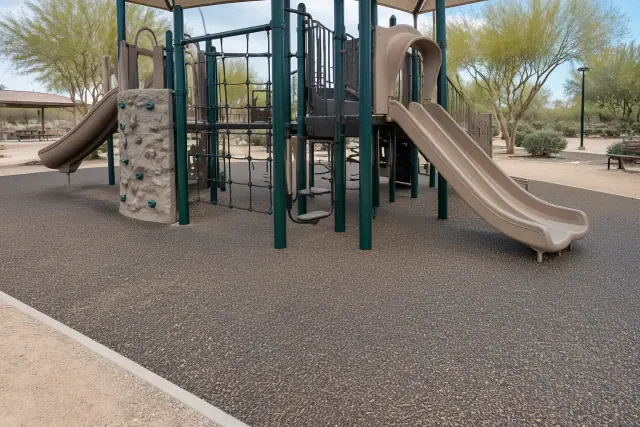
Poured rubber safety surfacing at a public park playground in Mesa, AZ.

We install tile and poured-in-place playground surfaces selected for the equipment's critical fall height. Playground projects follow ASTM F1292 impact attenuation and ASTM F1951 accessibility standards, with drainage suited to monsoon rainfall.

Poured-in-Place Rubber Flooring

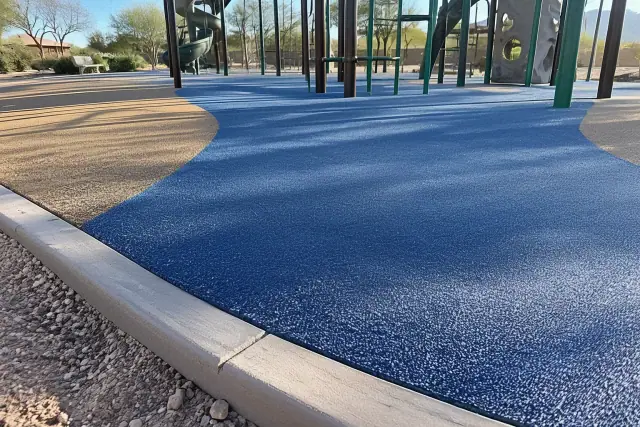
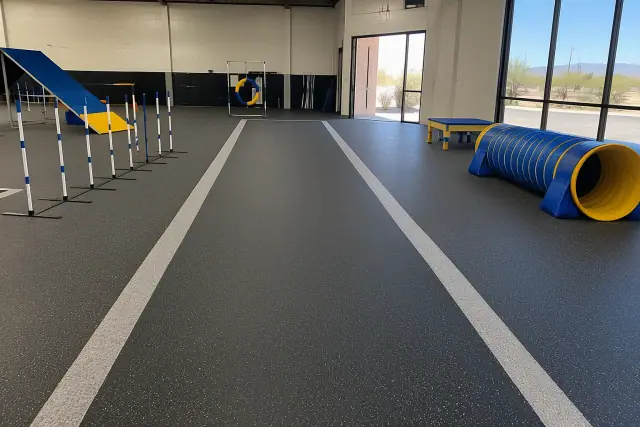
Poured-in-place rubber safety surfacing installed at a desert park playground in Mesa, AZ.

EPDM granules and polyurethane binder are mixed on-site and troweled over a prepared substrate. The seamless finish accepts custom color blends and logo inlays for splash pads and commercial entries.

Industrial Rubber Flooring

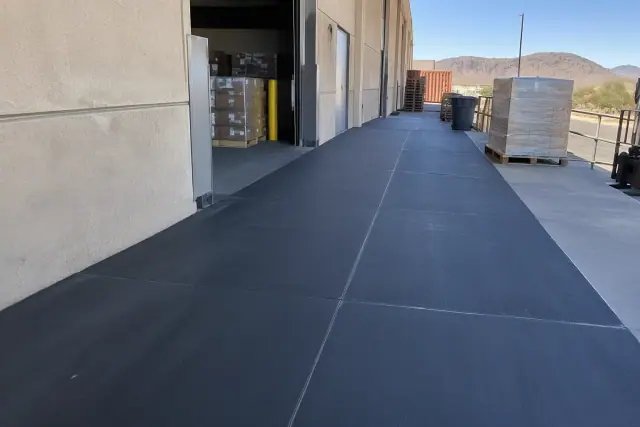
Industrial rubber flooring installed at a desert warehouse loading dock in Mesa, AZ.

Warehouses and distribution facilities near the Loop 202 corridor need flooring selected for forklift traffic, pallet drops, and chemical exposure. We match industrial rubber flooring and substrate preparation to the loads the work area carries.

Anti-Fatigue Rubber Flooring

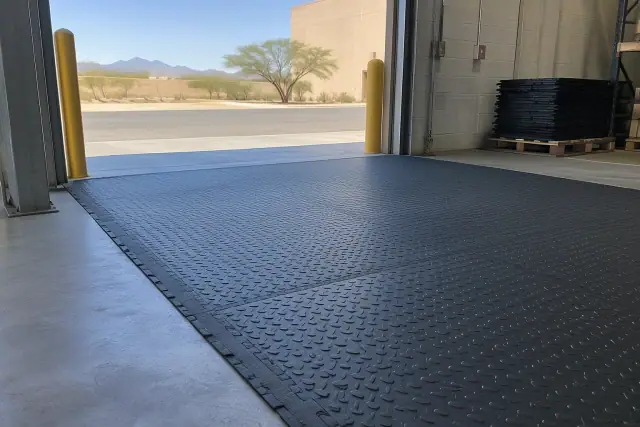
Interlocking anti-fatigue rubber flooring installed on concrete in a Mesa, AZ warehouse loading dock.

Cushioned mats flex underfoot for workers standing through an 8-hour shift. Beveled edges suit workstation boundaries, while rubber helps dampen noise and cushion dropped tools.

Rubber Flooring Repair & Replacement

Rubber flooring installation under heavy barbell racks at a gym jobsite in Mesa, AZ.

Lifted seams, curled edges, and damaged tiles call for an assessment of the floor and slab. We repair suitable sections or remove worn material and adhesive before installing a replacement matched to today's use.

Materials and Installation Details

More Ways to Customize Your Floor

The right rubber floor depends on more than room size. Thickness, moisture conditions, surface design, and the option to replace individual sections all affect how well it fits your property.

Contractor progress photo of rolled rubber flooring installation at a sports facility in Mesa, AZ.

Thickness Matched to Training

Our rubber flooring options range from 3/8 inch to 3/4 inch thick. Light-use rooms and dropped-weight zones call for different cushioning, so we match the material to your activities and equipment.

  • Interlocking tiles for home workout rooms
  • Rolled rubber for commercial training floors
  • Impact cushioning beneath free weights
  • Stable surfaces around cardio equipment
  • Heavy-gauge material for high-impact zones
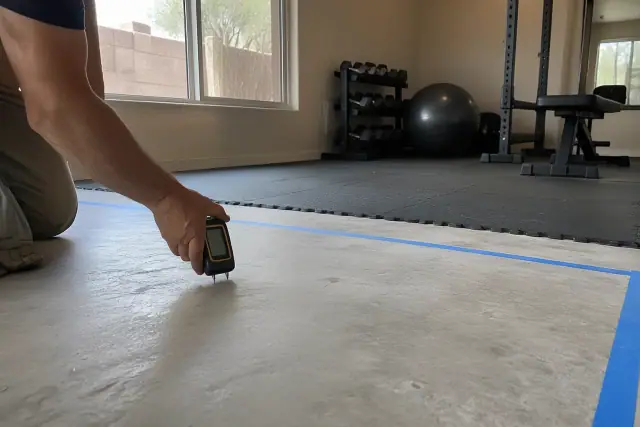
Moisture meter probe on a concrete slab during basement prep in Mesa, AZ.

Moisture Testing and Slab Preparation

Concrete condition affects every installation. We check for slab moisture and remove old adhesive or prepare uneven areas before selecting an appropriate adhesive, underlayment, or fastening method.

  • Slab moisture testing before installation
  • Inspection of existing adhesive condition
  • Old flooring and residue removal when needed
  • Slab grinding where preparation requires it
  • Fastening matched to the substrate and traffic
Custom-cut rolled rubber flooring installed in a sports training facility in Mesa, AZ.

Colors, Edges, and Custom Layouts

Rubber can fit a playroom, showroom, or branded commercial entrance. Tile finishes and poured-in-place design options help coordinate the floor with the space.

  • Solid-color rubber tiles
  • Color-flecked tile finishes
  • Beveled edges at floor transitions
  • Custom poured-in-place color blends
  • Logo inlays for commercial surfacing
Precision-cut interlocking rubber tiles fitted tightly together in a Mesa, AZ basement exercise space.

Residential Comfort and Easy Upkeep

Rubber adds cushioning to playrooms, laundry rooms, and home gyms while standing up to daily use. Its density also dampens impact noise in two-story homes.

  • Cushioning for active play spaces
  • Reduced impact noise between levels
  • Resistance to furniture dents
  • Sweeping and damp mopping for routine care
  • Individual tile replacement when damage is localized
Local Flooring Experience

Why Choose Mesa Rubber Flooring

Installation, repair, and replacement start with understanding the existing floor and its next use. Our experience includes garages in Las Sendas, gyms near Fiesta Mall, and industrial spaces in the Elliot Road Technology Corridor.

Experience Across Mesa Properties

Different properties need different approaches, from home gyms in Dobson Ranch to warehouse floors near Falcon Field. We can provide references from recent gym, garage, and warehouse projects to help you evaluate our work.

Manufacturer-Trained Installers

Our installers train on interlocking tiles, rolled goods, and poured-in-place surfacing. We follow the selected material's specifications for preparation and installation instead of treating every rubber floor alike.

Written Estimates Before Work

A site assessment identifies the floor area, material choice, and preparation involved. Your written estimate accounts for the project scope before you commit, including removal or moisture-related work when needed.

What Is Happening to Your Floor?

Flooring Problems in Mesa Properties

Heat cycling, slab moisture, and heavy use can show up as cracked surfaces, loose seams, or worn traffic paths. An inspection helps distinguish a repairable section from a floor that needs replacement.

Request a Floor Assessment

Heat-Stressed Garage Floors

Summer surface temperatures on unprotected Mesa garage floors regularly exceed 140°F, and garages also face 115°F-plus asphalt-adjacent heat. Heat cycling and shifting caliche soil can stress rigid flooring, making the slab's condition part of the installation assessment.

Slab Moisture Under Rubber

Monsoon humidity swings and rising slab vapor can leave moisture beneath a floor. Testing before installation helps identify when the project needs an appropriate adhesive or underlayment to address those conditions.

Lifted Seams and Curled Edges

Seam separation and curled edges can signal adhesive breakdown or moisture intrusion. We inspect the cause before re-adhering a seam or replacing a damaged section.

Weight Impact and Surface Wear

Repeated weight drops and concentrated equipment loads can wear flooring that is too thin for the job. Suitable heavy-gauge rubber cushions training areas, while localized tile damage may be addressed section by section.

Sun-Exposed Outdoor Surfaces

Repeated Arizona sun exposure can leave unprotected materials faded or brittle. UV-stabilized rubber compounds and an assessment of the existing surface help guide outdoor installation or replacement.

Dust and Debris at Floor Seams

Windblown dust collects at joints and edges, adding to routine cleaning. Rolled rubber reduces the number of seams across large rooms, while poured-in-place surfacing removes seams from the finished surface.

From Assessment to Installation

Our Rubber Flooring Installation Process

We assess the space, select the material, and prepare the slab before installation. The method changes with the flooring format, equipment loads, and indoor or outdoor conditions.

01.

Assess the Space and Existing Floor

We review how the room is used and inspect the current flooring for damage, moisture intrusion, and adhesive failure. That assessment helps determine whether repair or replacement makes sense.

02.

Choose Material and Thickness

We compare tile, rolled rubber, and poured-in-place options against foot traffic, equipment loads, and design needs. The selection also considers color, edges, and any playground impact requirements.

03.

Review the Written Estimate

The estimate reflects square footage, material choice, and subfloor condition. We identify preparation, moisture mitigation, or old flooring removal before work begins.

04.

Test and Prepare the Subfloor

We test slab moisture, remove old adhesive residue, and grind the concrete where needed. The prepared substrate guides the adhesive, underlayment, or mechanical fastening used for the installation.

05.

Install the Selected Rubber Surface

Tiles are fitted to the layout, rolled flooring is seamed and adhered, and poured-in-place material is mixed and troweled on-site. Installation follows the selected manufacturer's specifications.

06.

Finish Seams and Plan Routine Care

Seam sealing and edge trim affect how the completed floor handles moisture and everyday use. Routine sweeping and damp mopping help manage dust, while lifted seams or damaged tiles should be assessed for repair.

Serving Mesa and the East Valley

Our service area covers Mesa's 138 square miles, from downtown properties to East Mesa homes and North Mesa business parks. We also serve Tempe, Chandler, Gilbert, Queen Creek, and Apache Junction.

  • Downtown Mesa
  • East Mesa
  • West Mesa
  • North Mesa
  • Las Sendas
  • Dobson Ranch
  • Red Mountain
  • Falcon Field
  • Riverview
  • Superstition Springs
  • Main Street
  • Fiesta District
  • Elliot Road Technology Corridor
  • Loop 202 Corridor
  • Tempe
  • Chandler
  • Gilbert
  • Queen Creek
  • Apache Junction
Thick rubber gym flooring installed under barbell racks in Mesa, AZ.

Honest Feedback from Mesa Customers

Result Examples
★ ★ ★ ★ ★

I was setting up a garage gym in Las Sendas and wasn't sure which rubber thickness to choose. They explained the difference for my weights and cardio equipment, and the written estimate made the prep work clear. The finished floor feels much better for workouts.

AL
Amanda L.Las Sendas, Mesa
★ ★ ★ ★ ★

Our garage floor was worn around the parking space and workbench. They walked me through the vehicle-rated tile option and how to clean oil marks. I like having a floor that works for the car and my rolling toolbox.

JR
Jason R.Mesa, AZ
★ ★ ★ ★ ★

The seams in our small workout studio had started lifting. They checked the adhesive and slab before explaining which sections could be repaired. I appreciated understanding what needed attention before deciding on the work.

PS
Priya S.Mesa, AZ
★ ★ ★ ★ ★

We wanted something easier to keep clean in our Dobson Ranch playroom. The team helped us choose rubber tiles and explained how a damaged tile could be replaced later. Sweeping and damp mopping have been straightforward.

DK
Daniel K.Dobson Ranch, Mesa
Start with a Site Assessment

Request a Rubber Flooring Estimate

Tell us how you use the space and what you want to improve. Mesa Rubber Flooring can assess the existing floor, discuss suitable materials, and provide a written estimate for installation, repair, or replacement.

Planning Your Rubber Floor

Rubber Flooring Questions, Answered

Compare materials, preparation needs, costs, and care before deciding on a rubber floor. These answers cover common questions about homes, garages, gyms, and outdoor surfaces in Mesa.

Discuss Your Floor

New rubber flooring can have a noticeable odor that takes days to weeks to dissipate, especially in enclosed rooms. It is heavier than vinyl or laminate, and lighter colors may show scuffs more readily. We help choose finishes suited to traffic and ventilate spaces during and after installation.

Rubber flooring installation typically costs $3 to $15 per square foot, including material and labor. Basic residential rolled rubber sits toward the lower end, while custom poured-in-place surfacing sits toward the higher end. A site assessment and written estimate account for your material choice and preparation needs.

Trapped moisture between the slab and rubber can allow mold to grow. Concrete that has not fully cured or has rising moisture vapor needs attention before flooring is installed. We test slab moisture and select appropriate adhesives or underlayment when readings are high.

Interlocking tiles and rolled rubber are useful choices for home gyms, with thickness matched to the activities. A 3/8 inch floor suits light use, while 3/4 inch is better suited to weight rooms. Modular tiles also allow individual damaged sections to be replaced.

Rubber resists moisture at the surface, which helps with spills and garage runoff. Seam sealing and edge trim are important to the finished floor's water resistance. Surface resistance does not replace testing for moisture coming through the concrete underneath.

Thickness, tile versus roll or poured-in-place construction, and total square footage affect cost. Custom colors, logo inlays, and playground impact requirements add to the material scope. Slab preparation, moisture mitigation, and removal of an old floor also affect the work involved.

A licensed contractor is accountable through the Arizona Registrar of Contractors. Proper moisture testing and manufacturer-specified preparation help avoid adhesive and seam failures. Material warranty eligibility also depends on following the manufacturer's installation requirements.

Rubber flooring suits retail areas with carts, office lobbies and break rooms, and warehouses with heavy traffic. It holds a share near 29.7 percent of the resilient commercial flooring category nationally. The choice for a particular space still depends on equipment loads, traffic, and exposure to spills.

Rolled rubber covers large areas with fewer seams and is installed here with double-cut seams and full-spread adhesive. Most interlocking tile systems need no adhesive and can be reconfigured as a space changes. Tiles make localized replacement easier, while rolls suit continuous gym and warehouse floor areas.

High-impact training areas fitted with suitable 3/4 inch rubber can have a usable floor life well past 20 years with routine care. Properly cured poured-in-place surfacing typically performs 10-15 years in Mesa sun before recoating is needed. Material choice, exposure, and maintenance affect how the floor wears.

Interlocking garage tiles rated for vehicle loads are used for daily parking, jack stands, and rolling toolboxes. Our garage flooring selection accounts for oil, tire marks, and the demands of workshop use. The load rating and installation method need to match the intended use.

We mix EPDM granules with polyurethane binder on-site, then trowel the mixture over a prepared substrate to form a seamless surface. Custom colors and logo inlays can be incorporated into the design. Playground installations also require surfacing matched to equipment fall heights and accessibility needs.

Routine sweeping removes windblown dust, followed by damp mopping. Interlocking tile floors clean with a neutral cleaner, while our garage rubber flooring tolerates standard degreasers for petroleum stains. Cleaning needs should be matched to the selected material and the kind of spills it receives.

Lifted seams or isolated damaged tiles may be suitable for re-adhering or section replacement. We inspect moisture intrusion, adhesive breakdown, and UV damage before recommending the approach. When the floor is too worn or its current material no longer suits the space, replacement includes removal and renewed substrate preparation.