Proudly serving Mesa, Gilbert, Chandler, Tempe, Scottsdale, Queen Creek & surrounding areasCall or Text 24/7: 480-319-7553
Aerial drone view of suburban neighborhoods and desert landscaping in Mesa, AZ.

Gym & Home Gym Rubber Flooring in Gilbert, AZ for Workout Rooms & Garages

Mesa Rubber Flooring installs gym and home gym rubber flooring throughout Gilbert, Arizona. We fit garage workout spaces, commercial training rooms, and home gyms with rubber rolls, interlocking tiles, and mats. Our services include garage rubber flooring and rolled rubber installation, with thickness and layout matched to your equipment. We also repair and replace worn rubber surfaces.

Arizona heat, sun exposure, and monsoon humidity can put extra stress on rubber floors and their adhesives. We assess the concrete slab for moisture, cracks, and uneven areas before installation. Material selection accounts for your room's exposure and the impact from daily training. Contact us to discuss your space and arrange a project estimate.

From garage gyms in Val Vista Lakes to fitness spaces near SanTan Village, we plan the floor around the property and its use. Our Gilbert service area includes the Heritage District, Agritopia, Power Ranch, Cooley Station, Seville, and Higley.

★ ★ ★ ★ ★4.9/5 Customer Rating - 19 Years of Flooring Experience - 1,000+ Flooring Projects Completed - Licensed, Bonded & Insured - Residential & Commercial Flooring
Installation Services

Rubber Flooring Services in Gilbert, AZ

Choose from rubber flooring for homes, gyms, commercial interiors, playgrounds, and industrial work areas. Our East Valley service area includes Chandler, AZ , so property managers with spaces in both communities can discuss their flooring needs together.

Gym & Home Gym Rubber Flooring
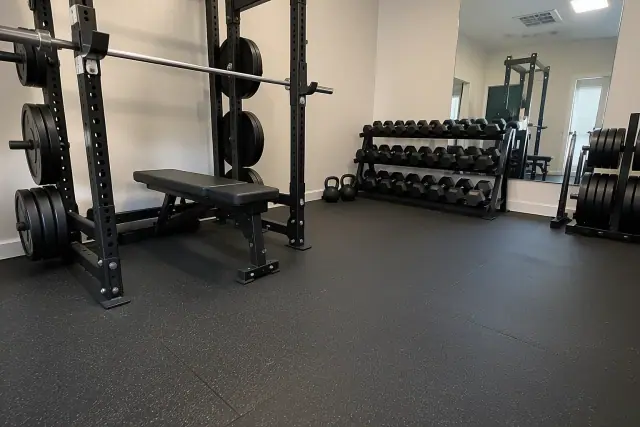
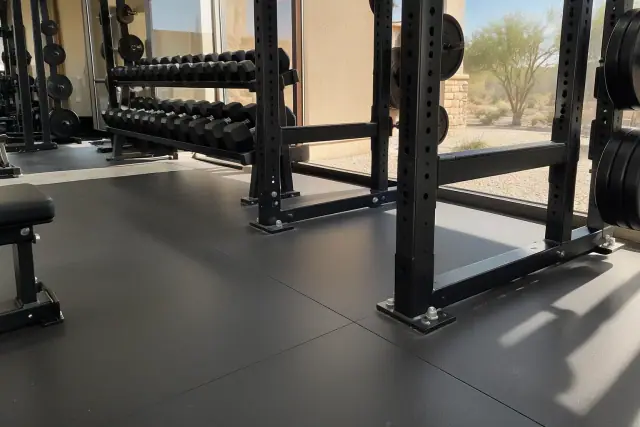
Rubber flooring installed under barbell racks and dumbbell storage in a Gilbert, AZ indoor gym.

We install mats, tiles, and rolls for garage bays, spare rooms, and commercial gyms. Rolled rubber in 3/8-inch to 1/2-inch gauges suits cardio and free-weight zones, while thicker 3/4-inch stock serves Olympic lifting platforms. Equipment weight and training intensity guide the specification. Explore Service →

Explore Service
Garage Rubber Flooring

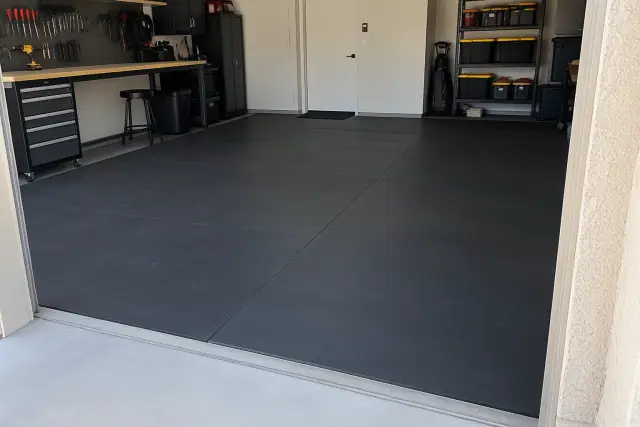
Heavy-duty rubber flooring installed over a concrete garage and workbench area in Gilbert, AZ.

Garage workout floors need material selected for heat and sun exposure as well as dropped equipment. We install heavy duty rubber rolls and interlocking tiles, checking slab condition and how the garage is used before choosing the product. West-facing spaces need particular attention to exposure. Explore Service →

Explore Service
Rolled Rubber Flooring

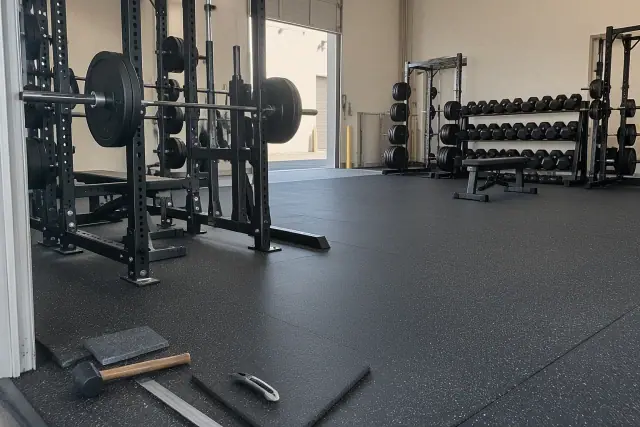
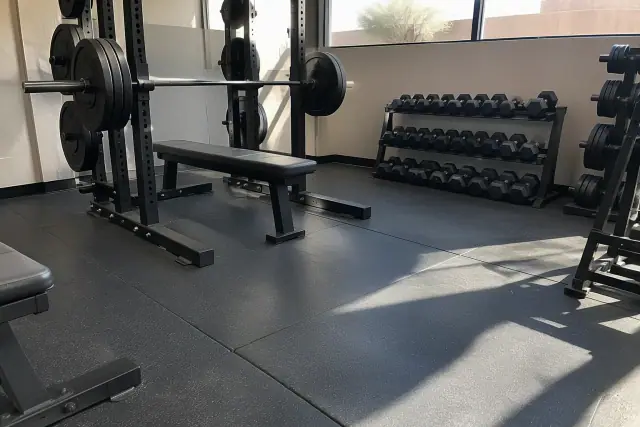
Rolled rubber flooring installed under heavy barbell racks in a Gilbert, AZ commercial fitness facility.

Rolled rubber covers larger training areas and cardio rooms with fewer seams. We plan roll direction and cuts to limit waste, then use a glued or loose-laid installation suited to the space and its mobility needs. Multiple thicknesses and colors let the surface fit the room's use. Explore Service →

Explore Service
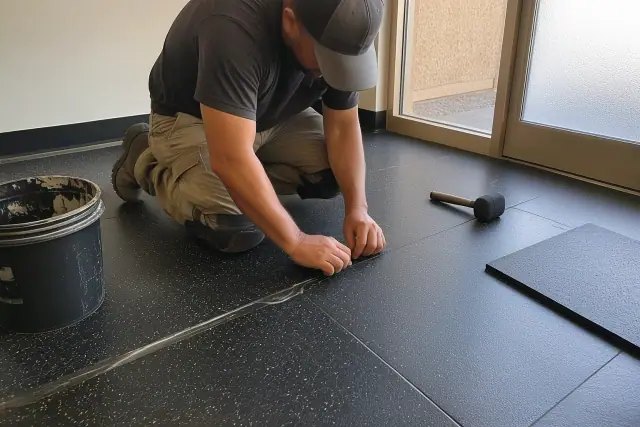
Rubber Floor Tile Installation

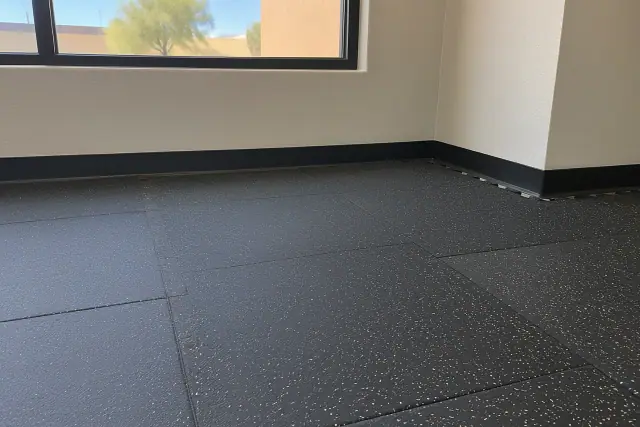
Rubber floor tile installation in progress in Gilbert, AZ, showing seamless interlocking tiles along a baseboard.

Interlocking rubber tiles suit smaller gyms and irregular layouts where removable flooring is useful. Tile pricing ranges from about $2 to $18 per square foot depending on thickness and finish quality. We match the tile specification to your equipment, budget, and preference for replacing individual pieces later.

Commercial Rubber Flooring

Impact-absorbing rubber flooring installed under heavy barbell racks at a gym in Gilbert, AZ.

Fitness centers, dance studios, and Pilates studios need rubber flooring selected for frequent class turnover. We account for equipment placement, daily foot traffic, and doorway transitions in the installation plan. For training facilities running classes seven days a week, commercial-grade material and secure seams are central to the layout.

Playground Rubber Surfacing

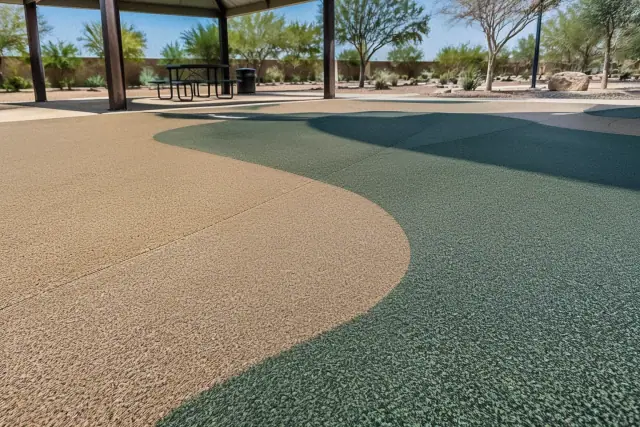
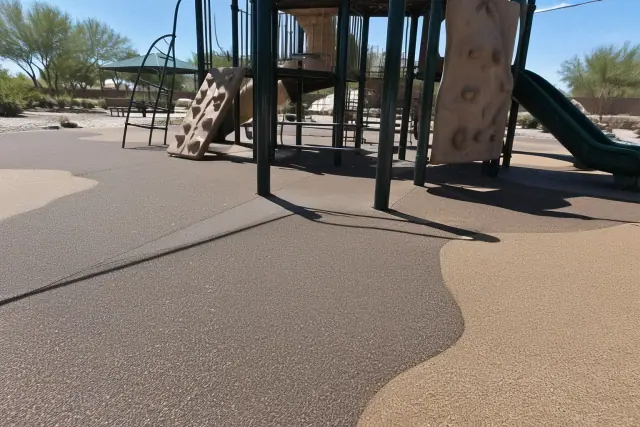
Seamless poured-in-place rubber safety surfacing at a park in Gilbert, AZ.

We install poured-in-place and tile playground surfacing for schools, HOA parks, and daycare facilities. Surface selection accounts for the equipment's certified fall height, impact attenuation under ASTM F1292, and accessibility under ASTM F1951. These standards are referenced in the Consumer Product Safety Commission's Public Playground Safety Handbook.

Poured-in-Place Rubber Flooring

Poured-in-place rubber flooring with textured EPDM granules in Gilbert, AZ.

Poured-in-place rubber combines EPDM granules and binder mixed and troweled on site. It creates a continuous, custom-colored surface for playgrounds, therapy spaces, and commercial installations. With no tile or roll seams, there are fewer joints for dirt and moisture to collect in.

Industrial Rubber Flooring

Thick impact-absorbing rubber flooring installed in a Gilbert, AZ commercial fitness weightlifting zone.

Warehouse and manufacturing floors require product selection based on loading, forklift traffic, and potential chemical exposure. We install heavy gauge rolled rubber and interlocking industrial tile matched to the facility's load requirements. Projects include industrial spaces near Williams Gateway and the Loop 202 corridor.

Anti-Fatigue Rubber Flooring

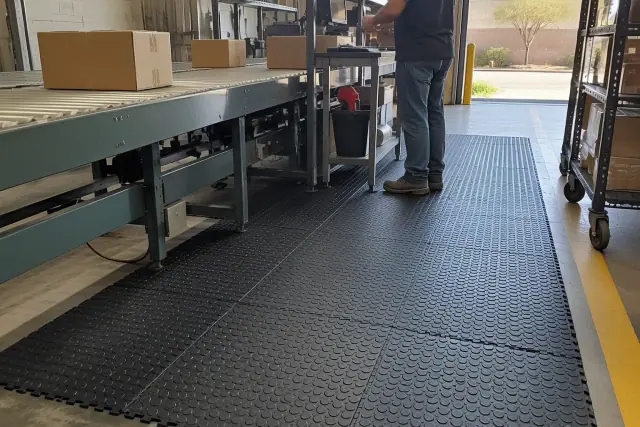
Anti-fatigue rubber flooring installed along a manufacturing workstation in Gilbert, AZ.

Anti-fatigue rubber matting and rolled flooring add cushioning at checkout counters, workstations, and warehouse packing lines. We size the material to the standing area and consider slip resistance and surface stability. The goal is a work surface suited to employees who spend full shifts on their feet.

Rubber Flooring Repair & Replacement

Black rubber tile flooring repair with fresh adhesive seam in Gilbert, AZ.

Localized tears, loose seams, and isolated adhesive failure may be repairable without removing the entire floor. We patch and re-seam rubber, matching material where possible. For widespread wear, replacement includes removing the old surface, scraping or grinding adhesive residue, and reassessing the slab before new flooring goes down.

Material Selection

Choose Rubber Flooring for Your Space

Start with the equipment, room conditions, and how you want to maintain the floor. We help compare formats and thicknesses so each zone gets a surface suited to its actual use.

Match Thickness to Equipment

A treadmill area and an Olympic lifting platform place different demands on the floor. We review squat racks, dumbbell storage, and dropped-weight activity before choosing thickness. Heavier impact zones may need thicker rubber than the rest of the room.

Choose Rolls, Tiles, or Mats

Rolls suit broad, continuous spaces, while interlocking tiles allow individual pieces to be removed or replaced. Mats can serve focused equipment areas. Room shape, installation method, and future layout changes help determine the format.

Check Slab Moisture First

Concrete can hide moisture issues beneath an otherwise sound-looking surface. Slab readings help determine whether moisture mitigation is needed before covering it. Cleaning and correcting uneven areas are part of preparing a stable base.

Account for Heat and Sun

A shaded interior and a west-facing garage need different exposure considerations. We select rubber compounds and adhesives for the conditions the room will see. Acclimation and installation methods matter alongside the material itself.

Compare Material and Installed Costs

Budget home gym tile options start around $2 to $4 per square foot, with premium products costing more. Material price is only part of the project cost. Slab preparation, thickness, format, and installation scope all affect the written estimate.

Plan for Cleaning and Upgrades

Consider how easily the surface can be cleaned or repaired around equipment. Modular tile makes localized replacement practical, while thicker rubber can be added where lifting demands increase. We assess the existing floor and subfloor before recommending an upgrade.

Gilbert Flooring Issues

Common Rubber Flooring Problems

Curling edges, loose seams, and surface wear can point to different causes. We inspect both the damage and the installation beneath it, because repeated failures may trace back to moisture or adhesive conditions.

Request Floor Assessment

Heat and UV Deterioration

Summer slab temperatures can climb past 150 degrees in an uncovered garage, while garage temperatures can exceed 120 degrees. Heat stresses adhesives, and UV exposure can harden or crack unsuitable rubber within a couple of seasons. Product exposure ratings matter when choosing a replacement.

Moisture Beneath the Floor

Monsoon humidity swings and slab moisture can contribute to bubbling or adhesive failure. Covering damp concrete without addressing the readings leaves the cause in place. We test the slab and address moisture conditions before installing new material.

Gaps and Curling Edges

Seam separation and curling edges can develop where adhesion or installation has failed. An isolated section may be suitable for re-seaming or patching. Similar damage across several areas calls for checking the underlying cause before deciding on repairs.

Compression and Impact Wear

Thin mats can show compression damage after a year or two of heavy use. Repeated barbell drops and concentrated equipment loads may call for thicker rubber in specific zones. We inspect wear patterns and match the replacement material to the load.

Tears from Equipment Movement

Dragging equipment can tear a corner or damage a small area of rubber flooring. Where the surrounding floor remains sound, a localized patch or tile replacement may be enough. We check material compatibility and match the existing surface where possible.

Chalk, Grit, and Cleaner Residue

Chalk dust, sweat residue, and tracked-in grit can build up on a gym floor. Sweeping and damp mopping with a pH-neutral cleaner help manage that buildup. Petroleum-based and high-pH cleaners can degrade rubber compounds, so cleaning products need to suit the surface.

Local Installation Experience

Why Choose Mesa Rubber Flooring in Gilbert

Our work starts with the slab, the equipment, and the conditions around the room. We explain material options and preparation needs before installation, then address problems uncovered during the job before covering them.

Familiarity with Gilbert Properties

Older homes near the Heritage District may have settling that calls for slab correction. Newer spaces in Cooley Station or Seville still need moisture and level checks. We also consider how garage orientation changes sun exposure.

Licensed and Insured Installation

We carry the licensing and insurance needed for residential and commercial work in Arizona. Our process accounts for commercial tenant improvements and required permitting through the Town of Gilbert Building Safety Division. Property managers can discuss their project requirements during the assessment.

Repair and Replacement Assessment

We assess whether a damaged floor needs a localized repair, a targeted upgrade, or full replacement. Repeated moisture or adhesive failures need their cause addressed first. We explain those findings so the recommendation follows the condition of the floor.

From Assessment to Walkthrough

Our Rubber Flooring Installation Process

Measurement, slab preparation, material selection, and finishing all shape the result. Skipped preparation can leave a floor needing replacement in three years, so we address moisture and surface problems before laying rubber.

01.

Measure and Assess the Slab

We measure the room and check the concrete for moisture, cracks, and level variation. Equipment locations and access points are reviewed at the same visit. The findings establish the preparation and material scope.

02.

Review Materials and Layout

We bring samples so you can compare thickness, color, and texture in the actual space. Layout planning places seams and cuts around the room and equipment. The estimate reflects the selected material and preparation work.

03.

Prepare the Concrete

Preparation can include cleaning, crack filling, correcting uneven areas, and moisture mitigation. Old adhesive is scraped or ground away when replacing an existing floor. If a high moisture reading or a crack needing epoxy injection appears, we address it before proceeding.

04.

Install the Selected Surface

Rubber rolls are seamed and installed with the chosen adhesive or loose-lay method. Interlocking tiles are fitted to the planned layout, while poured-in-place granules and binder are mixed and troweled on site. Installation follows the selected manufacturer's methods.

05.

Finish Edges and Transitions

We complete trim and transition work at doorways, walls, and equipment bases. Commercial layouts account for accessibility at changes in surface where required. Finishing details are considered as part of the floor, rather than left until the room is in use.

06.

Walk Through and Clean Up

The final walkthrough gives you a chance to review the installation and finished edges. We clean the work area and discuss care suited to the rubber surface. Cure time and the project scope affect when the space can return to use.

Practical Applications

Rubber Flooring for Different Uses

Case Study 1: Home workout spaces: Rolls, mats, and tiles can be fitted around treadmills, squat racks, and dumbbell storage. Matching material thickness to each zone helps manage equipment load without specifying the same surface everywhere.

Case Study 2: Commercial training rooms: Secure seams and material selected for daily class turnover support busy fitness spaces. Sound transfer to neighboring tenants also matters when planning lifting and functional training areas.

Case Study 3: Standing work areas: Anti-fatigue matting can be sized for counters, packing lines, and individual workstations. Surface stability and slip resistance guide selection alongside cushioning.

Plan Your Flooring Project

Request a Rubber Flooring Estimate

Tell us about your Gilbert property, room size, equipment, and the condition of the current floor. We can assess the slab, discuss rolls, tiles, or poured-in-place options, and prepare a written project estimate.

Project Questions

Rubber Flooring FAQs for Gilbert, AZ

These answers cover material selection, cost, installation, repair, and care for local gym and rubber flooring projects. A site assessment helps apply the options to your actual room and slab.

Call Our Experts

Mesa Rubber Flooring supplies and installs rolled rubber, interlocking tiles, and mats for home and commercial gyms. We bring samples to your site so you can compare thickness, color, and texture before choosing. The installation plan accounts for your equipment and the condition of the concrete underneath.

Installed gym rubber flooring in Gilbert typically runs $5 to $10 per square foot, depending on thickness, format, and slab preparation. A 500-square-foot home gym might fall in the $2,500 to $5,000 range depending on specification. Premium interlocking tile and poured-in-place options can cost more. We provide a written estimate after measuring the space and discussing its use.

Rolled rubber or interlocking tile in the 3/8-inch to 3/4-inch range suits many home gym projects. Thicker material is generally reserved for higher-impact areas beneath racks or lifting platforms. We compare your equipment list, room layout, and garage exposure before recommending a product.

Repeated dropped-weight impact generally calls for rolled rubber in 3/4-inch thickness or heavier beneath lifting platforms. Functional training and cardio areas may use thinner material, with the floor seamed and glued for the demands of regular movement. We also consider sound transmission where the facility shares a building with other tenants.

Rubber can work in below-grade gym spaces when slab moisture is managed correctly. We test the concrete and determine whether vapor-mitigating underlayment or an appropriate adhesive system is needed. Most local home gym projects are in garages, spare rooms, or converted bonus spaces, and those slabs need the same preparation.

Quality rubber gym flooring typically lasts 10 to 20 years with reasonable care. Thickness, compound quality, equipment loads, heavy barbell drops, and direct UV exposure all affect service life. Regular cleaning and material matched to the room's use help the floor hold up.

Rolled rubber covers larger continuous areas with fewer seams and tends to be economical across open gym layouts. Interlocking tiles offer modular installation and allow a damaged piece to be replaced individually. Room shape, budget, and future layout changes help determine which format fits.

Rubber absorbs dropped-weight impact and helps reduce shock and sound transfer to the structure below. Material generally in the 1/2-inch to 3/4-inch range, or heavier beneath platforms, helps protect equipment and the concrete slab. Its resilient surface suits the repeated loading and movement of strength training.

Most home gym and garage projects are completed in a single day. Larger commercial gym and poured-in-place projects may take two to four days, depending on square footage and cure time. Slab problems discovered during preparation need to be addressed before the flooring is installed.

Localized seam separation, a torn corner, or an isolated adhesive failure can often be repaired while the rest of the floor remains in place. We patch or re-seam the surface and match material where possible. Repeated damage across several areas may indicate an underlying moisture or adhesive problem that needs a broader solution.

Sweep regularly to remove grit and chalk dust, then damp mop with a pH-neutral cleaner suited to the flooring. Avoid petroleum-based or high-pH cleaners that can degrade rubber compounds. Regular removal of sweat residue also helps keep buildup under control.

A targeted upgrade may be practical when the existing installation and subfloor remain sound. Options include adding thicker material in high-impact lifting zones or converting from mats to interlocking tiles for easier spot replacement. We inspect the current surface before recommending an upgrade or full replacement.

Preparation starts with moisture readings and checks for cracks and uneven areas. Depending on the findings, work may include cleaning, crack filling, surface correction, and moisture mitigation. Replacement projects also require removing old flooring and adhesive residue before the slab is reassessed.

We serve Gilbert's community of over 287,000 residents, including the Heritage District, Agritopia, Val Vista Lakes, Power Ranch, Cooley Station, Seville, and Higley. Our East Valley service area also includes Mesa, Queen Creek, Tempe, and San Tan Valley. Commercial and industrial projects may extend farther into the Phoenix metro area.

Poured-in-place rubber suits projects needing a continuous, custom-colored surface, including playgrounds, therapy spaces, and commercial installations. EPDM granules and binder are mixed and troweled on site, so cure time is part of the schedule. For playground work, material selection must account for the equipment's fall height and accessibility requirements.