Proudly serving Mesa, Gilbert, Chandler, Tempe, Scottsdale, Queen Creek & surrounding areasCall or Text 24/7: 480-319-7553
Aerial drone view of suburban neighborhoods and desert landscaping in Mesa, AZ.

Rubber Flooring Repair & Replacement in Mesa, AZ for Gyms & Facilities

Mesa Rubber Flooring repairs and replaces rubber flooring for homes and businesses in Mesa, AZ. We restore damaged seams, torn surfaces, and compressed areas in gym, home gym, and garage floors. Our work also includes commercial and industrial flooring, playground surfacing, and anti-fatigue flooring. We help you choose between a targeted repair and replacement based on the condition of your floor.

Mesa's summer temperatures routinely exceed 110°F, putting exposed rubber surfaces under sustained stress. Heat and UV exposure can leave seams open, tile edges curled, and rubber less flexible. We assess the damage, inspect the slab, and check whether matching material is available before quoting. That gives you a practical basis for comparing repair with replacement.

We work with EPDM, SBR, virgin rubber, and recycled rubber, matching the material to traffic, sun exposure, and the way you use the space. Request a free estimate for a written scope based on measurements and floor condition.

Mesa Rubber Flooring offers rubber flooring repair and replacement in Mesa and nearby Tempe, Chandler, Gilbert, Queen Creek, and Apache Junction.

★ ★ ★ ★ ★4.9/5 Customer Rating · 19 Years of Flooring Experience · 1,000+ Flooring Projects Completed · Licensed, Bonded & Insured · Residential & Commercial Flooring

Rubber Floor Repair Options & Benefits

Should You Repair or Replace Your Rubber Floor?

Isolated tears, separated seams, and equipment indentations often call for targeted repair. We check the surrounding rubber and backing to see whether a patch or renewed seam adhesion can hold without replacing the whole floor.

The assessment covers three factors: how much surface is damaged, whether the subfloor has moisture or cracks, and whether the original product is still manufactured. Available material affects both the color match and the repair approach.

When damage covers more than roughly 25 to 30 percent of the floor, replacement usually costs less over time than repeated small repairs. We measure the affected areas and compare repair and replacement costs so you can decide with both scopes in view.

What a Well-Matched Repair or Replacement Can Improve

The right approach addresses the reason a rubber floor failed as well as the visible damage. Material density, adhesive preparation, and edge details each affect how the repaired surface performs.

  • Repair isolated damage while retaining usable flooring
  • Re-adhere separated seams after checking the cause
  • Replace compacted zones with matched-density rubber
  • Address cracks and unevenness in the concrete base
  • Choose UV-stabilized compounds for exposed areas
  • Match floor texture to traffic and slip-resistance needs
  • Use modular tiles where single-piece replacement matters
  • Check transitions and beveled edges for trip concerns
Flooring Work by Application

Rubber Flooring Repair & Replacement Services

From a torn home gym floor to worn commercial surfacing, the repair scope depends on the loads, moisture, and wear the material faces. We work across the applications below and recommend a format suited to each space.

Targeted Repairs & Full Floor Replacement

Rubber flooring repair and replacement at a commercial gym in Mesa, AZ.

Small tears may need rubber-compatible filler, cold-weld seam repair, or vulcanized patching when the backing is intact. For widespread damage, replacement includes old-floor removal, adhesive cleanup, slab preparation, and new material.

Request Estimate

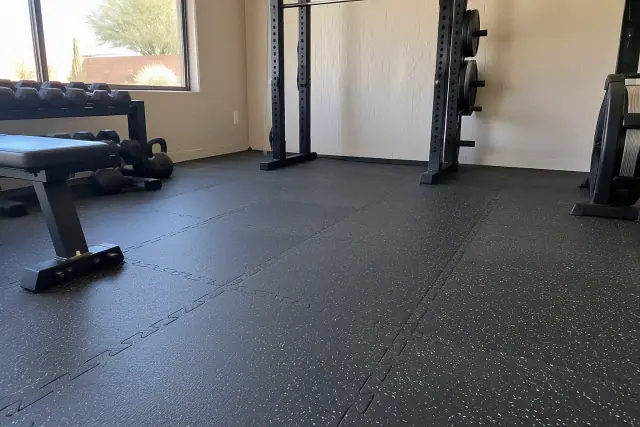
Gym & Home Gym Rubber Flooring

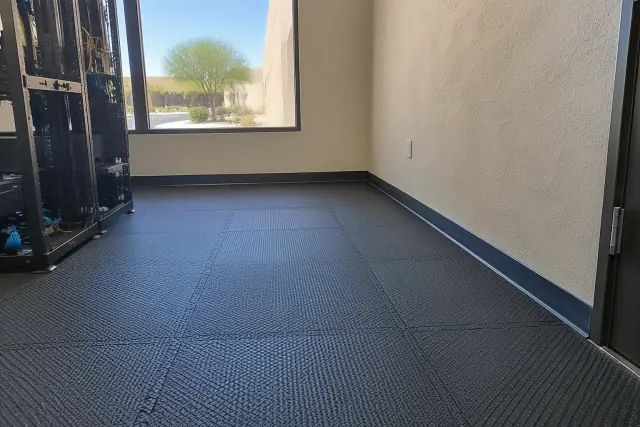
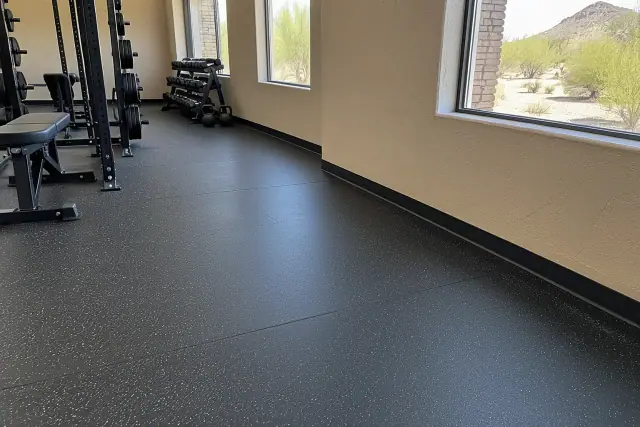
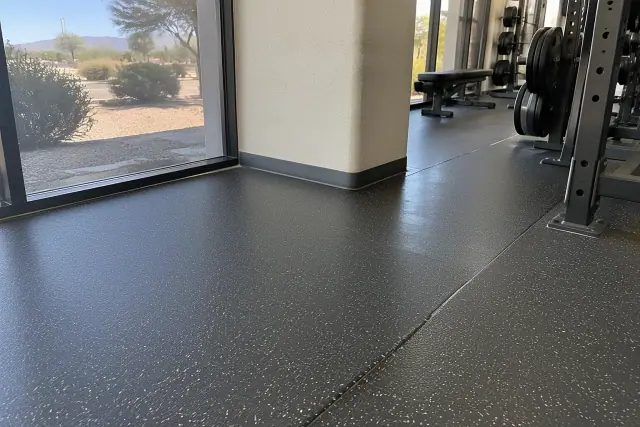
Completed rubber flooring installation in Mesa, AZ, showing dense interlocking seams and heavy texture.

Squat racks, weight platforms, and free-weight areas can leave deeply compacted spots. We cut out affected zones and install matched-density rubber, then check the surrounding floor for wear and cushioning loss.

Request Estimate

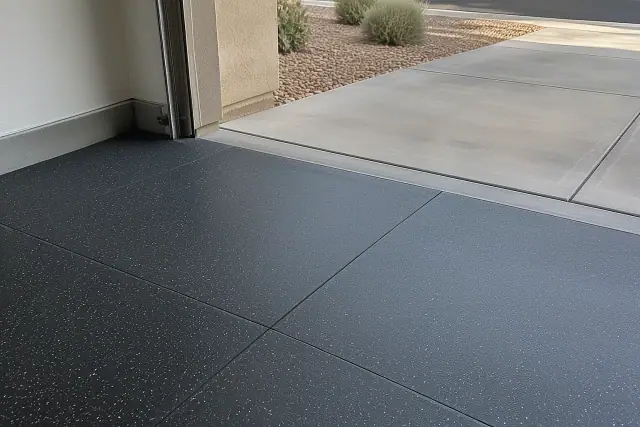
Garage Rubber Flooring

Garage rubber flooring installed in a residential vehicle bay in Mesa, AZ.

Garage floors face vehicle weight, summer hot-tire contact, and dropped tools. We install rubber coating and interlocking tile options selected for point loads and resistance to motor oil, coolant, and battery acid.

Request Estimate

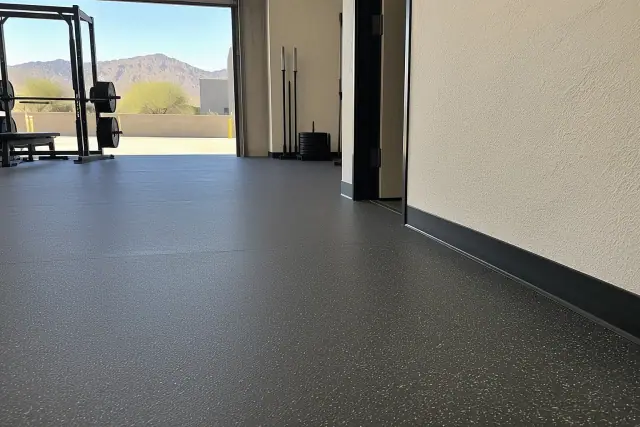
Commercial & Industrial Rubber Flooring

Commercial rubber flooring in a Mesa, AZ gym with clean edge-to-edge seaming and a matte finish.

Warehouses, auto shops, and manufacturing floors need materials chosen for traffic, chemical exposure, and continuous use. We consider forklift loads, surface texture, and cleaning needs when planning repairs or replacement.

Request Estimate

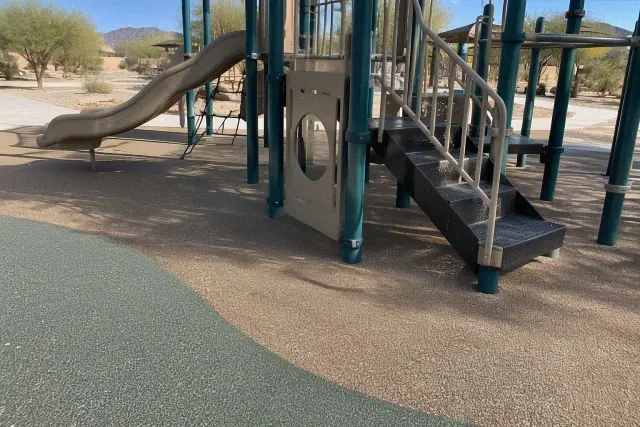
Playground Rubber Surfacing

Playground rubber flooring repair and replacement at a recreation park in Mesa, AZ.

Playground surfacing needs cushioning matched to the critical fall height of the tallest equipment. We plan poured-in-place thickness around impact attenuation and accessible routes, with patching and recoating for worn areas.

Request Estimate

Anti-Fatigue Rubber Flooring

Anti-fatigue rubber flooring with interlocking seams and textured grip surface inside a Mesa, AZ facility.

Standing workstations in manufacturing and food service need cushioning suited to full shifts on concrete. We fit anti-fatigue mats with attention to thickness and beveled edges, and inspect worn mats for comfort and trip concerns.

Request Estimate
Choose the Surface for Your Space

Replacement Formats & Rubber Materials

Rolled rubber, interlocking tiles, and poured-in-place surfaces offer different seam layouts and repair options. Compound, density, and virgin or recycled content also matter when matching an existing floor or choosing new material.

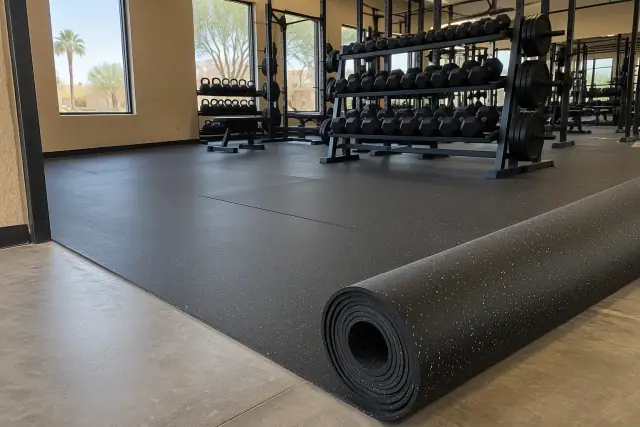
Rolled rubber flooring with trimmed seams and weight racks at a commercial gym in Mesa, AZ.

Rolled Rubber Flooring

Rolled goods suit large open areas where fewer seams are useful. A damaged roll can often be repaired at a seam or replaced in sections after the backing and adhesive are checked.

  • Wide-format coverage with fewer seams
  • Suited to large gyms and warehouses
  • Recycled rubber available as a lower-cost base option
  • Seam re-welding or re-adhesion where suitable
  • Section replacement for localized damage
Request Estimate
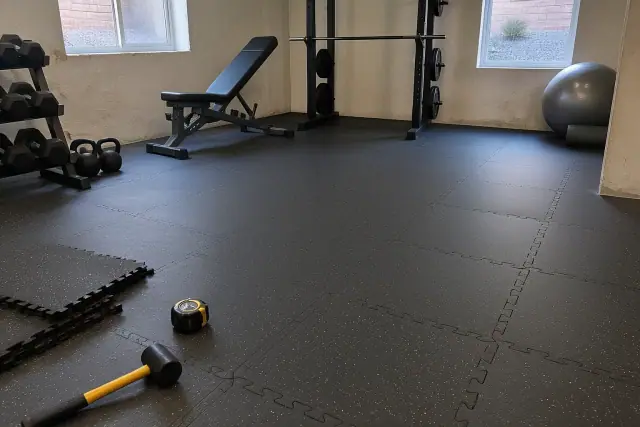
Interlocking rubber tiles installed on a residential basement exercise room floor in Mesa, AZ.

Interlocking Rubber Tiles

Interlocking tiles divide the floor into replaceable pieces. They suit garages, home gyms, and retail spaces where damage may be concentrated in one location.

  • Modular grid layout
  • Individual damaged tiles can be replaced
  • Check thickness and density when matching
  • Review product availability for color matching
  • Inspect tile edges and expansion gaps
Request Estimate
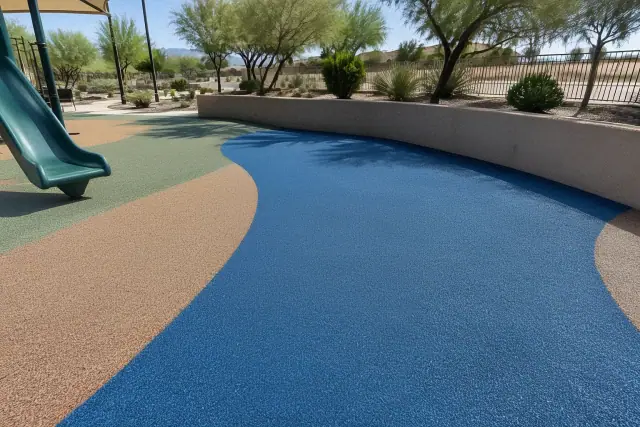
Poured-in-place rubber safety surfacing repaired at a public park in Mesa, AZ.

Poured-in-Place Rubber Flooring

Poured-in-place rubber is mixed and troweled on site to create a seamless surface. Curing takes 24 to 48 hours depending on temperature and humidity, so return-to-use planning is part of the job.

  • Monolithic finish without tile seams
  • Used on playgrounds and commercial entries
  • Surface planning for accessible paths
  • Damaged areas can be patched and recoated
  • Outdoor upkeep includes infill and recoating
Request Estimate
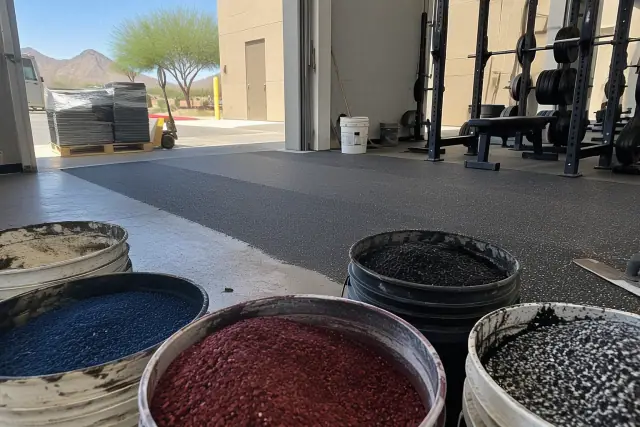
Contractor photo of EPDM and SBR rubber flooring repair materials in a Mesa, AZ commercial fitness zone.

EPDM & SBR Compound Selection

We work with EPDM and SBR compounds and select material grade for the application. An exposed playground surface and an indoor standing mat place different demands on the rubber.

  • Review existing compound before patching
  • Match material grade to the intended use
  • Consider density beneath equipment
  • Choose UV-stabilized compounds for sun exposure
  • Account for impact and slip-resistance needs
Request Estimate
Rubber flooring repair and replacement at a fitness facility in Mesa, AZ.

Virgin, Natural & Recycled Rubber

Recycled rolls and tiles generally offer the lowest base cost, while virgin and natural rubber options cost more upfront. Interior gyms may favor the latter for color retention and a cleaner odor profile.

  • Recycled rubber can use reclaimed tire material
  • Virgin rubber offers better color retention
  • Natural rubber uses rubber tree latex
  • Compare odor with ventilation needs in mind
  • Select thickness and density for expected traffic
Request Estimate
Assess the Floor Before Choosing

Choosing a Repair or Replacement Approach

The best fit depends on damage extent, slab condition, and the material you can match. We use those findings to explain the available scope, preparation work, and format choices before installation begins.

Diagnosis Before the Quote

We inspect the floor before pricing the work, including damaged areas, slab moisture, and adhesive failure. Measurements and a written scope make it easier to compare a localized repair with complete replacement.

Material Matching for the Space

Matching rubber involves density and intended use as well as color. We check whether the existing product is still available and consider traffic, sun exposure, and equipment loads when choosing a replacement.

Finished-Floor Walkthrough

We walk the completed floor with you and check seam adhesion, edge transitions, and surface flatness. Those details help confirm that the repaired or replaced area fits the surrounding space.

Find the Cause of the Damage

Common Rubber Flooring Problems We Repair

Floor damage can start at the surface or come from the slab and adhesive underneath. We check both, whether the issue is a curled garage tile in Dobson Ranch, a worn home gym in Eastmark, or damaged commercial flooring near the Fiesta District.

Get a Free Estimate

Surface Tears & Punctures

Dropped weights, moving equipment, and pet claws can tear rolled rubber or tiles. The repair method depends on tear size and whether the damage has reached the backing layer.

Separated Seams & Curled Edges

Daily temperature swings repeatedly expand and contract rubber. Poorly installed seams can open over one or two summers, so adhesive selection and correct expansion gaps matter when repairing the edges.

Compression Under Heavy Equipment

Equipment left in one spot for months can permanently indent lower-density rubber. Compacted sections may need replacement with matched-density material; occasional load rotation helps limit repeated wear in the same area.

Sun Fading & Surface Stiffness

Mesa sees over 300 sunny days a year, and rubber near west-facing garage doors or on uncovered patios faces stronger UV exposure. UV-stabilized compounds help slow the fading and stiffening that affect exposed surfaces.

Moisture, Slab Cracks & Adhesive Failure

Moisture intrusion, uneven concrete, and failed adhesive can undermine a new surface. Mesa's caliche soil and slab-on-grade construction make slab assessment important before patching, grinding, or installing replacement rubber.

Grease Stains & Lost Cushioning

Equipment lubricants penetrate porous recycled rubber, while compaction and dry conditions can reduce flexibility. We use rubber-formulated pH-neutral degreasers and assess whether conditioning or section replacement is appropriate.

From Inspection to Final Walkthrough

Our Rubber Floor Repair & Replacement Process

Each project begins with measurements and a written scope. We review the floor condition, prepare the base, and plan installation and curing around the material selected.

01.

Inspect the Floor & Slab

We document tears, open seams, indentations, and worn areas, then check slab moisture and flatness. Existing adhesive residue and concrete cracks are part of the assessment.

02.

Compare Repair & Replacement

We measure the damaged area and check whether matching material is available. The estimate explains whether targeted repairs are practical or whether a full replacement better addresses the condition of the floor.

03.

Select the Format & Material

Choose rolled goods, modular tiles, or poured-in-place rubber based on traffic, budget, and maintenance preferences. We also review density, sun exposure, and any impact or chemical-resistance requirements.

04.

Remove Flooring & Prepare the Base

Removal typically runs $2 to $5 per square foot, including hauling and disposal of the old material. We grind away adhesive residue where needed, patch and level the concrete, and moisture-test before the new floor goes down.

05.

Install & Allow for Curing

Most home gym and garage projects finish in one to two days. Larger commercial work and poured-in-place installations take longer, with curing conditions affecting when the surface is ready for use.

06.

Check the Finish & Plan Maintenance

We inspect seam adhesion, transitions, and surface flatness during the final walkthrough. Sweeping, neutral-pH mopping, and periodic resealing are part of industrial floor maintenance; that upkeep can separate a 15 to 20 year service life from failure in five years.

Plan Your Next Step

Request a Rubber Flooring Repair Estimate

Describe the damage, the space, and how the floor is used so we can plan an assessment. Mesa Rubber Flooring offers free estimates for residential and commercial projects and same-day service calls for urgent repair issues.

Repair, Cost & Care Questions

Rubber Flooring Repair & Replacement FAQs

Find answers about repair methods, replacement costs, material choices, and caring for rubber floors in Mesa. A floor assessment helps apply these considerations to your space.

Call About Your Floor

Quality rubber flooring can last 20 years or more with proper maintenance. Material grade, traffic, and sun exposure affect its useful life, with heavily used gyms and garages facing more wear. That potential lifespan is useful to weigh against flooring alternatives that need replacement every 5 to 8 years.

Small tears and punctures can be cleaned, filled with rubber-compatible adhesive filler, and color-matched. Open seams may need re-adhesion or cold-weld seam repair, while deeper compression damage can require cutting out and replacing the affected section. We check the backing and surrounding material before selecting the method.

New rubber flooring can have a noticeable odor, particularly with recycled content, which fades over several weeks with ventilation. Prolonged direct sun can fade or stiffen the surface, and dark rubber absorbs heat in exposed spaces. Poor adhesive selection or incorrect expansion gaps can also lead to seam separation.

An average residential or light commercial replacement project generally runs $5,857 to $11,714, including removal, subfloor preparation, and new material. Smaller home gym and garage projects can fall well below that range. Format, material grade, and the condition of the base all affect the scope and total cost.

Repair work typically runs $4 to $8 per square foot, depending on material matching and access. Underlayment installation, when needed, adds $1 to $3 per square foot. New material pricing varies by format, thickness, and density, with recycled rolls generally costing less than virgin rubber or poured-in-place options.

Rubber provides cushioning and handles impact in gyms, garages, and standing workstations. It also resists moisture and offers surface textures suited to different traffic conditions. Selecting the material for the loads and environment matters as much as choosing rubber itself.

Recycled rubber flooring commonly uses reclaimed tire material, diverting it from landfills. Natural rubber made from rubber tree latex offers a different material source. Compare those choices alongside the wear, maintenance, and indoor odor considerations for the space.

Replacement becomes more practical when damage is widespread, the base has problems, or a suitable matching product is unavailable. Isolated tears and seams are better candidates for localized work when the surrounding floor is sound. We compare both scopes after inspecting the damaged area and subfloor.

Interlocking tile systems allow individual damaged pieces to be swapped without replacing the entire floor. A suitable match still depends on the original product's availability, color, thickness, and density. We also check why the tile failed before fitting its replacement.

Surface thickness is based on the critical fall height of the tallest equipment, with ASTM F1292 impact attenuation standards and ADA accessibility requirements informing the plan. Outdoor poured-in-place rubber needs periodic infill and recoating to maintain cushioning and UV resistance. The condition of the surface and the accessible routes both need attention.

Routine sweeping and neutral-pH mopping help maintain the surface, while rubber-formulated pH-neutral degreasers address equipment grease. Standard solvents can strip the finish and speed cracking. Indoor anti-fatigue mats benefit from annual inspection, and heavily loaded areas should be checked for permanent indentations.

We review forklift traffic, chemical exposure, point loads, and the way employees use the floor. Surface texture selection considers slip-resistance benchmarks referenced by OSHA and testing protocols from the National Floor Safety Institute. A warehouse, auto shop, and standing workstation may each need a different material or finish.

Mesa Rubber Flooring serves Mesa and the surrounding East Valley, including Tempe, Chandler, Gilbert, Queen Creek, and Apache Junction. Work includes homes and commercial facilities, with Mesa areas such as Dobson Ranch, Eastmark, and the Fiesta District covered in the service area.