Proudly serving Mesa, Gilbert, Chandler, Tempe, Scottsdale, Queen Creek & surrounding areasCall or Text 24/7: 480-319-7553
Aerial drone view of suburban neighborhoods and desert landscaping in Mesa, AZ.

Gym & Home Gym Rubber Flooring in Paradise Valley, AZ for Residential & Commercial Gyms

Mesa Rubber Flooring installs gym and home gym rubber flooring for homes and fitness facilities throughout Paradise Valley, AZ. We fit garage gyms with rubber flooring chosen for equipment loads and the room itself. Our options include rolled rubber, interlocking tiles, and poured-in-place surfaces for residential and commercial spaces. We handle material sourcing, subfloor preparation, and installation from start to finish.

Desert heat, dusty floors, and seasonal moisture can make a rubber floor shift or wear before it should. A converted casita also needs careful attention to odor, impact, and the finish at each doorway. We inspect the existing surface and discuss your training style before recommending rubber thickness and an attachment method. Contact us to plan a floor that suits the space and the way you use it.

We work near Camelback Mountain, Mummy Mountain, and the resort corridor along Lincoln Drive. After assessing your space, we provide a written estimate that accounts for material choice and subfloor condition.

★ ★ ★ ★ ★4.9/5 Customer Rating - 19 Years of Flooring Experience - 1,000+ Flooring Projects Completed - Licensed, Bonded & Insured - Residential & Commercial Flooring
Rubber Flooring Services

Rubber Flooring Options for Every Space

Paradise Valley's roughly 12,658 residents share a town of estate homes, private fitness spaces, and resort properties with different flooring demands. We scope each installation around its use, from a home weight room to a commercial training floor, workshop, or playground. For another nearby service area, see San Tan Valley, AZ .

Gym & Home Gym Rubber Flooring
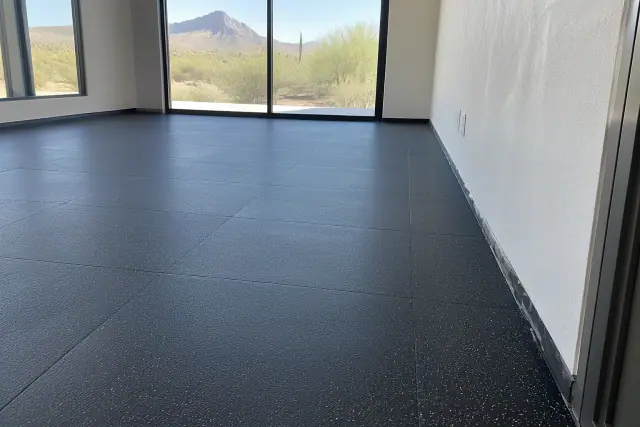
Interlocked black rubber gym flooring installed along a stucco wall in Paradise Valley, AZ.

We install 3/8-inch to 3/4-inch rubber rolls or tiles for home gyms over suitable concrete, tile, or existing flooring. Room measurements, equipment weight, and impact zones guide the material choice for a converted bedroom, casita, or dedicated fitness room.

Explore Service
Garage Rubber Flooring

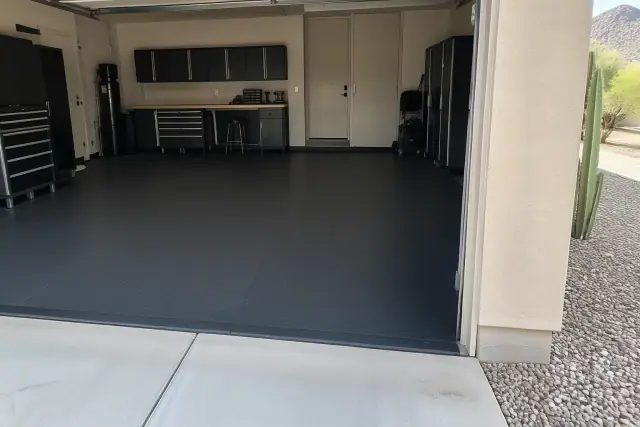
Heavy-duty rubber flooring installed in a garage with a stucco wall in Paradise Valley, AZ.

Turning a two- or three-car garage into a gym calls for rubber suited to heat as well as training. Arizona garages can exceed 120°F in direct summer sun, so we recommend compounds selected to resist thermal expansion and limit off-gassing under heat.

Explore Service

Rolled Rubber Flooring

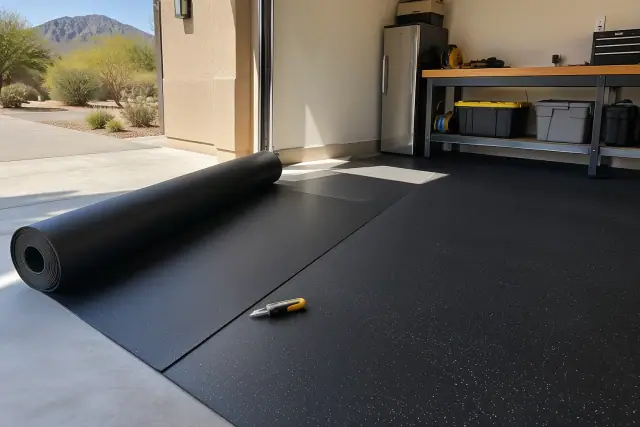
Rolled rubber flooring installed on a concrete garage floor in Paradise Valley, AZ.

Rolled rubber covers larger continuous rooms with fewer seams than tile. We offer multiple thicknesses and colors, using full-spread adhesive or perimeter taping according to the rubber, subfloor, and room size.

Explore Service

Rubber Floor Tile Installation

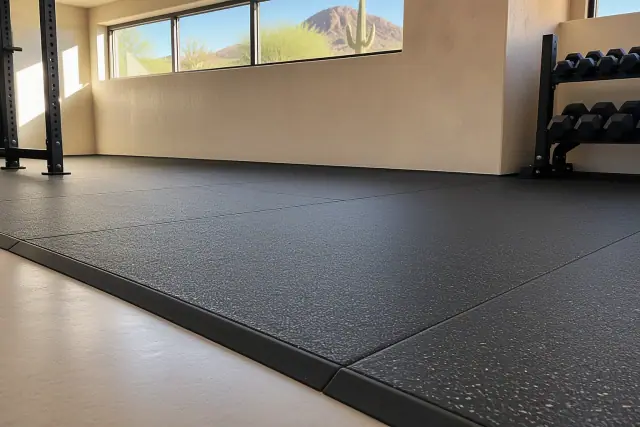
Rubber floor tile installation for a weightlifting zone in Paradise Valley, AZ.

Interlocking rubber tiles fit smaller rooms and irregular layouts, including spaces where you may want to relocate the floor later. We fit puzzle-style and beveled-edge tiles with tight, low-profile joins that keep equipment wheels from catching.

Commercial Rubber Flooring

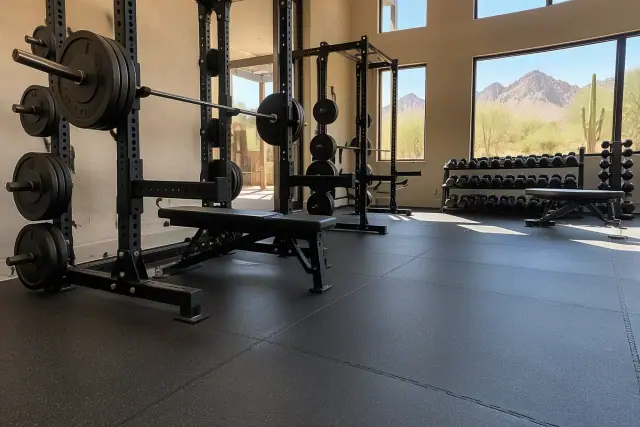
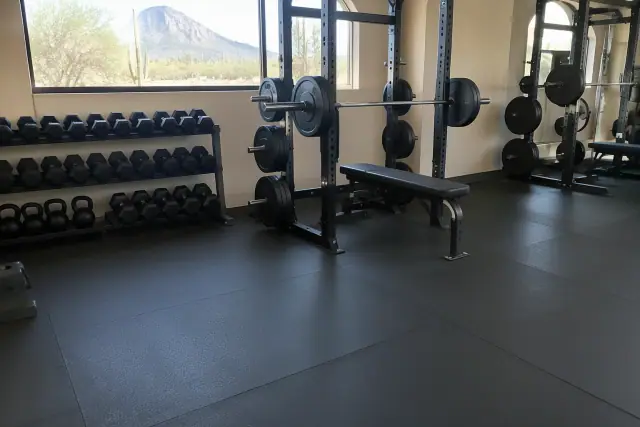
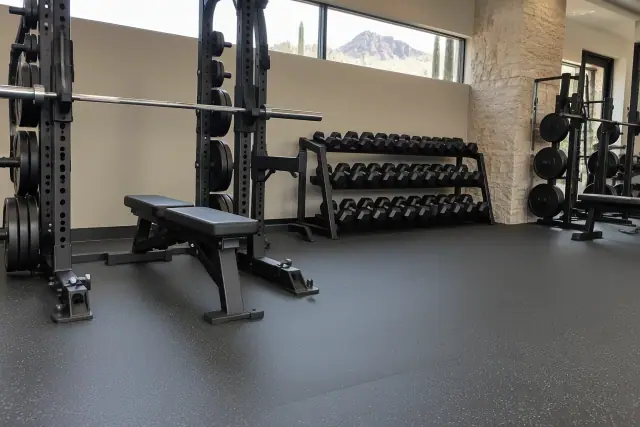
Black rubber flooring installed under heavy barbell racks in Paradise Valley, AZ.

Studios, medical fitness centers, and resort gyms need high-density rubber for steady foot traffic and heavy equipment, typically 1/2-inch to 1-inch thick. We match performance needs to ASTM F2772 where impact attenuation matters and coordinate installation around operating hours.

Playground Rubber Surfacing

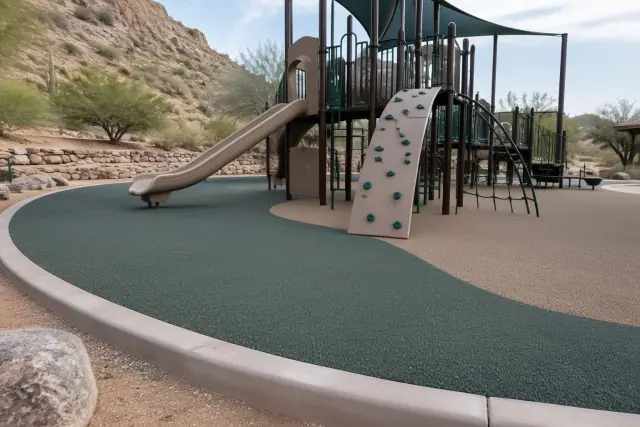
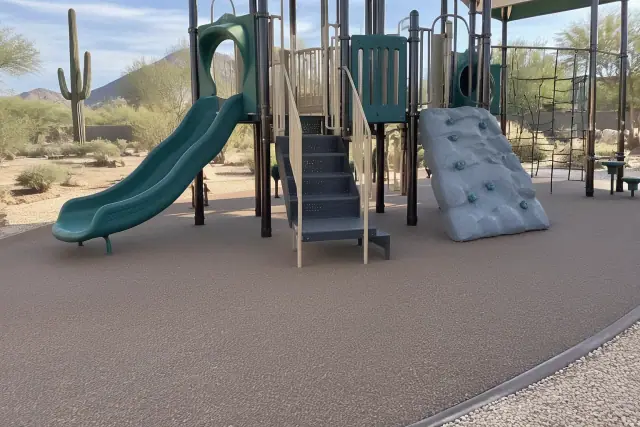
Poured rubber safety surfacing at a Paradise Valley, AZ playground with a steel climbing set and desert backdrop.

We install poured-in-place and rubber tile surfaces for private estates, HOA common areas, and school playgrounds. Material selection accounts for equipment height, ASTM F1292 critical fall-height testing, and applicable ADA requirements for surface firmness and stability.

Poured-in-Place Rubber Flooring

Poured-in-place rubber safety flooring at a community park playground in Paradise Valley, AZ.

EPDM granules and polyurethane binder form a trowel-applied rubber surface that cures on site without tile or roll seams. We install this continuous finish for fitness spaces and accessible playground surfacing, with curing included in the project schedule.

Industrial Rubber Flooring

Industrial rubber flooring installed under heavy barbell racks and dumbbells in Paradise Valley, AZ.

Workstations and light-industrial spaces need flooring selected for the work area and time spent standing. We install rubber mats and rolled systems with attention to the existing floor, equipment layout, and OSHA workplace safety considerations.

Anti-Fatigue Rubber Flooring

Anti-fatigue rubber flooring installed under barbell racks in Paradise Valley, AZ.

Rubber mats and rolled surfaces help reduce strain during long periods of standing. We fit anti-fatigue flooring in home kitchens, garage workshops, reception areas, and workstations, matching the format to the space.

Rubber Flooring Repair & Replacement

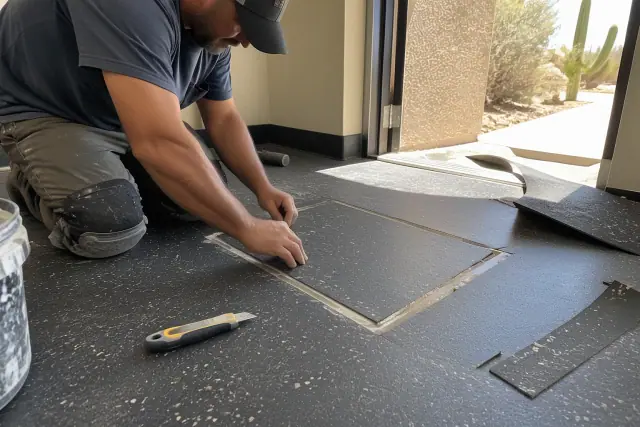
Technician cutting and replacing a torn section of commercial sheet rubber flooring in Paradise Valley, AZ.

We repair lifting seams, replace damaged tiles, and re-adhere sections loosened by garage heat cycling. For gouged or compressed lifting areas, we assess whether a matched patch can restore the floor or full replacement makes better financial sense.

Material Selection

Choose Rubber Flooring for Your Routine

A yoga room, barbell platform, and busy resort gym place different demands on rubber. Compare the training load, room layout, temperature, and existing surface before settling on a material or installation method.

Match Thickness to Training

Dropped barbells need more impact absorption than cardio equipment or stretching areas. We identify lifting zones and equipment loads first, then recommend rubber thickness for each part of the room.

Fit the Material to the Layout

Rolls suit open training areas where fewer seams are useful, while interlocking tiles work well around irregular room shapes. In a single-car garage gym, the layout and any future plans to move the floor help determine the format.

Account for Heat and Sunlight

Unconditioned garages and rooms with south- or west-facing windows need different material choices from shaded, climate-controlled gyms. Heat-stable and UV-stabilized compounds address the expansion and fading concerns described during the site assessment.

Compare Virgin and Recycled Rubber

Virgin rubber generally has less odor and a cleaner finish, making it worth considering for indoor fitness rooms. Recycled fluff rubber composite offers a budget-conscious option; we discuss the tradeoffs alongside room ventilation and training needs.

Check the Existing Subfloor

Clean, level concrete provides a useful base, but moisture testing comes before adhesive selection. Existing tile or vinyl needs an overlay-versus-removal assessment so cracks, high spots, or weak areas do not undermine the new floor.

Define the Budget and Scope

Square footage, rubber grade, and subfloor work all affect the written estimate. Poured-in-place surfaces and custom logo work add cost compared with standard rolled rubber, so discuss those choices before materials are ordered.

Paradise Valley Floor Concerns

Rubber Floor Problems in Desert Conditions

Heat cycling, monsoon moisture, and abrasive dust affect both the rubber surface and the bond beneath it. Identifying the cause of movement or damage helps determine whether preparation, a material change, or a targeted repair is needed.

Request a Floor Assessment

Heat Movement and Curling Edges

Direct-sun concrete in unconditioned garages and patios can climb past 130°F. Rubber expands and contracts through heat cycles, so we leave room for movement at walls and thresholds and inspect curled edges before they become trip points.

Moisture Beneath the Floor

Monsoon season, typically July through September, can bring humidity spikes and water intrusion near garage doors. Slab moisture checks and careful seam work help address moisture beneath ground-level rubber, where trapped water can contribute to mold.

Barbell Impact and Vibration

Repeated weight drops can compress rubber and transfer shock into tile, vinyl, or the structure below. We plan impact zones and lifting platforms to help protect the base and reduce vibration around attached casitas or shared walls.

Dust Abrasion and Cleaner Damage

Desert grit works into rubber texture and wears it down under foot traffic. Sweeping or vacuuming several times a week and using a pH-neutral cleaner helps maintain the surface without the drying effects of ammonia-based products.

Loose Seams and Damaged Sections

Poor preparation, unsuitable adhesive, and heavy equipment can leave seams lifting or localized gouges. We check the surrounding rubber and underlying surface before replacing a tile, matching a patch, or re-adhering a separated section.

Sun Fading and Rubber Odor

Lower-grade rubber can fade near uncovered windows or release more odor under sustained heat. We discuss UV-stabilized material for sunlit rooms and ventilation needs for indoor gyms before selecting the rubber compound.

Why Choose Mesa Rubber Flooring

Installation Details That Make a Difference

Mesa Rubber Flooring handles the material supply and installation together, keeping subfloor preparation and rubber selection in the same project scope. We carry general liability coverage and follow Arizona Registrar of Contractors guidance on flooring work.

Plan Around Local Construction

Post-tension slabs affect how transition strips and perimeter attachments are planned. We also account for HOA architectural guidelines on visible garage or outdoor-adjacent flooring changes before selecting colors and ordering material.

Use the Right Preparation Tools

Moisture meters help identify slab conditions before the floor goes down, and seam rollers help finish the joins. We bring commercial-grade tools and check the material specifications against the actual room and training style.

Give Clear Repair Advice

An isolated worn area does not always call for replacing the whole room. We assess matching material and the surrounding floor, then explain when a targeted repair is practical and when replacement offers better value.

Installation Process

From Room Measurements to Finished Flooring

The project moves from site assessment and preparation through material selection, installation, and a final walkthrough. We adjust the work to the room size and rubber format, including time for removal or curing where needed.

01.

Assess and Measure the Space

We measure square footage, check the slope, and locate moisture sources around garage doors, exterior walls, and slab-on-grade construction. Equipment positions and lifting areas help establish the project requirements.

02.

Prepare the Subfloor

Concrete is cleaned, patched, and moisture-tested, with high spots addressed before installation. We evaluate existing tile or vinyl for removal or overlay and use the base condition to guide the adhesive approach.

03.

Confirm the Rubber and Finish

We review thickness, color, and virgin versus fluff rubber options against your training style and budget. Room conditions and odor preferences help narrow the material selection before it is fitted.

04.

Cut, Dry-Fit, and Adhere

Rolls or tiles are cut to the room, dry-fit, and secured with the method appropriate to the material and floor area. We check the seams for a tight, flush fit as installation progresses.

05.

Trim Edges and Doorways

Perimeter edges are trimmed and transition strips fitted at doorways. We check these junctions alongside the expansion space planned for thermal movement.

06.

Clean and Walk Through the Floor

We remove adhesive residue and clean the finished surface before walking the space with you for final approval. Disposal of old flooring and packaging is handled as part of the installation.

Practical Flooring Outcomes

Flooring Goals for Homes and Facilities

Case Study 1: Home weight rooms: Rubber selected for equipment loads helps protect the underlying floor from everyday training impact. Tight seams and trimmed doorway transitions give a dedicated gym or converted casita a finished appearance.

Case Study 2: Garage training spaces: Heat-stable material, suitable adhesive, and perimeter expansion space address seasonal movement. Thicker rubber and a lifting platform can support the demands of CrossFit-style training.

Case Study 3: Commercial fitness rooms: Higher-density rubber accommodates repeated foot traffic and heavy equipment. Planning installation around business hours and checking doorway transitions helps an occupied facility manage the work.

Plan Your Flooring Project

Request a Rubber Flooring Estimate

Tell us how you use the room, what equipment it holds, and whether the existing floor needs repair or replacement. We will assess the space and provide a written estimate based on its condition, material selection, and project scope.

Gym Flooring Questions

Rubber Flooring FAQs for Paradise Valley, AZ

Find answers about buying rubber, choosing thickness, preparing concrete, and caring for a gym floor in desert conditions. The details below can help you prepare for a site assessment and written estimate.

Call Our Experts

Mesa Rubber Flooring supplies and installs rolled rubber, interlocking tiles, and poured-in-place surfaces. We match the material to your subfloor and training needs before it arrives, including virgin and recycled fluff rubber options. Installation also includes disposal of old flooring and packaging.

Residential rubber gym flooring generally costs $2 to $8 per square foot for material plus labor, while commercial-grade flooring runs $4 to $12 per square foot depending on thickness and finish. A typical home gym room might total $600 to $2,500, depending on size and material grade. Poured-in-place finishes, custom logo work, and subfloor condition affect the final estimate. We provide a written estimate after assessing the space.

For bodyweight exercise, free weights, and moderate lifting, 8mm rolled rubber is a practical balance of floor protection and cost. Virgin rubber generally has less odor than recycled fluff rubber and suits odor-sensitive indoor spaces, while fluff rubber can suit a tighter budget. We compare your training style and ventilation needs before recommending the material.

Heavier free-weight training and dropped Olympic lifts call for rubber in the 3/4-inch to 1-inch range to absorb impact. Thinner 1/4-inch to 3/8-inch mats suit stretching areas or equipment pads but are not intended for barbell drops. We size each training zone to the equipment and expected impact.

We discuss project costs and payment structure during the estimate so you can review what is included. Larger commercial installations are typically billed in phases tied to project milestones. Contact us to discuss the arrangements for your project size and schedule.

A standard home gym or garage installation usually takes one to two days, depending on room size and whether old flooring needs removal. Larger commercial installations or projects with poured-in-place curing can take three to ten days, depending on scope. Working around business hours can add time, and we provide a timeline after the assessment and material selection.

Yes, rubber can go over concrete that is clean, level, and tested for excess moisture. We patch cracks and address high spots before installation; significant moisture readings may require a vapor barrier beneath the rubber. Existing tile or vinyl can sometimes remain, depending on its condition and suitability for an overlay.

Sweep or vacuum regularly, damp mop with a pH-neutral cleaner, and check seams and perimeter edges for lifting. Avoid ammonia-based and petroleum-based cleaners, which can damage rubber. With routine care and prompt attention to seam issues, properly installed rubber flooring commonly lasts 20 years or more.

We select heat-stable rubber compounds and leave expansion space at walls and thresholds to account for temperature changes. Moisture sources near garage doors and ground-level slabs are checked before the attachment method is chosen. Material choice and ventilation also help address odor in an unconditioned training space.

We plan horizontal lifting platforms bordered by rolled rubber runs for areas handling dropped barbells. Double-sided tape and seam adhesive are selected for heavy dynamic loads. Platform layout and rubber thickness follow the training style and the subfloor beneath the lifting area.

We can repair isolated seam failures, replace individual damaged tiles, and re-adhere rubber that has separated. A worn lifting area may be suitable for a patch that matches the surrounding material. We assess the extent of wear and explain when full replacement makes more financial sense.

Poured-in-place rubber combines EPDM granules with polyurethane binder and is troweled into a continuous surface that cures on site. Rolls and tiles are fitted as separate pieces with joins between them. The poured option suits seamless fitness floors and accessible playground surfacing, with curing included in the schedule.

Equipment height determines the fall-height performance needed from the surface. We select poured-in-place or tile systems tested for critical fall height under ASTM F1292 and consider applicable ADA requirements for firmness and stability. These needs are reviewed against the actual playground layout.

Commercial gyms need higher-density material for continuous traffic and heavy equipment, along with attention to slip resistance, ADA transitions, fire code, and occupancy inspection requirements. Residential projects focus more on personal training needs, room finishes, and any HOA guidelines. For commercial builds, we account for the relevant municipal permitting expectations and Maricopa County Environmental Services Department involvement where applicable.

We work throughout Paradise Valley, including properties near Scottsdale Road and Tatum Boulevard, and regularly handle projects in Scottsdale, Phoenix, Tempe, and Cave Creek. Other East Valley projects are considered case by case. If you are planning flooring in San Tan Valley, AZ, share the site details so we can discuss the project scope.