Proudly serving Mesa, Gilbert, Chandler, Tempe, Scottsdale, Queen Creek & surrounding areasCall or Text 24/7: 480-319-7553
Aerial drone view of suburban neighborhoods and desert landscaping in Mesa, AZ.

Garage Rubber Flooring in Mesa, AZ for Parking Areas & Workshops

Mesa Rubber Flooring installs garage rubber flooring for parking areas, workshops, and home gyms in Mesa, AZ. We fit rolled rubber flooring and interlocking rubber floor tiles to the way you use your space. We also repair or replace worn rubber flooring and install surfaces for commercial and industrial use.

Mesa garages face heat, monsoon grit, vehicle drips, and impact from dropped tools or weights. A floor chosen for a workout corner may need a different thickness and hardness than one used for heavy equipment. We start with a site evaluation of the concrete, moisture conditions, and intended use. That assessment guides the material and installation method before work begins.

Our material choices include commercial-grade recycled rubber, CalRecycle-sourced material, and virgin rubber compounds. Request an itemized quote covering the flooring, labor, and slab preparation.

Mesa Rubber Flooring installs garage rubber flooring throughout Mesa and nearby Gilbert, Chandler, Tempe, Queen Creek, and Apache Junction.

★ ★ ★ ★ ★4.9/5 Customer Rating · 19 Years of Flooring Experience · 1,000+ Flooring Projects Completed · Licensed, Bonded & Insured · Residential & Commercial Flooring

Garage Rubber Flooring Options & Benefits

What Is Garage Rubber Flooring?

Garage rubber flooring places a resilient surface over your concrete slab. Rolls cover broad areas with fewer seams, while interlocking tiles create sections that can be lifted and replaced. Both formats add cushioning where bare concrete feels hard underfoot.

The installation method depends on the product and how permanent the floor needs to be. Full-spread adhesive bonds rubber to the slab; interlocking and loose-lay options allow access underneath. We assess square footage, drainage, and daily use before recommending a layout.

Rubber flexes and absorbs impact, making it useful around benches, tools, and workout equipment. Thickness and material grade still matter: a parking bay, lifting area, and standing station place different demands on the floor. Surface preparation remains part of the job even when you choose a removable floor.

Practical Benefits for Your Garage

The right rubber surface can make a garage more comfortable to work in and easier to maintain. We match the material, texture, and thickness to the traffic and exposure it will receive.

  • Cushioning underfoot for workshop and workout areas
  • Impact absorption beneath tools, weights, and equipment
  • Textured options for grip where water or mud gets tracked in
  • Oil-resistant materials for vehicle parking areas
  • UV-resistant options for sun exposure at open bay doors
  • Routine cleaning with sweeping and mild soap
  • Individual tile replacement when a section is damaged
  • Removable layouts for future access to the concrete
Flooring for Daily Use

Garage Flooring Installation & Repairs

We install rubber surfaces for garages that share parking, storage, work, and exercise space. The layout can use broad rolls, modular tiles, or focused standing mats, with material choices based on equipment loads and maintenance needs.

Rolled Rubber Flooring

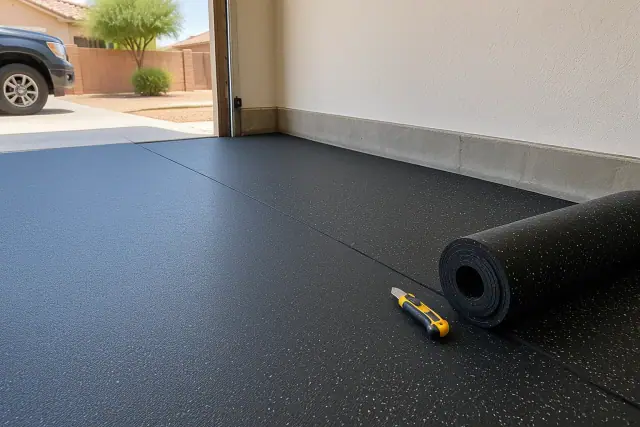
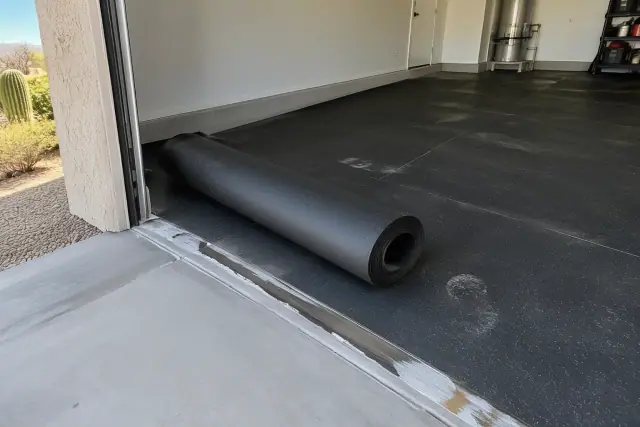
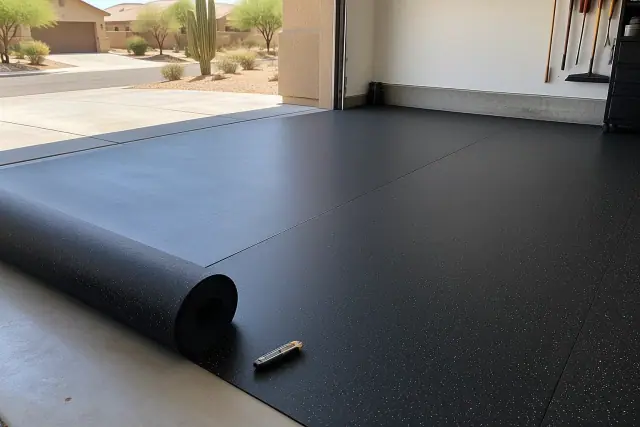
Rolled rubber flooring installed in a residential garage in Mesa, AZ, with a utility knife on the floor.

Rolls provide nearly seamless coverage across larger garages and commercial areas. Fewer joints leave fewer places for grit and debris to collect. We trim the material to fit and secure seams and edges for the selected installation method.

Request Estimate

Interlocking Rubber Floor Tiles

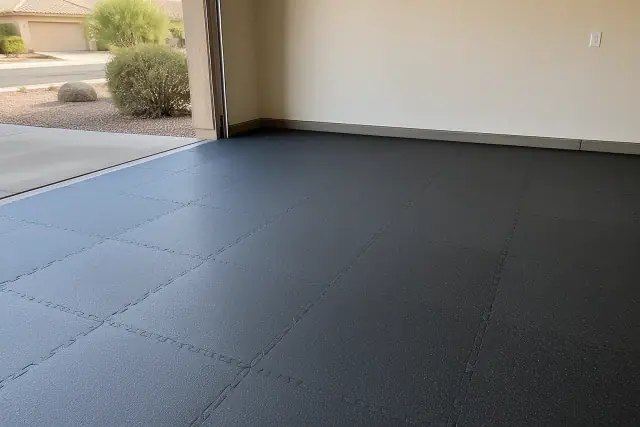
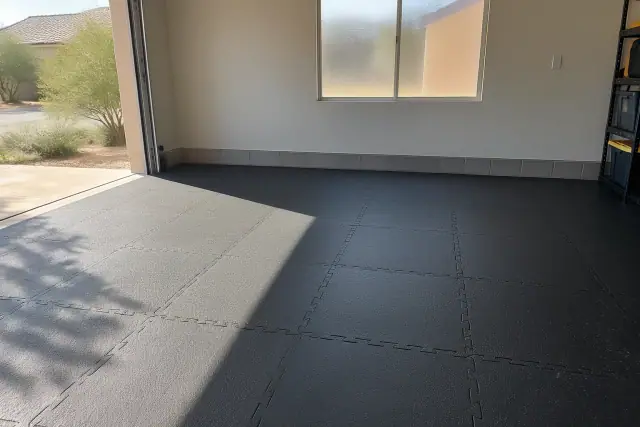
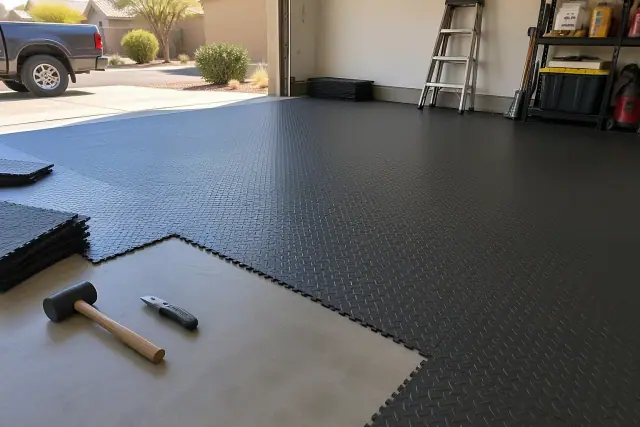
Interlocking rubber floor tiles installed in a residential garage in Mesa, AZ.

Interlocking tiles snap together without adhesive and let you lift or relocate sections later. They suit garages and workout rooms where flexibility matters. Black, gray, and flecked blends offer different looks, with flat, coin, and diamond-plate surface options.

Request Estimate

Garage Gym Flooring

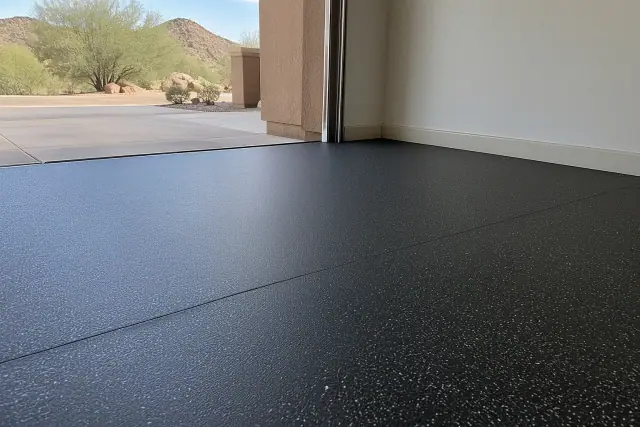
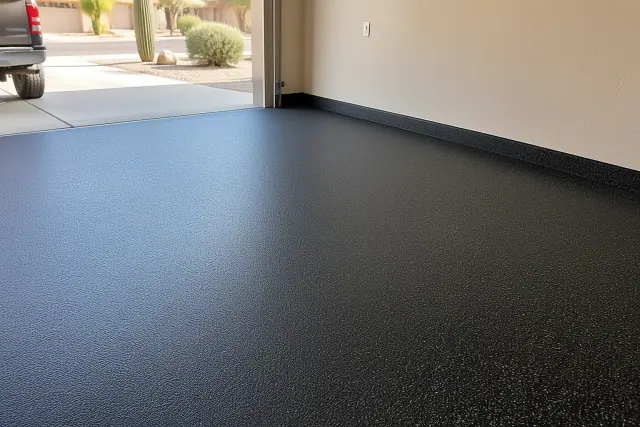
Garage rubber flooring installed in a residential garage in Mesa, AZ.

We size home gym flooring to the equipment and activity, including dropped weights and lifting platforms. Heavy lifting areas use 3/4-inch or thicker material for impact absorption and noise reduction. The floor plan accounts for both the workout area and the rest of the garage.

Request Estimate

Commercial & Industrial Rubber Flooring

Commercial and industrial rubber flooring installed in a garage in Mesa, AZ.

We install commercial-grade surfaces in retail spaces, warehouses, offices, and facilities near Mesa Riverview and the Fiesta District. Heavy-duty options address equipment and forklift traffic. Chemical-resistant formulations are available for shops handling solvents or fuel.

Request Estimate

Anti-Fatigue Matting

Heavy-duty rubber garage flooring matting installed in a residential vehicle bay in Mesa, AZ.

Garages used as workshops often need extra cushioning where someone stands at a bench. Anti-fatigue matting supports these standing areas without treating every part of the garage alike. We also fit matting for commercial standing stations.

Request Estimate

Rubber Flooring Repair & Replacement

Garage rubber flooring repair and replacement in Mesa, AZ, showing newly fitted sections and seam adhesive.

Worn tiles, damaged seams, and lifting edges do not always call for removing the entire floor. We assess the existing installation and replace individual sections where practical. The review includes the slab and attachment points so the repair addresses the source of the trouble.

Request Estimate
Plan the Surface

Rubber Flooring Materials & Installation Options

Choose a format around the garage's daily use and whether you need access to the slab later. Tile thickness, seam treatment, adhesive use, and curing requirements all affect how the finished floor works.

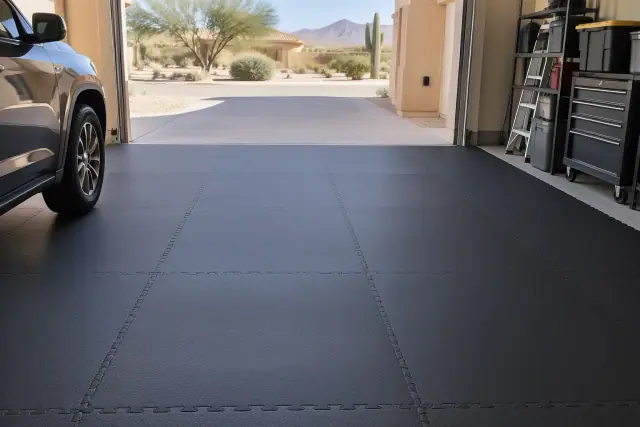
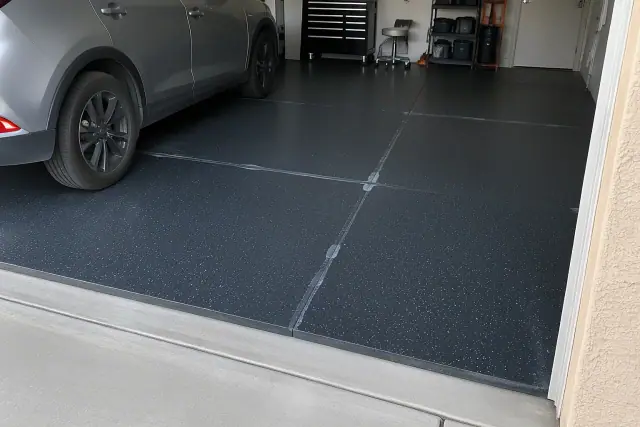
Interlocking rubber floor tiles installed in a Mesa, AZ garage.

Interlocking Tile Layouts

Modular tiles work well when a garage layout may change. We stock tiles from 3/8 inch up to 3/4 inch thick and match the selection to traffic and equipment.

  • Snap-together tabs without adhesive
  • Sections that lift for relocation
  • Thicker choices for heavy equipment
  • Cut edges around walls and obstructions
  • Replaceable tiles at worn or damaged spots
Request Estimate
Rolled rubber garage flooring installed in Mesa, AZ, showing edge seams and adhesive residue.

Fully Bonded Rolled Rubber

Full-spread adhesive creates a permanent rolled rubber installation. The slab must be prepared before bonding, and seam work helps keep the surface flat.

  • Broad coverage for larger floor areas
  • Clean, degreased concrete beneath the rubber
  • Moisture checks before adhesive application
  • Glued or heat-welded seams as the product requires
  • Seams rolled under pressure for full contact
Request Estimate
Loose-Lay Garage Mats installed in a residential garage vehicle bay in Mesa, AZ.

Loose-Lay Garage Mats

Loose-lay rubber rests on the slab without a permanent adhesive bond. This method is useful for rental properties and garages that need periodic access to the concrete.

  • Removable coverage over existing concrete
  • Access beneath the mat when needed
  • Layout selected for the intended garage use
  • Edges trimmed to fit the space
  • No adhesive curing period
Request Estimate
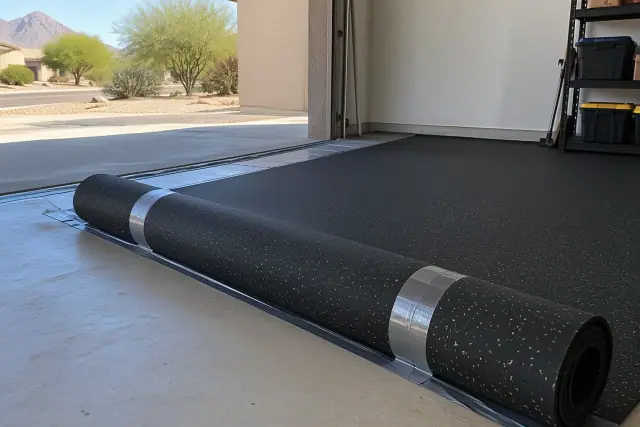
Tape-secured rolled rubber flooring on a residential garage concrete floor in Mesa, AZ.

Tape-Secured Rolled Rubber

Double-sided tape offers another way to install rolls where future access to the slab matters. We check the fit and finish the edges around the garage layout.

  • Rolled material for continuous coverage
  • Double-sided tape attachment
  • An option where slab access matters
  • Careful treatment at adjoining seams
  • Finished edges around walls and obstacles
Request Estimate
Poured-in-place rubber flooring in a residential garage vehicle bay in Mesa, AZ.

Poured-in-Place Rubber

Fully bonded poured-in-place rubber is another available surface for suitable projects. We evaluate the intended use, material, and cure requirements before recommending it.

  • Rubber formed in place on the prepared surface
  • Fully bonded installation method
  • Slab condition reviewed before work
  • Options for playground and fitness projects
  • Cure time included in project scheduling
Request Estimate
Finding Your Right Fit

Choose Flooring Around Your Garage's Use

Tell us whether the space mainly holds vehicles, supports a workbench, or doubles as a gym. We use that information alongside the slab assessment to recommend thickness, rubber hardness, texture, and attachment. A useful recommendation accounts for cleaning and future repairs as well as the initial fit.

Slab Evaluation Before Installation

We measure the garage and check for moisture, cracking, and spalling before selecting the installation method. This helps identify surface issues that need attention before rubber covers the concrete.

Materials Matched to the Load

Rubber thickness and durometer, a measure of hardness, are selected around vehicles, tools, or exercise equipment. We consider grip, impact absorption, and chemical exposure as part of the material choice.

Itemized Project Quotes

Our quotes separate material, labor, and preparation so you can review the scope before work starts. Flooring style, thickness, square footage, and the condition of the slab help determine the cost.

What Your Floor Faces

Solutions for Common Garage Floor Problems

Stains, grit, moisture, and worn seams call for different responses. We assess the cause and select a rubber surface and installation method that fit the garage, whether you are covering bare concrete or replacing an existing floor.

Request a Site Assessment

Heat & Sun Exposure

Summer temperatures can push exposed concrete past 150 degrees, while Mesa garages face triple-digit heat from May through September. Direct sun at an open bay door adds exposure. We consider UV resistance and temperature conditions when selecting the material.

Oil Drips & Embedded Grit

Vehicles parked on 100-plus-degree days can leave oil drips, while dust and tire traffic work grit into an unsealed slab. We degrease the concrete before installation and discuss oil-resistant rubber for parking areas.

Impact from Dropped Tools & Weights

Dropped tools and weights can chip a hard surface or damage a thin floor covering. Rubber adds impact absorption, with thickness selected around the equipment. Garages in Dobson Ranch and Eastmark that double as workshops or gyms need that use considered from the start.

Water & Moisture Trouble

Monsoon rain and mud can leave a smooth garage floor slippery, while moisture beneath flooring can undermine adhesive. We check the slab before bonding material and consider surface texture for the way the garage gets used.

Hard Floors at the Workbench

Standing on bare concrete can become uncomfortable during long stretches of garage work. Anti-fatigue matting adds cushioning at the bench or standing station. The mat choice follows the work area rather than the vehicle parking layout.

Lifting Edges & Open Seams

Loose edges and gaps collect debris and can interrupt a walking path. We inspect seams, transitions, and adhesion points, then repair or replace affected sections where practical. Careful trimming and pressing help finish the replacement material.

From Slab to Surface

Our Garage Flooring Installation Process

Most residential garage jobs finish in a single day; larger commercial or poured-in-place projects may take two to three days depending on cure time. Installation completion and return to vehicle traffic are separate milestones. We explain the requirements for the selected product before the garage is put back into use.

01.

Measure & Assess the Slab

We measure square footage, review how you use the garage, and inspect the concrete. Moisture conditions, cracks, and equipment loads guide the choice of material and installation method.

02.

Clean & Degrease

The concrete is swept and degreased before flooring goes down. We check for moisture and surface damage so unresolved slab problems are addressed before installation.

03.

Dry-Lay the Material

We position tiles or rolls to check the fit before securing them. This lets us review the layout, seams, and coverage around the garage's walls and equipment areas.

04.

Trim Around Obstructions

We trim the rubber at walls and other obstructions. Edge transitions receive attention so the fitted surface meets adjoining areas cleanly.

05.

Set Tiles or Rolls

We secure the material using the selected adhesive, interlocking, tape, or loose-lay method. Seams and attachment points are checked as installation progresses.

06.

Press Seams & Check the Finish

We roll or press seams, then check tightness, transitions, and adhesion points. Adhesive-set installations need 24 to 48 hours before heavy vehicle traffic returns. Loose-lay and interlocking systems can be used immediately once fitting is complete.

Plan Your Garage Floor

Request a Garage Rubber Flooring Quote

Tell Mesa Rubber Flooring about your garage size, slab condition, and whether the space is used for parking, workshop tasks, or workouts. We will assess the floor and provide an itemized quote for materials, preparation, and installation.

Garage Flooring Questions

Garage Rubber Flooring FAQs

Compare materials, costs, lifespan, and installation requirements before choosing a garage floor. These answers cover common questions about rubber flooring in Mesa.

Call About Your Garage

Rubber can suit garages used for parking, workshops, or workouts because it adds cushioning and absorbs impact. We choose material grade and texture around heat, vehicle drips, and tracked-in water. The slab condition and installation method also affect the finished result.

Heavy-duty rolled rubber and interlocking tiles 1/2 inch or greater are options for garages with demanding use. The right choice depends on traffic, equipment, and impact loads. We select thickness and material grade for the way you use the space.

Epoxy is a rigid coating, so slab movement or existing cracks can affect its finish. Dropped tools may chip it, and preparation, coating, and curing keep the garage out of use during the work. Rubber adds cushioning and flexibility, although bonded rubber also needs time before heavy vehicle traffic returns.

For a typical two-car garage of 400 to 500 square feet, rigid coatings commonly cost $3 to $12 per square foot installed, or roughly $1,200 to $6,000 for the job. Coating type, surface preparation, and the number of coats affect that range. Rubber flooring is around $2,800 installed for a two-car garage up to 450 square feet. An itemized quote identifies the scope for your floor.

Thinner interlocking mats typically last 2 to 7 years depending on thickness and traffic. Thicker commercial-grade rolled rubber and poured-in-place systems can last 20 years or more with routine cleaning. Installation quality, material thickness, and daily use influence lifespan.

Yes, existing concrete is a common base for garage rubber flooring. It needs to be clean, reasonably level, and free of active moisture intrusion. We check for cracking, spalling, and moisture before laying the selected material, and existing slab demolition is typically unnecessary.

Textured rubber offers grip that is useful where monsoon water or workout moisture reaches the floor. We use ASTM D2047 slip-resistance benchmarks and choose texture for the intended application. Flat, coin, and diamond-plate options provide different surface finishes.

Materials typically cost $1.19 to $4.98 per square foot depending on thickness, style, and whether the floor uses rolls or tiles. Full installed pricing for a one-car garage is around $1,700. Larger commercial or industrial spaces beyond 450 square feet generally run about $6 per square foot installed. Our itemized quotes cover material, labor, and preparation.

Sweep away dust and grit, then mop occasionally with mild soap. Routine care does not require waxing, resealing, or recoating. Damaged tiles or seams can be assessed for individual replacement.

Yes, interlocking tiles and loose-lay mats allow sections to be lifted. Double-sided tape is also used for rolled installations where future slab access matters. We discuss access needs before choosing a permanent bond or a removable layout.

Individual tiles or damaged seams can often be replaced without removing the entire installation. We inspect the affected section, adjacent edges, and attachment points first. The repair approach depends on the material and the condition underneath.

Mesa Rubber Flooring serves Mesa, Gilbert, Chandler, Tempe, Queen Creek, and Apache Junction. In Mesa, garage projects include spaces in Dobson Ranch and Eastmark. Contact us to discuss your slab and planned use.

Yes, we install home gym flooring, commercial fitness surfaces, and playground rubber surfacing as well as garage floors. Poured-in-place systems are among the available methods. Fitness and playground projects use application-specific material choices and ASTM F1292 impact-attenuation standards where applicable.