Proudly serving Mesa, Gilbert, Chandler, Tempe, Scottsdale, Queen Creek & surrounding areasCall or Text 24/7: 480-319-7553
Aerial drone view of suburban neighborhoods and desert landscaping in Mesa, AZ.

Poured-in-Place Rubber Flooring Installation in Mesa, AZ for Playgrounds & Pool Decks

Mesa Rubber Flooring installs poured-in-place rubber flooring for homes and businesses in Mesa, AZ. We create seamless surfaces for playgrounds, pool decks, patios, and shared recreation areas. We also install gym and home gym rubber flooring, garage flooring, rolled rubber, and rubber tiles. Our repair and replacement services address worn surfaces when an existing floor needs attention.

Mesa summers can push asphalt and concrete surface temperatures past 150 degrees, while monsoon rain puts drainage and bonding under pressure. We evaluate the substrate, exposure, and intended use before choosing the rubber surface. Site preparation and substrate testing help address the conditions that can lead to early delamination. An on-site evaluation gives us the information needed to quote the work and explain the installation.

Our poured surface combines a shock-absorbing SBR rubber base with a colored EPDM wear layer and polyurethane binder. Your final walkthrough covers surface depth, care, and the fall-height rating where playground equipment is involved.

Mesa Rubber Flooring installs poured-in-place rubber flooring in Mesa, Gilbert, Chandler, Tempe, Apache Junction, and the greater East Valley.

★ ★ ★ ★ ★4.9/5 Customer Rating · 19 Years of Flooring Experience · 1,000+ Flooring Projects Completed · Licensed, Bonded & Insured · Residential & Commercial Flooring

Poured Rubber Construction & Benefits

What Is Poured-in-Place Rubber Flooring?

Poured-in-place rubber, often shortened to PIP or called wet pour, is mixed and troweled directly at the installation site. It forms a continuous surface instead of a floor assembled from pre-formed tiles or rolls.

The two-layer construction pairs a resilient SBR base mat with a colored EPDM top layer. Polyurethane binder holds the granules together, while the finished surface flexes under impact and returns to shape.

Poured rubber removes the joints found between modular flooring pieces. That makes it useful for outdoor play areas and wet recreation spaces where seams can collect debris or allow water beneath the surface.

Why Choose a Seamless Rubber Surface?

A well-matched poured surface combines cushioning with practical day-to-day care. Its value depends on the use of the space, the condition of the base, and the material selected for sun or water exposure.

  • Continuous surfacing without tile joints
  • Impact absorption for playground fall zones
  • Accessible transitions for wheelchairs and strollers
  • Slip-resistant texture for wet recreation areas
  • Custom colors in the EPDM wear layer
  • UV-stabilized EPDM options for outdoor exposure
  • Routine cleaning without waxing or refinishing
  • Recycled rubber content in most SBR base mats
Spaces We Surface

Rubber Flooring Installation & Repairs

We work with homeowners, property managers, churches, and businesses throughout Maricopa County. Each application calls for a different balance of cushioning, load resistance, water management, and cleaning access.

Residential Patios and Pool Decks

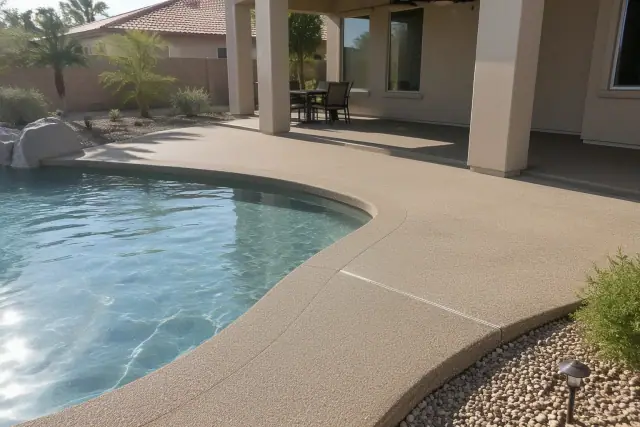
Textured poured-in-place rubber flooring on a residential pool deck in Mesa, AZ.

Homeowners in Red Mountain Ranch and Superstition Springs use poured rubber for patios, pool surrounds, and backyard play areas. The cushioned surface offers a slip-resistant finish around water, with substrate drainage checked before installation. We match the outdoor wear layer to the site's sun exposure and chosen colors.

Request Estimate

Playground, School, and Daycare Surfacing

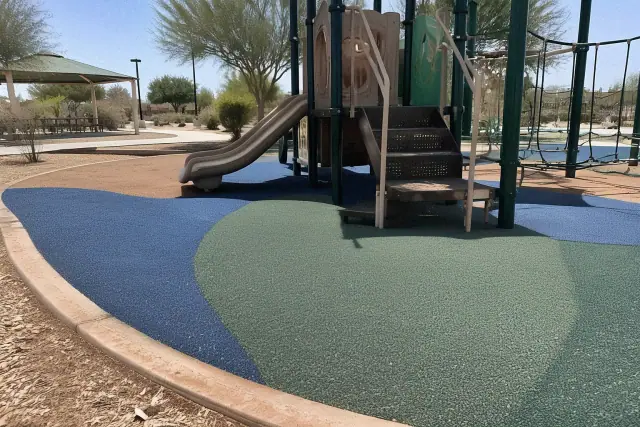
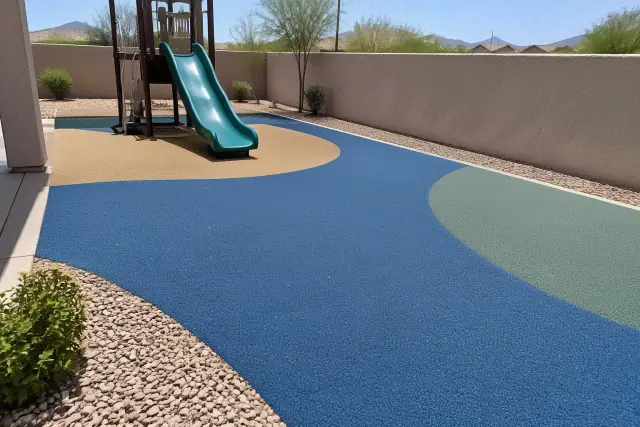
Poured-in-place rubber safety flooring at a park playground in Mesa, AZ.

We install poured rubber for school playgrounds, private preschools, and childcare facilities across Mesa Public Schools boundaries. Playground surface depth is calculated against equipment fall height rather than selected as a single standard thickness. Colorful wear layers let play areas combine cushioning with an accessible continuous surface.

Request Estimate

Gym and Home Gym Rubber Flooring

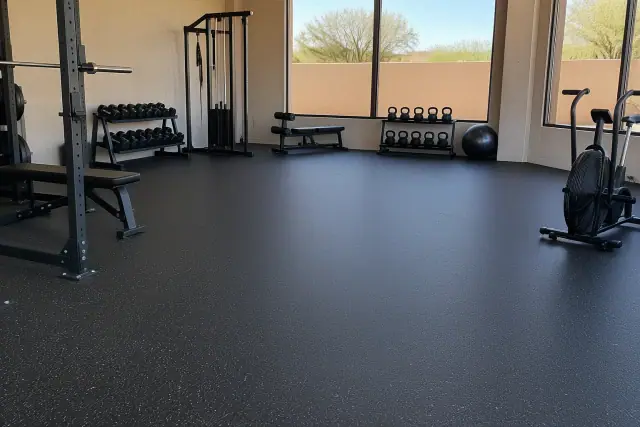
Seamless rubber flooring installed at an indoor fitness facility in Mesa, AZ.

Garages converted into home gyms often benefit from rolls or interlocking tiles; 3/8-inch to 1/2-inch rolled rubber is our most common residential recommendation. Projects range from single-car garages to full commercial fitness facilities. Commercial gyms need impact and noise control around weights, with surfaces up to 3/4-inch thick specified under Olympic lifting platforms.

Request Estimate

Commercial and Industrial Rubber Floors

Commercial and industrial poured-in-place rubber flooring installation in Mesa, AZ.

Church fellowship halls, childcare wings, retail spaces, and multipurpose rooms need flooring suited to repeated foot traffic. Warehouses and manufacturing floors near Elliot Road and Pecos Road face forklift loads, abrasion, and chemical spills. We select thicker-gauge rubber and chemical-resistant compounds for those heavier industrial demands.

Request Estimate

Dog Parks, Splash Pads, and Water Features

Poured-in-place rubber safety surfacing around playground equipment at a park in Mesa, AZ.

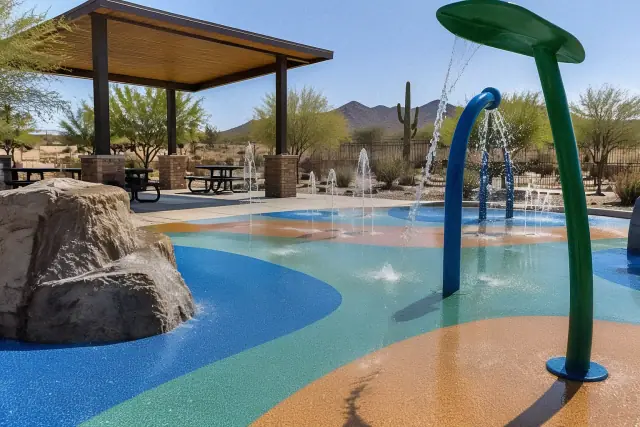
Shared dog park amenities need a surface that resists digging and can be hosed down. We use odor-resistant formulations and anti-bacterial surface treatments for these shared pet areas. Splash pads and water features call for materials suited to chlorine and sun exposure, so we match the poured surface to water use and cleaning needs.

Request Estimate

Rubber Flooring Repair and Replacement

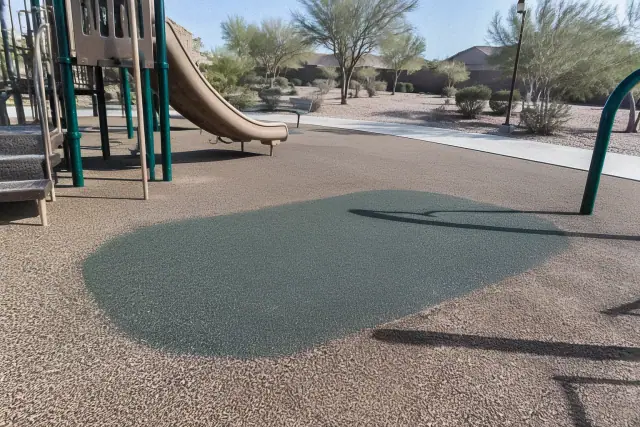
Freshly cured seamless rubber patch on a poured-in-place playground safety surface in Mesa, AZ.

Localized wear or separation may allow a patch and re-bond of the top layer when the base mat remains sound. Water damage beneath the base or a surface at the end of its useful life can call for full replacement. We remove failed material, inspect and re-grade the substrate, and install poured rubber, rolls, or tiles to suit the current use.

Request Estimate
Match the Surface to the Space

Rubber Flooring Materials & Options

Poured rubber is one option within a wider range of rubber flooring. Compare the construction and intended application before choosing a seamless outdoor finish, a gym floor, or cushioning for a standing workstation.

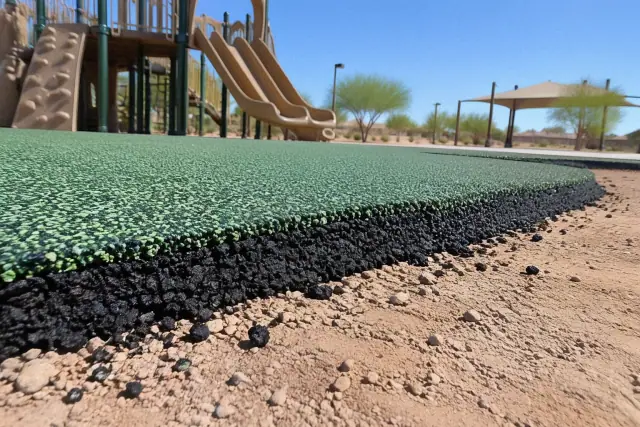
Two-layer poured rubber safety flooring cross-section installed at a recreation park play structure in Mesa, AZ.

Two-Layer Poured Rubber

PIP combines a base selected for cushioning with a wear layer selected for color and exposure. The materials are mixed and troweled on-site to create the finished surface.

  • SBR base mat bonded to the prepared substrate
  • Colored EPDM granules at the surface
  • Polyurethane binder for the rubber layers
  • Hand-troweled finish around the project layout
  • Depth chosen for the application and fall height
Request Estimate
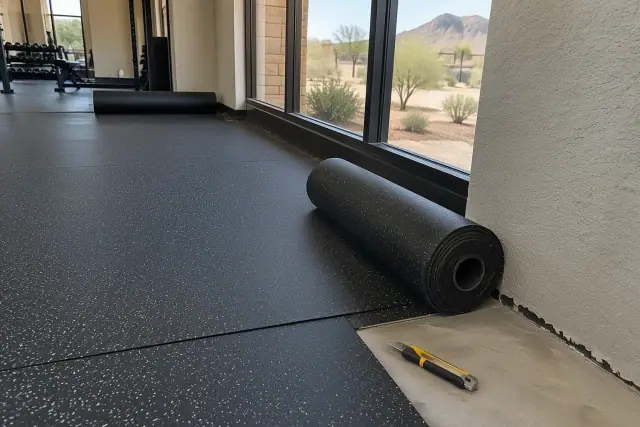
Rolled rubber flooring installation with a utility knife at a fitness facility in Mesa, AZ.

Rolled Rubber Flooring

Rolled rubber is a common choice for garage gyms and commercial fitness areas. Pricing runs $5 to $10 per square foot, making it an option to discuss when poured rubber exceeds the available budget.

  • Flooring for garages converted to home gyms
  • Cushioning for exercise and equipment areas
  • Impact absorption around dropped weights
  • Noise reduction in fitness facilities
  • Thickness selected around equipment and use
Request Estimate
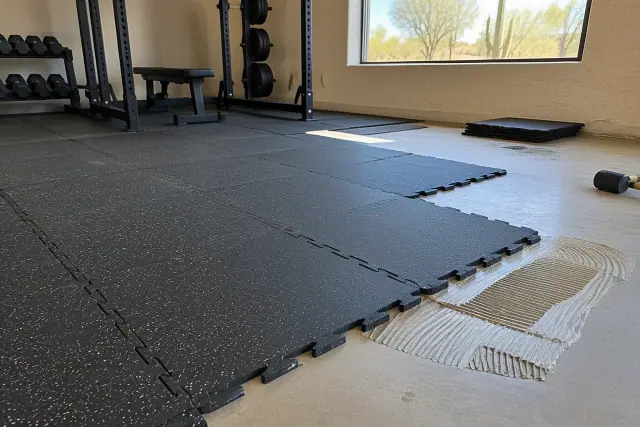
Installing rubber floor tiles with adhesive residue in a Mesa, AZ fitness weightlifting zone.

Rubber Floor Tiles

Rubber tiles provide a modular alternative for smaller indoor spaces. We install interlocking floor tiles where their layout, price, and performance fit better than a poured surface.

  • Home gym flooring layouts
  • Garage exercise areas
  • Modular pieces instead of a troweled finish
  • An alternative to higher-cost poured installation
  • Seam sealing considerations where water is present
Request Estimate
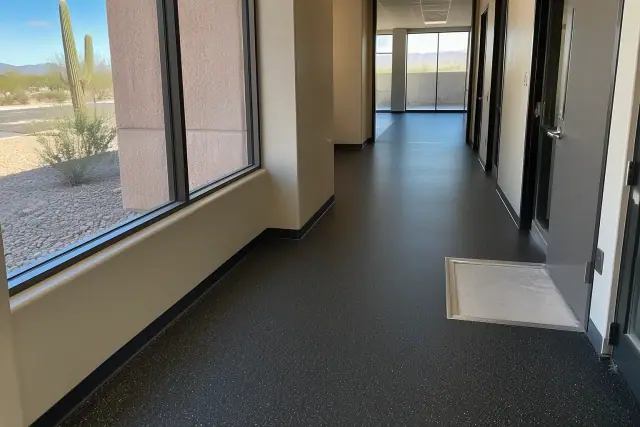
Anti-fatigue rubber surfaces installed on a commercial interior hallway floor in Mesa, AZ.

Anti-Fatigue Rubber Surfaces

Standing on concrete for eight-plus hours can put strain on joints and lower backs. We install anti-fatigue matting and poured surfaces for workplaces where people spend long shifts on their feet.

  • Cushioning at standing workstations
  • Matting for retail checkout stations
  • Poured options for production areas
  • Rubber flooring for commercial kitchens
  • Comfort-focused surfaces along assembly lines
Request Estimate
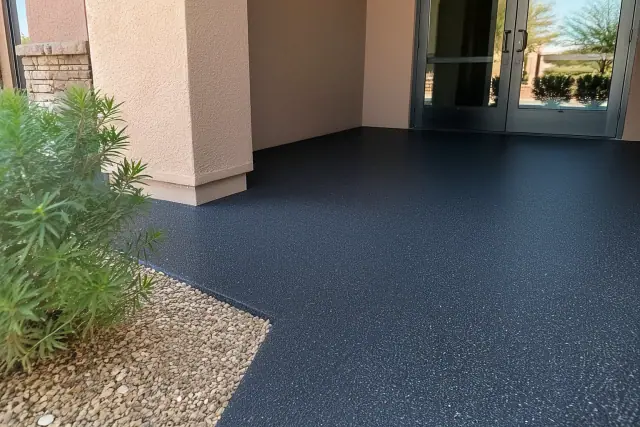
Recycled rubber surface installation with a desert gravel border and stucco wall in Mesa, AZ.

UV-Stabilized and Recycled Rubber Materials

Outdoor wear layers and recycled base materials serve different purposes. UV-stabilized EPDM helps manage sun exposure, while most of our SBR base mats incorporate reclaimed tire rubber.

  • UV-stabilized EPDM for exposed surfaces
  • Reclaimed tire content in most SBR base mats
  • Custom wear-layer color selections
  • Material selection for wet recreation areas
  • Low-odor material choices for indoor installations
Request Estimate
Plan Around Actual Use

Choose the Right Rubber Flooring Approach

A playground needs a fall-height-based design; a gym needs support for weights and equipment; a pool deck needs attention to water and exposure. We compare the intended use, substrate, access, and budget before recommending poured rubber, rolls, or tiles.

Site and Drainage Assessment

We inspect the substrate and drainage before quoting an installation. That visit identifies preparation needs and helps match the surface to traffic, equipment loads, and exposure. The quote reflects the site rather than relying on a phone-only estimate.

Materials for Mesa Conditions

Mesa's 300-plus days of sun a year and seasonal monsoon downpours make exposure and drainage central to material selection. We consider UV-stabilized wear layers, bonding agents, and water movement together. This helps address conditions that shorten the useful life of outdoor rubber.

Depth and Fall-Height Walkthrough

For playground work, we explain the relationship between equipment fall height and rubber depth. Our crews follow International Play Equipment Manufacturers Association guidelines, and the final walkthrough covers the installed surface and its fall-height rating. You can review those details before putting the space back into use.

Preparation and Repair Decisions

Address the Causes of Rubber Surface Damage

A damaged wear layer can be a surface problem or a sign of trouble underneath. We inspect the base, bonding, drainage, and exposure before recommending a patch or replacement. That distinction matters when deciding how much material needs to be removed.

Request a Site Evaluation

UV Wear and Fading

Intense sun can wear the top layer and shorten a poured surface's service life. UV-stabilized EPDM is part of the material decision for exposed areas. When wear is localized, we assess whether the top layer can be repaired over the existing base.

Water Beneath the Surface

Poor drainage can leave moisture beneath the rubber and contribute to base-layer damage. We check slope and substrate conditions before installation and during replacement assessments. A damaged base may require removal and re-grading before new rubber is installed.

Separation and Delamination

An inadequate bond can let the wear layer lift or separate, while rolled and tiled floors can develop gaps at seams. Substrate preparation and bonding-agent selection are common factors we inspect on repair calls. Re-bonding is an option when the remaining base is still sound.

Indentation Under Gym Equipment

Treadmills, squat racks, and plate storage concentrate weight on small areas. Our heavy-duty rubber flooring helps resist compression set and indentation better than foam tiles. With basic maintenance, it can hold up under equipment for 10 years or more.

Worn Playground Fall Zones

Wear in an active fall zone deserves attention because surface depth is tied to equipment height. We assess localized damage and the condition of the base before proposing a repair. Commercial and childcare properties benefit from an annual walkthrough to catch small gaps and wear early.

Abrasion and Chemical Exposure

Industrial traffic, spills, and repeated cleaning place different demands on rubber than residential foot traffic does. Thicker-gauge material and chemical-resistant compounds suit heavier applications in distribution and manufacturing facilities. Matching the floor to that exposure is part of the selection process.

From Site Visit to Final Cure

Our Poured Rubber Installation Process

Installation starts with evaluating the space and ends with a review of the finished surface. Between those stages, substrate preparation, layer construction, and curing all affect the result.

01.

Inspect the Site and Quote the Work

We review the intended use, existing substrate, drainage, and site access in person. Equipment fall height determines depth requirements for a playground. Color complexity, bonding agent, and preparation needs also inform the quote.

02.

Clean and Prepare the Substrate

We clean and pressure-wash the substrate, then check its condition and drainage slope. Replacement work includes removing failed flooring and re-grading where needed. Preparation provides the foundation for the rubber layers.

03.

Bond the SBR Base Mat

The SBR base mat supplies the cushioning layer beneath the finished surface. We bond it to the prepared substrate at the depth selected for the application. For playgrounds, that depth is tied to the equipment's fall height.

04.

Trowel the Colored EPDM Layer

We mix EPDM granules with polyurethane binder and hand-trowel the wear layer on-site. Your chosen colors form the visible finish. Correct mixing and bonding are important to the surface's cure and durability.

05.

Allow the Rubber to Cure

Cure time typically runs 24 to 48 hours, depending on humidity and surface depth. The installation schedule needs to account for this stage before the space returns to use. We review curing as part of the project handoff.

06.

Review the Finish and Ongoing Care

The final walkthrough explains the surface depth and the fall-height rating for playground installations. We also cover routine cleaning and inspection for wear or separation. Commercial and childcare sites should include the recommended annual walkthrough in their maintenance planning.

Plan Your Surface Installation

Request a Poured Rubber Flooring Estimate

Tell us how the area is used and whether you are planning a new floor, repair, or replacement. We work across Downtown Mesa, Dobson Ranch, Las Sendas, and Eastmark, as well as the wider East Valley. An on-site evaluation lets us assess preparation, drainage, depth, and material options before providing a firm quote.

Costs, Care, and Material Choices

Poured-in-Place Rubber Flooring FAQs

These answers cover poured rubber pricing, indoor and outdoor uses, maintenance, and installation decisions. A site visit helps apply the options to your surface and intended use.

Call About Your Project

Poured installation in larger spaces can take longer than laying carpet or vinyl, and a hand-troweled surface may show subtle texture variation. Tile seams can admit water if they are not properly sealed. New rubber can also have a mild odor for the first few weeks, so material selection matters for indoor spaces.

Poured rubber is a specialty installation made from rubber granules and binder mixed on-site. Mesa Rubber Flooring sources the materials from manufacturers and handles preparation, mixing, troweling, and curing. Incorrect base and binder ratios can cause early bonding failures, including within the first year.

Wet pour typically costs $10 to $15 per square foot installed, with a broader range of $9 to $18 depending on scope and site conditions; demanding projects can reach $18 or more. Surface depth, color complexity, bonding agent, and access affect the price. Larger, simpler areas often have lower per-square-foot costs than small, detailed installations. We provide a firm quote after evaluating the site.

Poured rubber can suit dog parks and residential pet areas because it resists digging and scratching and can be cleaned with a hose. Odor-resistant top coatings help with pet-related odors. We consider cleaning needs and the use of the shared or private area when selecting the surface.

Yes, poured rubber can be used in home gyms, mudrooms, and basements. Many homeowners choose rolls or tiles for smaller indoor areas because they cost less and avoid the same on-site wet-pour curing process. We compare the available options with the room's use and budget.

Depth is calculated against equipment fall height, so there is no single thickness for every playground. A 1.5-inch depth for low fall-height equipment costs less than a 4-inch depth required for taller structures. Those dimensions describe different project needs; the site's equipment determines the actual specification.

We build playground surfaces to meet ASTM F1292 impact attenuation standards and ASTM F1951 accessibility requirements for ADA-compliant surfacing. Our playground work also follows Consumer Product Safety Commission fall-zone guidelines. The installation walkthrough covers the surface depth and equipment fall-height rating.

A properly installed poured surface lasts 10 to 15 years, sometimes longer with regular maintenance and lower UV exposure. Traffic, drainage, installation quality, and sunlight all affect that span. Mesa's sun can shorten service life toward the low end when the top layer is not UV-stabilized EPDM.

Rubber flooring needs routine cleaning with appropriate standard cleaners, without waxing or refinishing. Inspect for localized wear, loose areas, and gaps so small problems can be addressed before spreading. We recommend an annual walkthrough for commercial and childcare properties.

A localized patch or re-bond of the wear layer may be possible if the base mat is sound. Full replacement is more appropriate when water has damaged the base or the surface has reached the end of its useful life. We inspect the substrate and remaining material before recommending the repair scope.

Poured rubber carries a premium for its seamless installation, while rolled rubber is a lower-cost option for garages and home gyms. Rolled rubber runs $5 to $10 per square foot, compared with $6 to $12 per square foot for rubber mulch. Those materials have different applications, so the choice should also account for the space's performance needs.

Facilities report lower flooring replacement costs over a 10 to 15 year span compared with vinyl or carpet. In high-traffic commercial settings, those alternatives typically need replacement every 5 to 7 years. Actual cost depends on the installation, maintenance, and wear the space experiences.

Poured rubber can provide a cushioned, slip-resistant surface for pool decks and water features. Drainage slope and material selection still need attention before installation. Splash pads call for rubber materials suited to both chlorine exposure and outdoor sun.