Proudly serving Mesa, Gilbert, Chandler, Tempe, Scottsdale, Queen Creek & surrounding areasCall or Text 24/7: 480-319-7553
Aerial drone view of suburban neighborhoods and desert landscaping in Mesa, AZ.

Gym & Home Gym Rubber Flooring in Queen Creek, AZ for Fitness Rooms & Garages

Mesa Rubber Flooring installs gym and home gym rubber flooring for homeowners and businesses throughout Queen Creek, AZ. We fit surfaces for commercial fitness centers, spare-room workouts, converted garages, and casitas. Our services include garage rubber flooring, rolled rubber flooring, and interlocking tile installation, along with playground and poured-in-place surfacing. We also install industrial and anti-fatigue flooring and repair or replace worn rubber surfaces.

Queen Creek's summer heat, slab movement, and seasonal moisture make floor preparation especially important. A roll chosen without checking the concrete can develop lifted seams or lose its adhesive bond. We measure the space, test slab moisture, and match material thickness to your equipment before recommending a floor. Contact us to discuss your project and arrange an on-site assessment.

We serve homes near Horseshoe Park, equestrian properties toward San Tan Valley, and developments along Ocotillo Road and Ironwood Drive. Our work covers both the Maricopa County and Pinal County sides of Queen Creek.

★ ★ ★ ★ ★4.9/5 Customer Rating - 19 Years of Flooring Experience - 1,000+ Flooring Projects Completed - Licensed, Bonded & Insured - Residential & Commercial Flooring
Rubber Flooring Services

Rubber Flooring Options in Queen Creek, AZ

Choose flooring around how the room will be used: barbell drops, parked vehicles, playground activity, and standing workstations place different demands on a surface. We supply and install residential and commercial materials, then match the installation method to the slab and exposure. For another nearby service area, see Apache Junction, AZ .

Gym & Home Gym Rubber Flooring
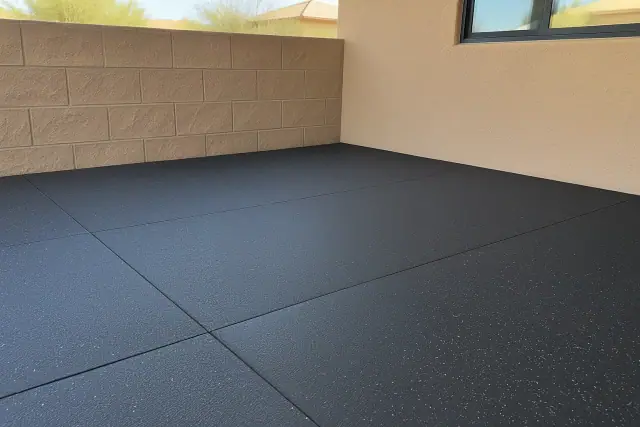
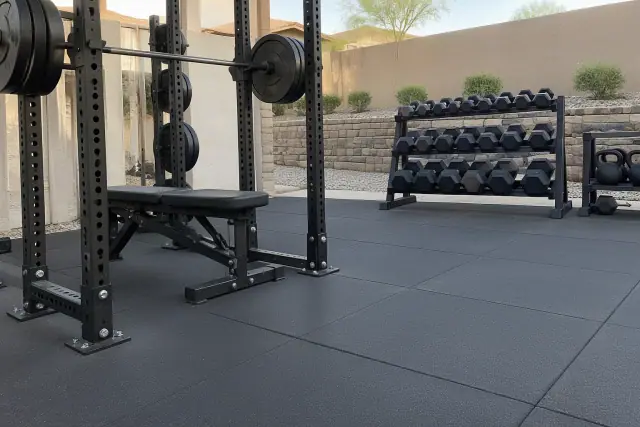
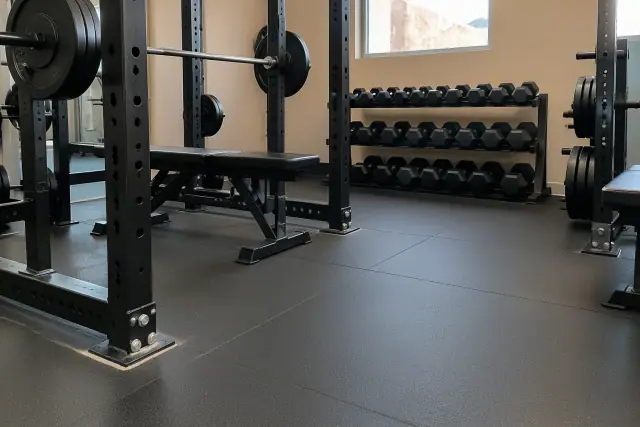
Thick rubber gym flooring installed along a stucco wall in Queen Creek, AZ.

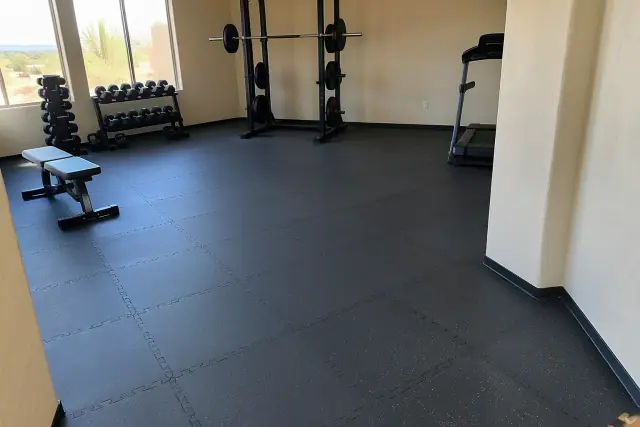
Commercial gyms and CrossFit facilities need rubber matched to lifting loads, with weightlifting zones typically using 3/8 inch to 3/4 inch material. Home gyms usually use 8mm to 1/2 inch flooring, selected around dumbbells, treadmills, and squat racks. Explore Service →

Explore Service
Garage Rubber Flooring

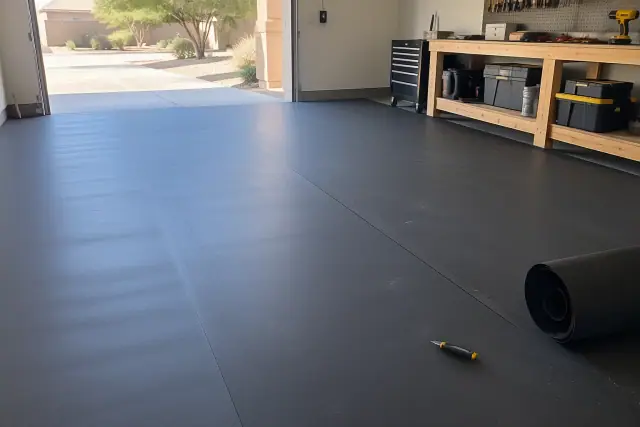
Heavy-duty black rubber flooring rolled out on a concrete garage floor in Queen Creek, AZ.

We install interlocking rubber tiles and rolled matting for garages that also serve as workout rooms. Material selection accounts for tire chemicals, oil drips, and slab temperatures that can exceed 140 degrees in direct sun through an open garage door. Explore Service →

Explore Service
Rolled Rubber Flooring

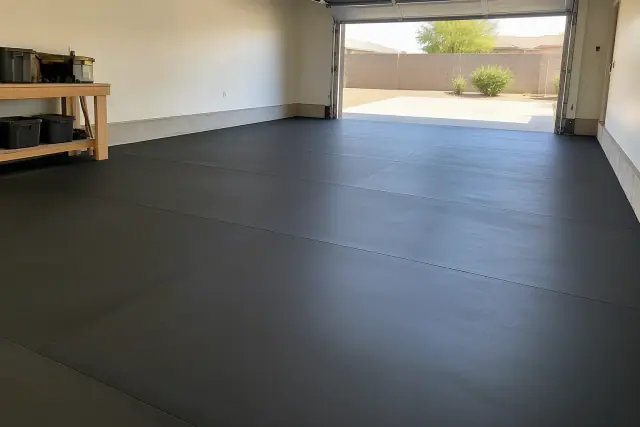
Rolled rubber flooring installed in a residential garage vehicle bay in Queen Creek, AZ.

Rolled rubber suits larger workout areas where fewer seams help equipment wheels move across the floor. We install rolls in widths up to 4 feet and follow the selected product's requirements for adhesion and seam treatment. Explore Service →

Explore Service
Rubber Floor Tile Installation

Rubber floor tile installation in a residential basement exercise space in Queen Creek, AZ.

Interlocking or glued rubber tiles provide modular coverage for home gyms and commercial workout spaces. If a kettlebell or leaking appliance damages one section, individual tiles can be replaced without removing the entire floor.

Commercial Rubber Flooring

Commercial rubber flooring installed near a retaining wall in Queen Creek, AZ.

We install rubber flooring for fitness studios and multi-tenant commercial buildings, matching grade and texture to daily foot traffic. Vulcanized rubber resists compression set and helps retain surface texture under sustained use.

Playground Rubber Surfacing

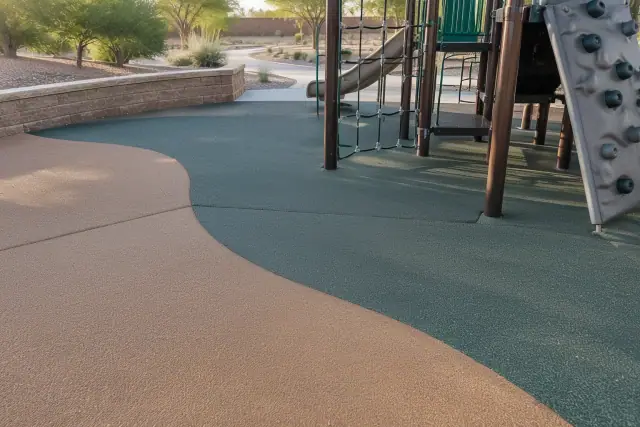
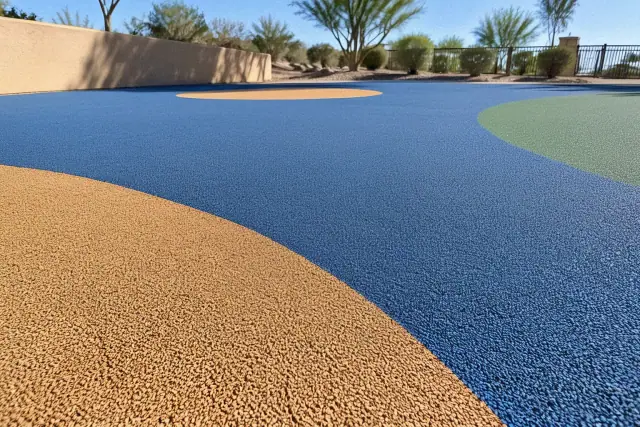
Playground rubber safety surfacing with a textured wet-pour layer in Queen Creek, AZ.

School playgrounds need cushioning matched to the equipment use zones. We install rubber surfacing with depth and impact performance selected for ASTM F1292 requirements and reference IPEMA guidance when choosing surfacing materials.

Poured-in-Place Rubber Flooring

Poured-in-place rubber safety flooring with textured wear layers at a recreation park in Queen Creek, AZ.

Poured-in-place rubber creates a continuous surface for playgrounds, pool decks, and suitable commercial spaces. We mix EPDM granules with a polyurethane binder on-site, then trowel and compact the material to the specified depth.

Industrial Rubber Flooring

Industrial rubber flooring installed in a commercial fitness zone in Queen Creek, AZ.

Warehouse floors need material suited to working traffic and equipment loads. We match industrial rubber flooring to the activity in each area and assess the underlying concrete before installation.

Anti-Fatigue Rubber Flooring

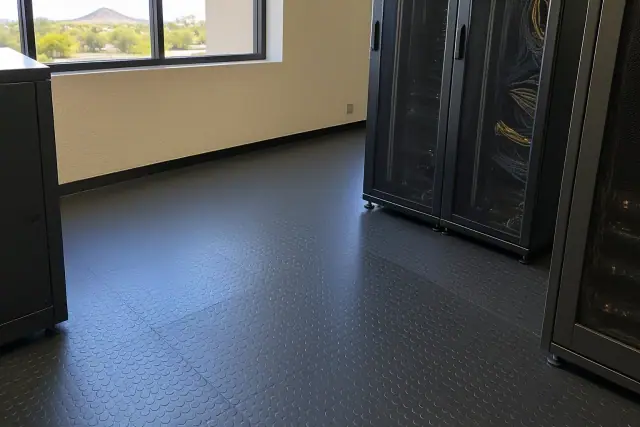
Anti-fatigue rubber flooring installed in an office in Queen Creek, AZ.

Cushioned rubber matting reduces the strain of standing on concrete at warehouse stations, kitchen work areas, and retail checkouts. We size coverage to the workstation and use beveled edges with surface texture suited to wet or dry conditions.

Rubber Flooring Repair & Replacement

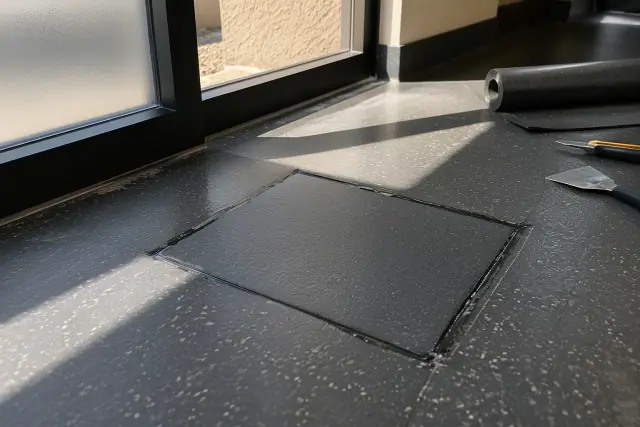
Rubber flooring repair in Queen Creek, AZ, showing a fresh patch fitted into commercial sheet flooring.

We inspect lifted seams, curled tiles, and damaged rubber to determine whether a localized repair will hold. Repair may involve patching, re-adhering a section, or replacing tiles; widespread UV deterioration or impact damage may call for full removal and replacement.

Choosing Your Floor

Match Rubber Flooring to Your Space

Thickness alone does not tell you whether a floor fits the job. Equipment loads, room temperature, slab condition, and future repair needs all affect the choice between rolls, tiles, and poured rubber.

Size Thickness for Your Workouts

A treadmill area and an Olympic lifting zone need different impact protection. For repeated heavy drops in CrossFit training, we typically use 3/4 inch rolled rubber or stall mat-grade material over a plywood subfloor.

Choose Rolls or Replaceable Tiles

Rolls reduce seam lines across larger rooms, while interlocking tiles make individual damaged sections easier to exchange. We explain those tradeoffs before choosing a layout for your equipment and room shape.

Check Slab Moisture First

Moisture vapor moving through concrete can undermine an adhesive bond even when the surface looks dry. We test the slab before selecting adhesive and use a moisture-mitigation primer where the results call for it.

Plan for Heat and Sun Exposure

Queen Creek's July and August heat regularly tops 110 degrees. For garages, patio gym conversions, and other exposed spaces, we select heat-stable adhesives and UV-resistant rubber compounds around the actual conditions.

Match Density to Daily Traffic

Commercial foot traffic and squat-rack loads call for an appropriate rubber grade. We compare density and surface texture so a heavily used floor gets the wear resistance it needs without overspecifying a lighter-use room.

Include Preparation in the Quote

Leveling, moisture mitigation, thickness, and installation method all affect the final scope. We inspect the space before providing a firm quote and explain which preparation work is needed to support the new surface.

Queen Creek Floor Concerns

Common Rubber Flooring Problems

A flooring failure can begin below the rubber. Heat, changing slab moisture, uneven concrete, and abrasive dust each leave different signs, so we inspect the surface and subfloor before recommending a repair.

Request Floor Assessment

Lifted Seams and Loose Edges

Poor bonding and inadequate preparation can let seams lift within months. We check adhesion, seam treatment, and perimeter gaps before re-securing a section or replacing damaged material.

Moisture Bubbles Beneath Rubber

Monsoon humidity can increase moisture moving through slabs with an inadequate vapor barrier. Bubbling or adhesive failure may appear a year or two after a rushed installation, making slab testing essential to the repair.

Heat-Softened Adhesive

Slab temperatures in unconditioned garages and outbuildings routinely climb past 120 degrees. That heat can soften an unsuitable adhesive and accelerate off-gassing, so the bond must be selected for the room's exposure.

Dust and Grit Wear

Open desert and agricultural land contribute dust that collects in rubber texture and seams. Lighter-duty flooring can show grit wear within a year; a denser wear layer and a suitable cleaning routine help address that exposure.

Rocking Tiles and Uneven Seams

Concrete high spots and low spots can leave tiles rocking or create lippage where sections meet. Grinding and patching the slab before installation gives the rubber a flatter base and helps prevent curled edges.

Compression and Drop Damage

Repeated barbell drops and concentrated rack loads can compress flooring that is too light for the activity. We inspect damaged zones and recommend a thickness and grade suited to the equipment using that area.

Local Installation Experience

Why Choose Mesa Rubber Flooring for Your Project

Our East Valley work includes single-room home gyms and commercial fitness studio renovations near Queen Creek Marketplace. We assess everything from new slabs to older concrete needing moisture mitigation and explain material choices before quoting the work.

Queen Creek Project Knowledge

Queen Creek grew from 59,519 residents at the 2020 census to an estimated 83,700 in 2024, bringing more new slabs and fitness spaces. We work with both local county jurisdictions and understand the preparation differences between tract construction and older custom properties.

Recommendations Based on Use

We carry residential and commercial rubber grades and walk you through thickness, density, and texture. A lighter-use home gym may not need the compound specified for a CrossFit facility with repeated barbell drops.

Attention to Seams and Edges

Our installation work includes the bond to the slab, the product's seam treatment, and perimeter expansion gaps. We check seams and edges after curing and stand behind our workmanship.

From Assessment to Cleanup

Our Rubber Flooring Installation Process

We plan the floor around the room, prepare the concrete, and follow the chosen material's installation requirements. Each stage addresses an issue that could otherwise show up later as a loose seam, uneven tile, or poor bond.

01.

Measure and Assess the Slab

At the on-site visit, we measure the room, check subfloor flatness, and test concrete moisture vapor emission. We note doorways and transitions that need special edging.

02.

Plan Equipment and Material

We identify racks, cardio equipment, and drop zones before finalizing thickness and grade. The recommendation accounts for the room's use, exposure, and measured slab condition.

03.

Prepare the Concrete Surface

We clear the space, grind high spots, and patch low spots. Concrete must be clean, dry, and free of curing compounds or sealers that would interfere with the selected adhesive.

04.

Dry-Lay the Floor Layout

We position the material before bonding to plan seam direction and reduce waste. This layout stage also helps coordinate doorway edges and transitions before final cuts.

05.

Install the Selected Rubber

We install rolls and tiles using the product's specified bonding or fastening method. Poured rubber is mixed, troweled, and cured on-site to the required thickness.

06.

Inspect and Clear the Space

After curing, we check seams and edges for lift, gaps, and unevenness. We confirm the surface is secure, then remove packaging and installation debris.

Flooring That Fits the Activity

Practical Benefits for Homes and Businesses

Case Study 1: Home workout rooms: Rubber matched to dumbbells, treadmills, and racks cushions activity and helps reduce noise reaching adjoining rooms. Rolls and tiles provide options for spare bedrooms, casitas, and converted garages.

Case Study 2: Commercial training spaces: Appropriate thickness and density support repeated loading and daily foot traffic. A planned seam layout also reduces interruptions where equipment wheels cross the floor.

Case Study 3: Standing work areas: Cushioned matting gives workers relief from long periods on concrete. Workstation sizing and beveled edges help keep coverage suited to the area.

Plan Your Flooring Project

Schedule a Rubber Flooring Assessment

Tell us about your room, equipment, and existing floor to arrange a site visit. We cover Queen Creek neighborhoods near Founders Park and Schnepf Farms, newer communities along Riggs Road and Germann Road, and fitness spaces near the 24 and Ellsworth corridor. An on-site assessment lets us explain preparation needs and provide a firm quote.

Rubber Flooring Questions

Rubber Flooring FAQs for Queen Creek, AZ

Compare materials, understand preparation needs, and learn what affects the cost and upkeep of a rubber floor. These answers cover common questions about home gyms, garages, and commercial installations.

Discuss Your Flooring

Mesa Rubber Flooring supplies and installs rolled rubber, interlocking tiles, and poured rubber systems in residential and commercial grades. We help select material around your equipment, slab, and budget. The work includes product selection, installation, and cleanup.

Installed gym rubber flooring typically runs $3.50 to $12 per square foot, depending on grade, thickness, and installation method. A basic home gym flooring package for a smaller room using budget rolled rubber often falls in the $230 to $380 range. Poured systems, commercial-grade material, leveling, and moisture mitigation can raise the total. We provide a firm quote after assessing the space.

For most home gyms, we recommend 3/8 inch to 1/2 inch rolled rubber or interlocking tiles, with the final choice based on equipment and room size. Heavy Olympic lifting may call for thicker protection in the drop zone. Tiles allow individual sections to be replaced, while rolls create fewer seams across a larger room.

Properly installed rubber gym flooring typically lasts 15 to 20 years with routine cleaning and maintenance. Material grade, installation quality, UV exposure, and extreme heat affect that lifespan. An unsuitable grade can mean replacement in three years instead of fifteen, which is why we match the rubber to its intended use.

Rubber provides impact absorption, moisture resistance, and support for repeated heavy loading in workout spaces. Its textured surface also helps with traction during lifting and movement. Upfront cost can be higher than some other flooring options, so the choice should reflect your equipment and activity.

Yes, we install rubber tiles and rolled matting in garages used for home gyms. Selection needs to account for slab heat, direct sun, and exposure to tire chemicals or oil. We check those conditions before recommending material and adhesive.

Moisture vapor can move through a slab and interfere with the flooring adhesive. Seasonal humidity during monsoons makes this especially relevant where the concrete lacks an effective vapor barrier. We measure moisture before adhesive selection and use mitigation where slab results require it.

Regular cleaning helps remove grit that collects in the surface texture and seams. We recommend a cleaning routine and surface profile suited to the dust exposure around your property. Dense wear layers are useful in areas subject to heavier abrasive traffic.

Individual tiles can often be swapped out, while some loose sections can be patched or re-adhered. We inspect the slab as well as the rubber to identify the cause of failure. Extensive UV degradation, age-related wear, or impact damage may make full replacement more practical.

The concrete should be prepared so the finished flooring sits flat. We grind high spots, patch low spots, and remove materials that prevent a proper adhesive bond. Skipping that work can leave rocking tiles, curled edges, or uneven seams.

Poured rubber is an option for playgrounds, pool decks, and commercial areas that need a continuous surface. EPDM granules and polyurethane binder are mixed on-site, then troweled and compacted to the specified depth. Playground installations also need impact performance matched to their equipment use zones.

For playground projects, we reference ASTM F1292 impact attenuation requirements and IPEMA surfacing guidance. Commercial floor planning also considers ADA slip-resistance expectations and ASTM E648 flame-spread ratings where applicable to the occupancy. Project requirements depend on the intended use and local review.

Some new rubber products have an odor that typically fades within days to weeks with ventilation. Extreme heat in an unconditioned space can accelerate off-gassing. We take room temperature and exposure into account during product selection.

The selected product needs to cure according to its installation requirements. We then inspect seams and edges for lift or gaps and confirm that the surface is level and secure. Packaging and debris are removed as part of the final cleanup.

We serve both the Maricopa County and Pinal County sides of Queen Creek, along with San Tan Valley, Gilbert, Chandler, and Mesa. Our East Valley coverage also includes portions of Apache Junction, AZ, where we can assess home gym or commercial flooring projects. Contact us to arrange a site visit for your location.