Proudly serving Mesa, Gilbert, Chandler, Tempe, Scottsdale, Queen Creek & surrounding areasCall or Text 24/7: 480-319-7553
Aerial drone view of suburban neighborhoods and desert landscaping in Mesa, AZ.

Rubber Floor Tile Installation in Mesa, AZ for Weight Rooms & Home Gyms

Mesa Rubber Flooring installs rubber floor tile for gyms, garages, and commercial spaces in Mesa, Arizona. We fit home gyms and weight rooms with flooring selected for their equipment and daily use. Our services also include rolled rubber flooring, playground surfacing, and rubber flooring repair and replacement.

Mesa's summer sun can push exposed concrete slab surface temperatures above 140 degrees, while monsoon humidity adds stress to poorly prepared adhesive bonds. We check subfloor moisture, slab flatness, and ambient conditions before choosing an installation method. Material density and thickness are matched to the loads your floor will carry. Contact us to discuss the preparation your space needs before comparing installation costs.

Our installation practices align with Resilient Floor Covering Institute guidelines, and product evaluation considers ASTM International testing standards for slip resistance and static load. Ask for an itemized quote covering materials, surface preparation, and labor.

Mesa Rubber Flooring provides rubber floor tile installation in Mesa and nearby Tempe, Chandler, Gilbert, Queen Creek, and Apache Junction.

★ ★ ★ ★ ★4.9/5 Customer Rating · 19 Years of Flooring Experience · 1,000+ Flooring Projects Completed · Licensed, Bonded & Insured · Residential & Commercial Flooring

Rubber Floor Tile Options & Benefits

What Is Rubber Floor Tile Installation?

Rubber floor tile installation creates a modular surface from interlocking or glue-down tiles, typically 3/8 inch to 3/4 inch thick. These products suit busy spaces that need to handle foot traffic, equipment, and repeated impact.

Tile density and thickness affect how the surface responds to dropped weights and rolling loads. We select flooring for home gyms, commercial fitness centers, garages, warehouses, and school facilities according to how each space will be used.

Installation begins beneath the tile, with a clean, flat substrate and moisture checks. Layout planning, perimeter gaps, and finished transitions help the surface fit the room and accommodate temperature changes.

Benefits of a Rubber Tile Floor

Rubber tile combines a resilient walking surface with modular sections that can be fitted around equipment and room features. The right product offers practical benefits for both residential and commercial spaces.

  • Resists gouging from dropped weights
  • Handles repeated rolling equipment loads
  • Dampens impact noise compared with bare concrete
  • Provides cushioning at standing workstations
  • Allows individual damaged tiles to be replaced
  • Fits corners, columns, and irregular room shapes
  • Offers movable interlocking layouts for changing equipment
  • Provides recycled and virgin rubber material choices
Floors for Work, Training, and Play

Rubber Flooring Installation & Repair Services

We install rubber surfaces for spaces with different demands, from a garage workout area to a busy commercial facility. Tile, rolled goods, and poured-in-place rubber each have a role, with product selection guided by traffic, impact, temperature, and the condition of the existing floor.

Gym and Weight Room Flooring

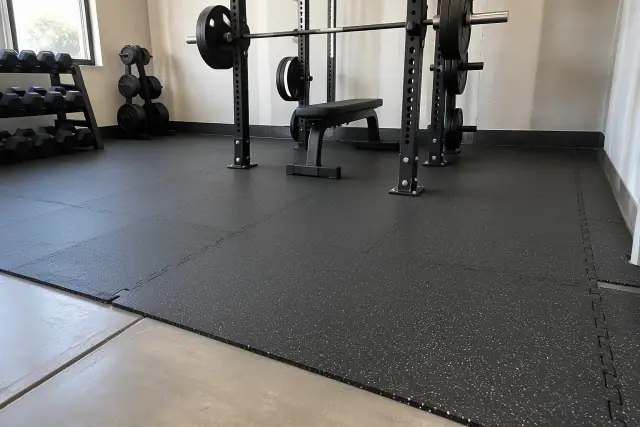
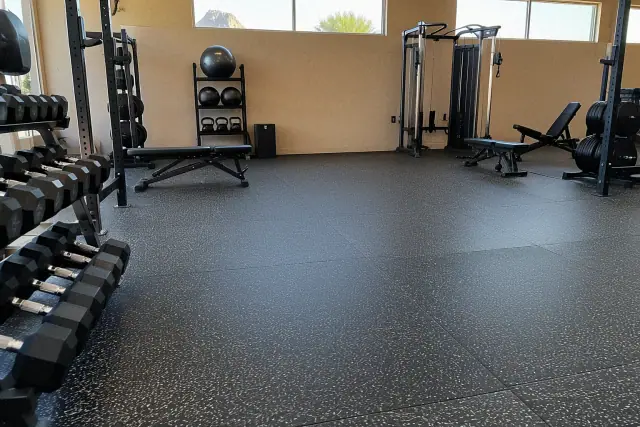
Rubber floor tile installation in a Mesa, AZ commercial gym and weight room.

CrossFit boxes and weight rooms need dense rubber suited to repeated barbell and dumbbell impact. For free-weight zones, we recommend 3/4 inch to 1 inch stall mats or thick rolled rubber, with thinner tile in cardio and functional training areas. We plan transitions between those surfaces around the equipment layout.

Request Estimate

Home Gym and Garage Flooring

Interlocking rubber floor tiles installed in a home gym basement in Mesa, AZ, with a window view.

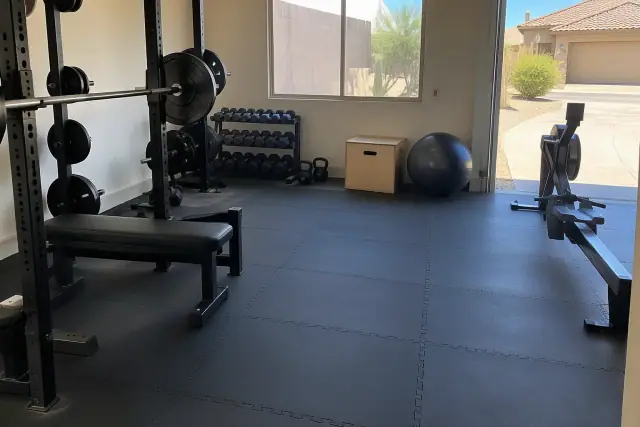
We fit rubber flooring around racks, benches, cardio machines, and garage features such as water heaters or floor drains. Mesa garages regularly exceed 110 degrees in summer, so garage installations use heat-tolerant, UV-stable products selected for those conditions. Interlocking tile helps accommodate awkward corners and irregular footprints.

Request Estimate

Commercial and Industrial Rubber Flooring

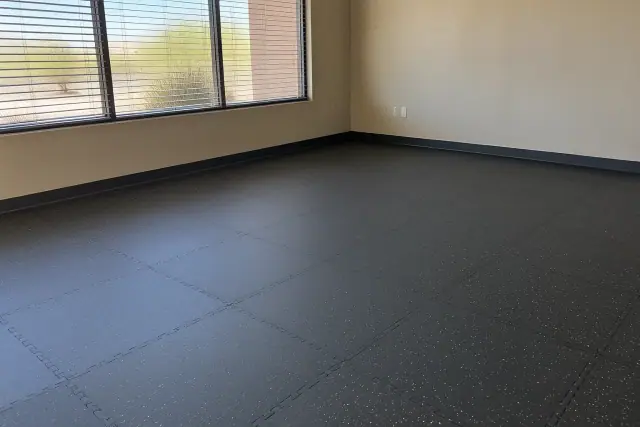
Commercial rubber floor tile installation with puzzle-edge seams at an office in Mesa, AZ.

Commercial floors need rubber matched to rolling loads, chemical exposure, and continuous foot traffic. For warehouses and manufacturing spaces near Falcon Field and the Elliot Road Technology Corridor, we select industrial products for the actual equipment loads. Larger projects may require phased installation across the floor plan.

Request Estimate

Rubber Floor Tile Repair and Replacement

Contractor photo of rubber floor tile repair at a commercial job site in Mesa, AZ.

We assess separated seams, curling edges, and tiles that shift with equipment movement before recommending repair or replacement. Localized repairs may involve re-adhering the affected section or replacing damaged tiles. When matching material is available, we keep replacement color and thickness consistent with the surrounding floor.

Request Estimate

Anti-Fatigue Rubber Flooring

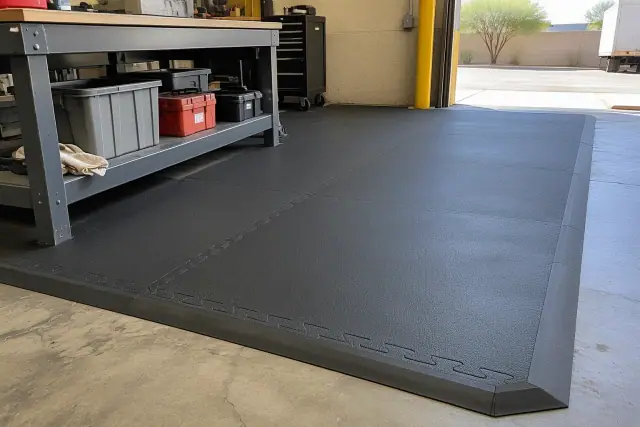
Anti-fatigue rubber flooring installation at an industrial workstation in Mesa, AZ.

Retail counters, food service work areas, and light manufacturing stations can benefit from rubber surfaces that cushion prolonged standing. We match the flooring to the workstation's use and expected traffic to help reduce strain on legs and lower backs during extended shifts.

Request Estimate

Sports and Playground Rubber Surfacing

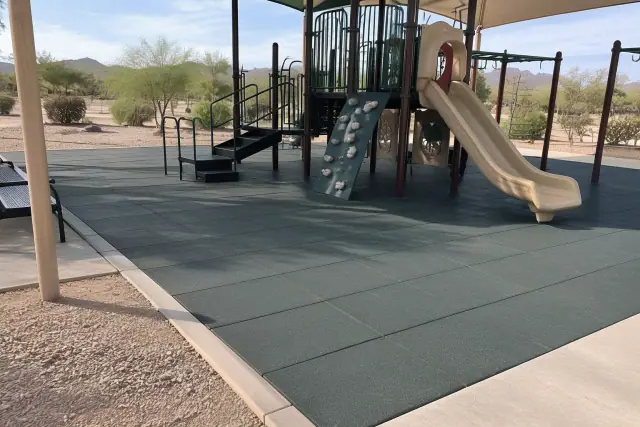
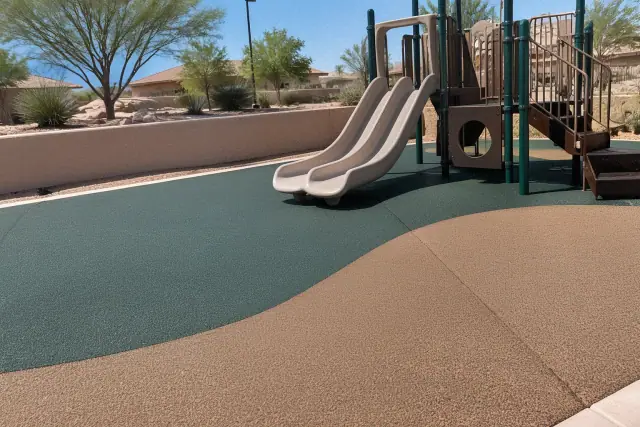
Rubber floor tile installation beneath a recreation park play structure in Mesa, AZ.

We install rubber flooring for school gyms and athletic training areas, plus tile and poured-in-place surfacing for playgrounds. Sports product selection considers shock absorption and slip resistance under ASTM testing protocols. Playground surfacing selection accounts for fall height, Consumer Product Safety Commission guidance, and ASTM F1292 impact attenuation standards.

Request Estimate
Material and Installation Choices

Rubber Flooring Materials & Installation Options

Choose the surface and attachment method together. A removable interlocking layout serves a different purpose from a permanent adhesive installation, while recycled rubber, virgin rubber, and poured-in-place products offer choices for different uses and budgets.

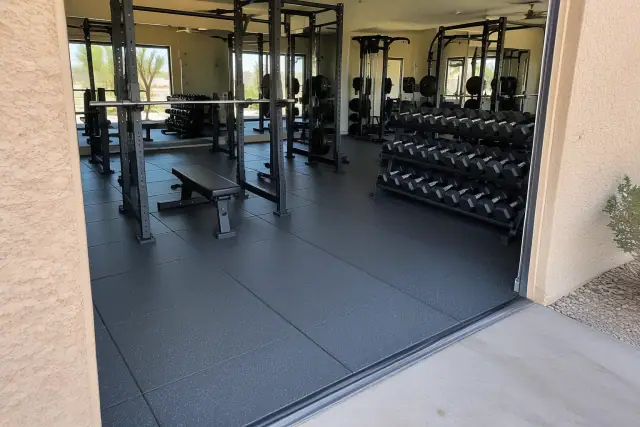
Interlocking rubber floor tiles installed in a commercial fitness weightlifting zone in Mesa, AZ.

Interlocking Rubber Tiles

Interlocking edges connect modular tiles without full adhesive coverage in many applications. This approach suits spaces that may change equipment layouts or need selective tile replacement.

  • Mechanical edges connect adjacent tiles
  • Can fit over suitable existing hard flooring
  • Sections can be lifted for reconfiguration
  • Individual damaged tiles can be swapped out
  • Cuts fit around columns and room corners
Request Estimate
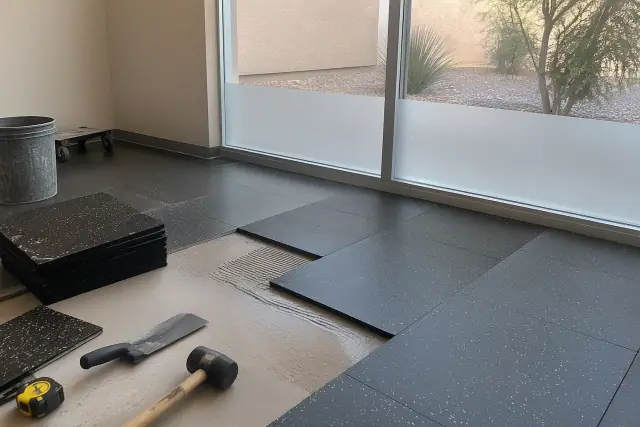
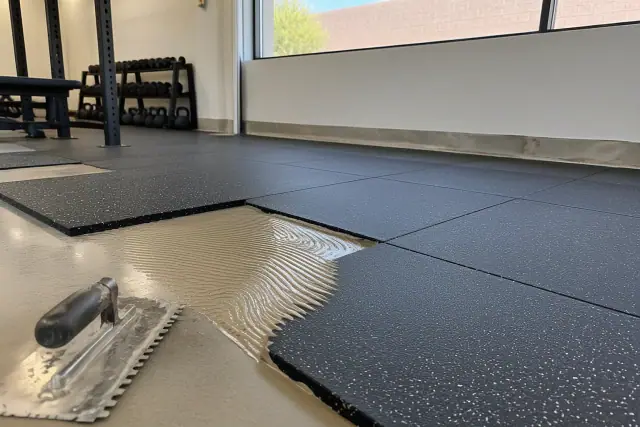
Glue-down rubber tile installation in progress with exposed adhesive and a notched trowel at a commercial gym in Mesa, AZ.

Glue-Down Rubber Tile

Glue-down tile uses an adhesive bond to hold the floor in place. Moisture and pH results guide adhesive and primer selection, and the prepared slab must support a sound bond.

  • Full-spread adhesive for suitable products
  • Moisture testing before adhesive selection
  • Primer chemistry matched to slab conditions
  • Roller seating to remove trapped air
  • Cure time before equipment returns
Request Estimate
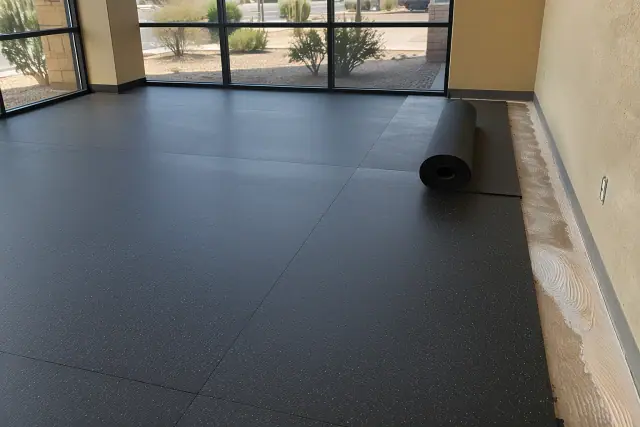
Rolled rubber flooring installed inside a building in Mesa, AZ, showing tight seams and adhesive.

Rolled Rubber Flooring

Rolled rubber ranges from 1/4 inch thick for light residential use to 3/4 inch or more for heavy commercial and industrial gym use. It suits large open rooms where fewer seams simplify cleaning and installation.

  • Rolls sized to room dimensions before cutting
  • Full-spread adhesive for permanent installations
  • Double-sided tape for suitable removable layouts
  • Double-cut seams glued flat
  • Transition strips where adjoining floors meet
Request Estimate
Recycled rubber flooring tiles installed at a commercial fitness facility in Mesa, AZ.

Recycled and Virgin Rubber Materials

Recycled rubber provides a lower-cost option for many home gyms and garages, while virgin rubber compounds offer a premium material choice. We consider density, thickness, expected loads, and exposure when choosing between products.

  • Recycled compounds for budget-conscious projects
  • Virgin rubber tile for premium applications
  • Density matched to traffic and equipment
  • Low-VOC product options
  • UV-stable choices for exposed garage areas
Request Estimate
Completed rubber floor tile installation at a public park in Mesa, AZ, showing seamless impact-absorbing safety surfacing.

Poured-in-Place Rubber Surfacing

Poured-in-place rubber is another option for playgrounds and high-impact training spaces. The intended activity guides product selection, including repeated heavy impact in gyms and fall-height requirements in play areas.

  • Playground surfacing for parks
  • Options for school play areas
  • Installations in HOA common areas
  • Impact-rated products for CrossFit spaces
  • Material selection based on the intended use
Request Estimate
Choose for the Space You Have

Choosing the Right Rubber Flooring Approach

Start with what the floor must support, whether it is a weight rack, rolling equipment, or a standing workstation. Then consider slab condition, heat exposure, and whether the layout needs to be removable. These details help us recommend a product and installation method that suit the room.

Moisture and pH Checks

We test concrete for moisture vapor emission and pH before selecting adhesives. Where readings exceed manufacturer thresholds, a moisture mitigation coating or vapor barrier may be needed. This evaluation helps identify bond problems before new flooring covers the slab.

Materials Matched to Equipment Loads

A free-weight zone, cardio area, and warehouse aisle place different demands on rubber flooring. We match thickness and density to expected impact, rolling loads, and foot traffic instead of applying the same product choice throughout every room.

Itemized Installation Quotes

Our quotes separate materials, surface preparation, and labor so you can compare the work included in each bid. Slab repair, moisture mitigation, and layout complexity can change the cost. Discussing these items early makes the installation scope easier to understand.

Preparation That Addresses Floor Problems

Why Choose Us for Rubber Tile Installation?

Tile performance depends on more than the visible surface. We evaluate the conditions behind lifted edges, loose seams, and uneven floors, then plan preparation and material selection around those findings. The common issues below show why that assessment matters.

Request a Floor Assessment

Moisture Beneath the Floor

Moisture moving through slab-on-grade concrete can interfere with adhesives and leave damp conditions beneath tile. This deserves particular attention in older homes where vapor barrier provisions may differ. We test the slab and select mitigation when readings exceed the flooring manufacturer's limits.

Uneven or Settled Concrete

Slab settling can leave low spots and uneven surfaces beneath otherwise sound tile. In older areas near Downtown Mesa and along Main Street, we document these conditions during the walkthrough. Grinding, patching, and removing old residue prepare the surface for a more consistent installation.

Heat-Related Movement

Heat can soften unsuitable adhesives and cause interlocking products to shift or warp. We use garage products rated for the conditions and plan perimeter expansion gaps for thermal movement. Direct sunlight at garage doors also influences material selection.

Gouged or Cracked Tiles

Heavy equipment drops can damage individual tiles even when the rest of the floor remains usable. We inspect the affected area and replace tiles where needed, using matched material when available. Selecting adequate thickness for the load helps address the cause of repeated damage.

Loose Seams and Curling Edges

Separated seams and lifted edges can develop where bonding or installation conditions were unsuitable. We assess whether the affected section can be re-adhered or needs replacement. Small separations are worth addressing before movement spreads to adjacent tiles.

Impact Noise in Shared Buildings

Dropped weights and moving equipment can carry sound into neighboring commercial spaces. This matters for gyms in shared buildings around the Fiesta District and Power Road corridor. Dense rubber compounds dampen impact noise compared with bare concrete, with product selection based on the activity.

From Site Walk to Finished Floor

Our Rubber Tile Installation Process

Each project begins with an assessment of the room and its existing floor. Residential jobs typically progress from site walk to finished floor within a matter of days, while larger commercial layouts may take longer and require phased work. Preparation needs and adhesive curing help determine the schedule.

01.

Walk Through and Measure the Space

We measure square footage, check door swing clearances, and identify transitions to adjoining floors. We also note equipment positions and obstructions such as columns or drains so the layout reflects how you use the room.

02.

Test and Prepare the Subfloor

We test moisture vapor emission and pH, then address conditions that interfere with bonding. Preparation may include grinding or shot-blasting coatings, removing adhesive residue, and patching cracks and low spots exceeding 3/16 inch over a 10-foot span. Primer and adhesive choices follow the slab findings.

03.

Dry-Lay the Tile Pattern

We dry-lay the pattern to plan cuts and minimize seams in highly visible areas. Perimeter gaps account for thermal movement, and the layout is adjusted around room edges, columns, and adjoining surfaces before attachment begins.

04.

Install and Seat the Flooring

Depending on the selected product, we use full-spread adhesive, pressure-sensitive tape, or interlocking mechanical edges. Rollers seat the tiles and remove trapped air pockets that can lead to bubbles. The attachment method follows the product and the intended use.

05.

Inspect Seams and Finish Edges

We inspect seams and trim edges for the completed layout. Transition strips or reducer moldings finish changes to adjacent tile, carpet, or concrete, while rolled flooring seams are double-cut and glued flat.

06.

Allow Curing and Explain Floor Care

Adhesive-set floors generally need 24 to 48 hours of curing before equipment or heavy foot traffic returns. We explain cleaning with pH-neutral products and avoiding petroleum-based solvents that can damage rubber. Maintenance guidance also covers addressing small seam separations early.

Plan Your Rubber Tile Project

Request a Rubber Floor Tile Estimate

Tell Mesa Rubber Flooring how you plan to use the space and whether the existing floor needs repair or replacement. We can assess the substrate, compare suitable materials, and provide an itemized quote for preparation and installation.

Answers for Your Flooring Project

Rubber Floor Tile Installation FAQs

Compare installation requirements, material choices, care needs, and costs before planning your project. These answers cover common questions about rubber tile floors in Mesa homes and commercial spaces.

Call About Your Floor

Rubber tile can cost more upfront than vinyl composition tile or carpet, and some lower-grade recycled products have an initial off-gassing odor that fades over the first few weeks. Prolonged direct UV exposure can cause fading, and petroleum-based cleaners or certain solvents can damage the surface. We help select UV-stable, low-VOC products and explain care requirements for the chosen material.

Properly installed rubber flooring commonly lasts 20 years or more with appropriate care and maintenance. Actual lifespan depends on the material, installation quality, subfloor preparation, traffic, and equipment loads. Home gyms and garages may experience less wear than busy commercial spaces.

Poor installation can lead to lifted seams, trapped moisture, and adhesive failure within the first year or two. Professional installation includes moisture testing, subfloor correction, and adhesive selection for the product and slab conditions. An itemized quote helps you assess the preparation and labor involved before work begins.

Clean, level, cured concrete is a common substrate for rubber flooring. Existing hard flooring such as tile or sealed wood may also be suitable if it is flat and structurally sound, while plywood may need appropriate underlayment to limit moisture wicking. We evaluate the existing surface before recommending an installation method.

Premium rubber tile material typically runs $12 to $20 per square foot. Surface preparation adds $2 to $4 per square foot when slab repair or moisture mitigation is needed, and labor typically adds $3 to $6 per square foot depending on layout complexity. We itemize these components so the quote reflects the work your floor requires.

Yes, but the product must suit garage temperatures and sunlight exposure. We choose heat-tolerant, UV-stable rubber products and include perimeter gaps for thermal movement. Slab testing and suitable adhesive selection remain part of the installation assessment.

Baseboard removal usually is not required because a small perimeter gap can be covered by trim or a reducer strip. Removing damaged baseboards or replacing trim may provide a cleaner finished edge. We assess door clearances and edge details during the walkthrough.

A standard residential or small commercial rubber flooring project in Mesa typically runs between roughly $5,857 and $11,715, including materials and labor. Square footage, material choice, slab preparation, and layout complexity affect the total. For broader context, national flooring installation projects across flooring types average around $5,500 and range from $1,000 to $10,000 depending on scope. Recycled rubber and simpler layouts can reduce costs compared with premium materials and more involved preparation.

Rolled rubber generally costs less per square foot installed in large open areas, where fewer seams reduce labor. Interlocking tiles fit irregular rooms and allow individual sections to be lifted or replaced. The decision also depends on whether you want a permanent installation or expect to rearrange equipment.

Equipment and heavy foot traffic should stay off adhesive-set flooring until the required cure is complete. Product choice and site conditions affect the schedule, so we explain the return-to-use timing for the selected installation. Larger commercial projects may be phased around the floor plan.

Isolated damage can often be addressed by re-adhering a section or replacing individual tiles. If damage covers more than roughly 20 to 30 percent of the total floor area, or the adhesive bond has failed across multiple zones, full replacement is usually more cost-effective than repeated spot repairs. We assess the extent of damage and whether matching replacement material is available.

Use pH-neutral cleaners and avoid petroleum-based solvents that can break down rubber compounds. Address small seam separations early, and check for damage where heavy equipment moves or drops occur. We provide maintenance guidance suited to the installed product.

Mesa Rubber Flooring serves Mesa and the surrounding East Valley, including Tempe, Chandler, Gilbert, Queen Creek, and Apache Junction. We assess residential and commercial spaces based on the existing floor, planned activity, and equipment loads.