Proudly serving Mesa, Gilbert, Chandler, Tempe, Scottsdale, Queen Creek & surrounding areasCall or Text 24/7: 480-319-7553
Aerial drone view of suburban neighborhoods and desert landscaping in Mesa, AZ.

Gym & Home Gym Rubber Flooring in Mesa, AZ for Weight Rooms & Workout Spaces

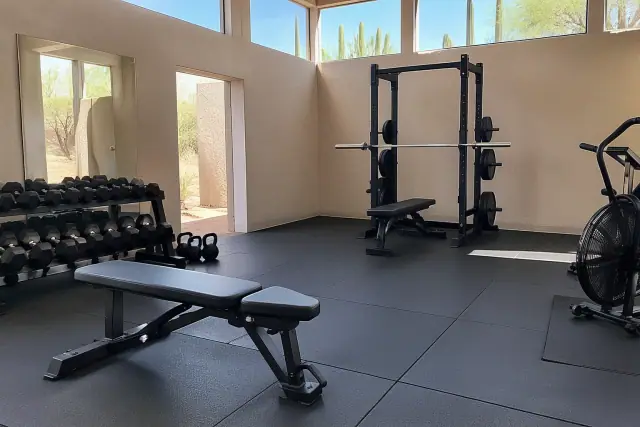
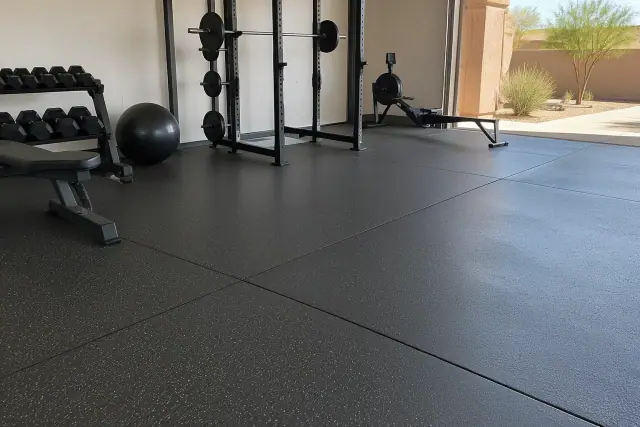
Mesa Rubber Flooring installs gym and home gym rubber flooring in Mesa, Arizona. We fit rubber rolls and interlocking tiles for spare-room workouts, garage conversions, and commercial weight rooms. Our services also include repairs, replacement, and thicker flooring for dedicated lifting areas. Each layout starts with your room dimensions, equipment, and training style.

Heat, moisture, and heavy equipment all affect how a gym floor performs on an Arizona concrete slab. We check the subfloor before installation and plan seams around racks, platforms, and daily traffic. Our crews work with USA-made rubber compounds selected for the impact and use each space receives. Contact us for a walk-through and a clear discussion of material, thickness, and cost.

From home workout rooms to CrossFit boxes and apartment fitness centers, we supply and install rubber flooring with subfloor preparation and seam work included in the project plan.

Mesa Rubber Flooring installs gym and home gym rubber flooring in Mesa and nearby Tempe, Chandler, Gilbert, Queen Creek, and Apache Junction.

★ ★ ★ ★ ★4.9/5 Customer Rating · 19 Years of Flooring Experience · 1,000+ Flooring Projects Completed · Licensed, Bonded & Insured · Residential & Commercial Flooring

Gym Flooring Options & Benefits

What Is Rubber Gym Flooring?

Rubber gym flooring creates an impact-absorbing surface between your workout equipment and the concrete below. Rolls and tiles suit different room sizes, equipment layouts, and levels of traffic.

A home training room needs a balance of cushioning and stability, while a commercial weight room must handle continuous use. Dedicated lifting zones can use thicker material than nearby cardio areas.

The installation method matters as much as the format. We assess slab moisture, plan cuts and seams, and choose loose-lay or adhesive installation to suit the space.

Benefits for Your Training Space

A floor matched to your workouts helps protect equipment and makes a concrete room more practical for training. The right combination of material, thickness, and layout can provide:

  • Impact absorption beneath dumbbells and free weights
  • Protection for concrete beneath workout equipment
  • Less impact noise with suitable underlayment
  • Replaceable tiles where damage is limited to one area
  • Fewer seams across large rooms with rolled rubber
  • Cushioning in cardio and standing areas
  • Thicker surfacing in dedicated lifting zones
  • Removable mats for lighter garage gym setups
Installation, Repair & Replacement

Gym & Home Gym Flooring Services

We install flooring for home training rooms, garage gyms, and commercial facilities across Mesa. We also repair loose tiles and separated seams, replace worn rubber, and plan specialty surfaces around the demands of each property.

Home Gym Floor Installation

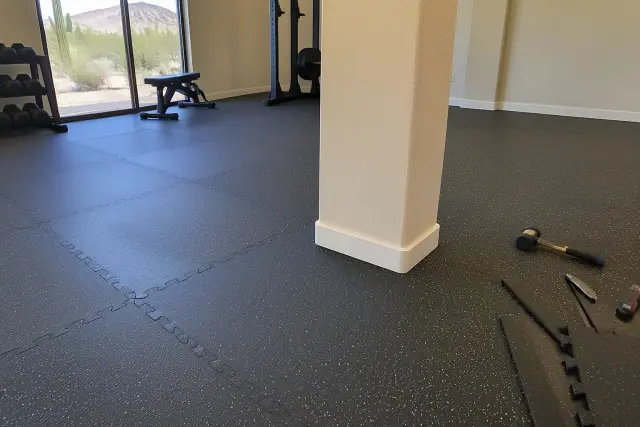
Rubber gym flooring installation progress around a corner column in a Mesa, AZ residential basement.

We measure and fit rubber flooring for spare rooms, dens, and other residential training spaces. Most home-use installations use rubber from 3/8 inch to 1/2 inch thick, with noise-reducing underlayment options where workouts share a building with living areas.

Request Estimate

Garage Gym Conversions

Precision-cut rubber flooring installed in a residential basement home gym in Mesa, AZ.

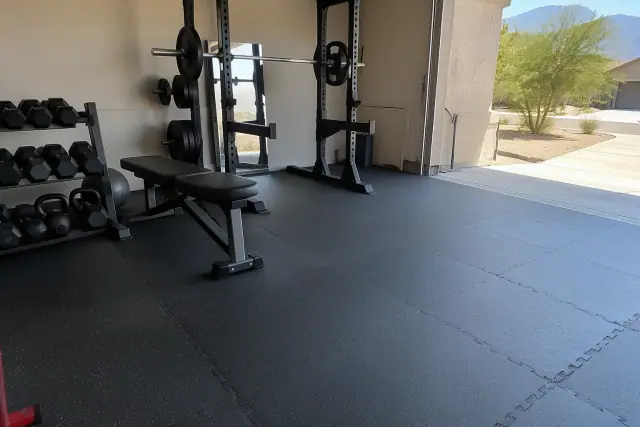
Garage bays in Dobson Ranch and Red Mountain Ranch can become practical spaces for racks, cardio equipment, and free weights. We assess unsealed concrete, existing slab cracks, stains, and control joints before planning the rubber floor, with material selection that accounts for garage heat.

Request Estimate

Commercial Gym Flooring

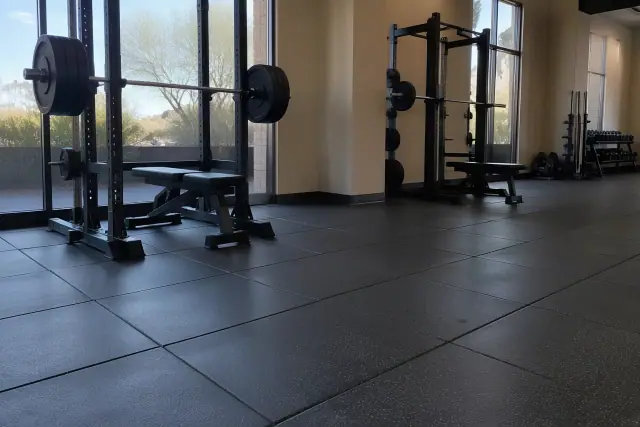
Commercial rubber gym flooring installed beneath barbell racks in a Mesa, AZ gym facility.

We install rubber surfaces for CrossFit boxes, apartment fitness centers, school weight rooms, and municipal recreation facilities. Layouts account for repeated impacts, stationary equipment, and continuous foot traffic, with dedicated platform zones and functional turf transitions where requested.

Request Estimate

Gym Floor Repair

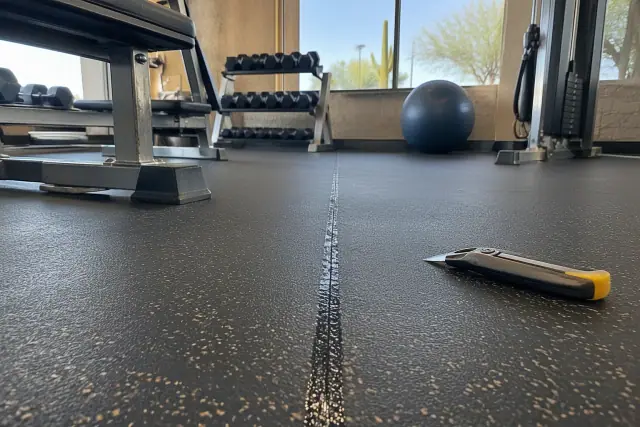
Repaired rubber gym flooring seam with a utility knife at a commercial facility in Mesa, AZ.

Gouges, tears, loose tiles, and failed adhesive do not always call for a complete replacement. We re-seat or re-cut affected interlocking tiles and re-adhere separated rolled-rubber seams after checking the surrounding floor for the same problem.

Request Estimate

Rubber Flooring Replacement

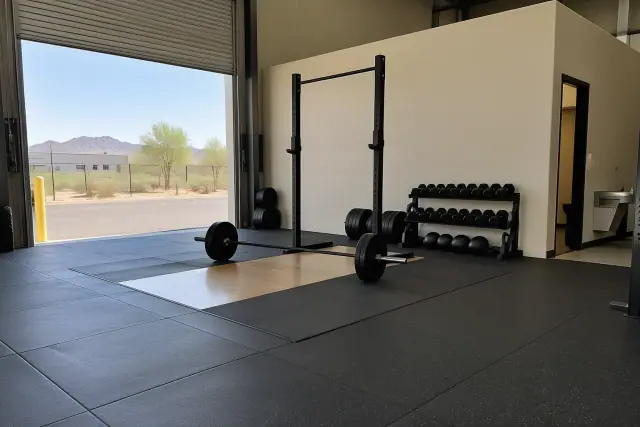
Rubber flooring replacement with interlocked tiles around a barbell platform in Mesa, AZ.

Flattened mats and permanently compressed areas may no longer provide the cushioning your workouts need. We replace worn flooring with higher-density rubber matched to current equipment loads, or replace individual damaged tiles when the rest of the floor remains usable.

Request Estimate

Specialty Rubber Surfacing

Recycled rubber gym flooring installed at a fitness center in Mesa, AZ.

Beyond gym floors, we install industrial rubber flooring, poured-in-place surfaces, and playground surfacing. Projects include warehouse and manufacturing spaces near Falcon Field and the Elliot Road Technology Corridor, along with parks, HOAs, and school properties where surfacing is selected around the installed play equipment.

Request Estimate
Materials & Formats

Rubber Gym Flooring Options

Tile format, roll layout, rubber compound, and cushioning each affect the finished floor. We help you compare these choices against equipment loads, room access, noise concerns, and the amount of daily use.

Interlocking rubber tiles installed on a residential basement gym floor in Mesa, AZ.

Interlocking Rubber Tiles

Interlocking tiles offer a modular surface for home gyms and weight rooms. They commonly install without adhesive in residential settings and allow damaged sections to be replaced individually.

  • Available in 2x2 foot and 4x6 foot formats
  • Thicknesses from 3/8 inch up to 3/4 inch
  • Thicker options for heavy free-weight use
  • Removable layouts for future relocation
  • Individual tile replacement for localized damage
Request Estimate
Rolled black rubber flooring installed at a fitness facility in Mesa, AZ.

Rolled Rubber Flooring

Rolled rubber creates a continuous surface with fewer seams than tile, making it useful for commercial weight rooms and CrossFit boxes. Glue-down installation suits facilities with heavy daily traffic.

  • Roll widths up to 4 feet
  • Roll lengths up to 50 feet
  • Continuous coverage across larger workout areas
  • Seam planning around racks and platforms
  • Heavier-gauge material beneath stationary equipment
Request Estimate
Vulcanized rubber flooring installation with tightly aligned seams at a home in Mesa, AZ.

Vulcanized Rubber

We supply USA-made vulcanized rubber for gym floors that need to handle heavy impact and regular equipment use. Material selection considers the room's heat exposure and the demands of the workout area.

  • Roll and tile formats for different layouts
  • Compounds selected for heavy-impact use
  • Material density matched to equipment loads
  • Shore A hardness ratings considered by application
  • Manufacturer documentation for material testing
Request Estimate
Interlocked rubber gym flooring installation in Mesa, AZ, showing cushioned anti-fatigue mats.

Anti-Fatigue Mats & Cushioned Zones

A mixed-use home gym can combine cushioning in cardio areas with thicker rubber beneath lifting platforms. Anti-fatigue mats also make extended standing on concrete more comfortable in commercial and industrial spaces.

  • Cushioning in cardio and standing zones
  • Thicker rubber beneath lifting platforms
  • Options for homes with attached living areas
  • Foam or cork underlayment for noise-sensitive spaces
  • Material choices matched to each activity
Request Estimate
Poured-in-place rubber flooring with a smooth texture for a gym in Mesa, AZ.

Poured-In-Place Rubber

Poured-in-place rubber provides a seamless, custom-colored finish for facilities that want a continuous architectural surface. We also install poured rubber for playground applications, with surfacing selected around equipment fall-height requirements.

  • Continuous finish without tile or roll seams
  • Custom color choices
  • Options for specialty facility layouts
  • Playground applications for parks and HOAs
  • Surfacing selected for the intended use
Request Estimate
Match the Floor to the Workout

Choosing Your Gym Flooring Approach

Start with the equipment and how it will be used: cardio machines, moderate free weights, or repeated barbell drops. Then consider the slab, garage heat, noise transfer, and whether you may want to relocate the floor later. We use those details to recommend thickness, format, and installation method.

Slab Checks Before Installation

Arizona slab construction needs careful moisture and surface assessment before rubber goes down. Our crews check the concrete and plan subfloor preparation before adhesive installation, helping address conditions that can lead to bubbling, curling, or failed seams.

Materials Matched to Your Equipment

We select USA-made rubber compounds for the way your gym operates, from home dumbbell workouts to continuous commercial traffic. Shore A hardness ratings and documented manufacturer testing help guide material choice alongside thickness and equipment loading.

Walk-Through Estimates

A site visit lets us measure the room and explain how subfloor condition, flooring format, and installation method affect cost. We discuss material and labor together so you can compare the proposed floor with your equipment needs and project budget.

Problems We Assess

Addressing Common Gym Flooring Problems

Mesa Rubber Flooring holds current Arizona Registrar of Contractors licensing and carries insurance for commercial project requirements. Our installation and repair work starts with the conditions beneath and around the rubber, including moisture, heat exposure, equipment pressure, and wear at seams.

Request a Flooring Assessment

Curling or Loose Tile Edges

Interlocking edges can lift when tiles are fitted poorly or moisture affects the subfloor. We check the fit and surrounding seams before re-seating, re-cutting, or replacing the affected pieces.

Moisture Beneath the Rubber

Trapped slab moisture can cause bubbles and adhesive failure beneath glue-down flooring. Concrete conditions can also change through monsoon humidity swings, making moisture assessment a key part of the installation plan.

Permanent Equipment Impressions

Thin or worn rubber can remain compressed under racks and heavy machines. Lower-grade bonded rubber may develop permanent marks within a year or two of heavy use; replacement material should match the equipment load rather than simply cover the impression.

Workout Noise Near Living Space

Impact from dumbbells and kettlebells can carry through slabs and into adjoining rooms. For gyms above living areas or in shared buildings, we consider foam or cork underlayment beneath the rubber to reduce impact transfer.

Separated Roll Seams

Heavy foot traffic and adhesive failure can open seams in commercial gym floors. We inspect the surrounding material, then re-adhere and re-seal repairable seams with commercial-grade adhesive selected for Arizona temperature conditions.

Heat & Sun Exposure

Mesa garage conditions can range from 40°F winter mornings to 130°F summer afternoons, while uncooled garages can exceed 110°F in summer. Heat cycling and direct sunlight near doors or windows can affect rubber and adhesive, so we account for exposure when choosing materials and planning repairs.

From Site Visit to Finished Floor

Our Rubber Flooring Installation Process

We begin with the space and the slab, then plan the material and layout before scheduling installation. Residential work is organized around room access, while commercial and industrial projects are scheduled around facility downtime.

01.

Walk the Training Space

We visit the room or facility to discuss your training style, equipment, and floor concerns. This identifies whether the project needs a full installation, a garage conversion, repairs, or replacement of worn areas.

02.

Assess Moisture & Slab Condition

We check the concrete for moisture and surface issues before choosing the installation method. Existing cracks, stains, and unsealed areas help define the preparation needed for the proposed rubber floor.

03.

Measure & Plan the Layout

We measure the floor and plan cuts around room edges, racks, and platforms. Tile or roll placement is arranged to suit equipment positions and limit awkward seams in busy workout areas.

04.

Select Material & Thickness

We compare rubber formats, density, and thickness against the equipment load and expected use. Noise-sensitive rooms may need underlayment, while lifting platforms can use thicker surfacing than surrounding cardio zones.

05.

Confirm Cost & Schedule

We explain material and labor costs after the site assessment and agree on an installation day. Most residential jobs finish in a single day; commercial and industrial work is scheduled around the facility's downtime.

06.

Fit the Floor & Finish Seams

We prepare the subfloor, cut and fit the rubber, and use the planned loose-lay or glue-down method. Seam work and finished edges complete the layout around the training equipment and room boundaries.

Plan Your Training Space

Request a Gym Flooring Estimate

Tell us about your room, equipment, and the floor problems you want to solve. We will walk the space, measure it, and discuss a rubber flooring option suited to your home gym or commercial facility.

Materials, Costs & Installation

Gym & Home Gym Rubber Flooring FAQs

Compare thicknesses, material costs, installation methods, and repair options before choosing your gym floor. These answers cover common questions from Mesa homeowners and facility managers.

Call About Your Gym Floor

Rubber gym flooring is available from big-box retailers, online suppliers, and installers such as Mesa Rubber Flooring. We supply USA-made rubber in roll and tile formats and handle delivery and installation together. Buying through the installer allows the material to be matched to your slab, equipment load, and room dimensions before cutting.

For many home gyms, vulcanized rubber rolls or interlocking tiles offer a useful balance of cushioning, durability, and stability. Moderate free-weight workouts often suit 3/8 inch to 1/2 inch material, while heavier training may need thicker rubber in specific zones. We choose the format and thickness around your equipment and the conditions in the room.

Rubber flooring material costs can range from $10 to $2,000 depending on the amount purchased, thickness, and format; that broad range is not an installed project total. A standard 10x10 home gym averages around $300 in materials, with a range of $125 to $1,500 depending on product grade and thickness. Commercial flooring is priced per square foot, with labor and subfloor preparation affecting the total. We provide a walk-through estimate for the actual installation scope.

Many residential installations place rubber directly over a clean, dry concrete slab. Foam or cork underlayment may be added where reducing impact noise is a priority, such as a gym above living space. We assess slab moisture before a glue-down installation because trapped moisture can undermine the adhesive.

Rubber is heavy, can cost more upfront than foam, and may have a noticeable odor when new. That odor often fades over several weeks with ventilation, while dark rubber near sun-exposed doors or windows can absorb heat. Material quality, equipment loading, and installation conditions all affect the risk of compression marks or curling edges.

Labor depends on floor area, slab condition, and whether the material is loose-laid or glued down. Adhesive installation adds material handling, seaming, and cure-time considerations. Larger commercial jobs and thicker flooring also affect the work involved, so we quote material and labor after seeing the space.

Rubber gym flooring is available with textured surfaces selected for grip during workouts. We consider the activities in the room when choosing the finish, since cardio areas and lifting zones have different demands. Sweat and moisture still need attention, and sound seam work helps keep the floor's edges intact.

Yes, modular interlocking flooring allows individual damaged tiles to be replaced when the surrounding floor remains usable. We check nearby seams and the subfloor before deciding whether the issue is limited to that tile. Loose or curling pieces may be re-seated or re-cut where appropriate.

CrossFit lifting zones typically use rubber from 3/4 inch to 1 inch thick for repeated barbell drops. Dedicated platform areas can be planned separately from cardio or general movement space. The final choice depends on the equipment and the way the area will be used.

Most residential installations are completed in a single day. Commercial and industrial projects are scheduled around facility downtime, with timing affected by preparation, floor area, and the installation method. We discuss the schedule after measuring and checking the slab.

Interlocking tiles suit homeowners who value a removable layout or individual tile replacement. Rolled rubber provides broader continuous coverage with fewer seams and can suit larger workout spaces. We compare both against garage conditions, equipment, and whether the floor needs adhesive installation.

Rubber flooring in heavy-use facilities typically lasts 10 to 20 years, though constant barbell drops and UV exposure can shorten that lifespan. Curling edges, permanent compression, and odor that persists after cleaning are reasons to assess the floor. Localized damage may allow a repair or tile replacement instead of replacing the entire surface.

We install gym flooring throughout Mesa, including Eastmark, Las Sendas, the Fiesta District, Dobson Ranch, and Red Mountain Ranch. Our East Valley service area also includes Tempe, Chandler, Gilbert, Queen Creek, and Apache Junction. Contact us to discuss access and the flooring scope at your property.