Proudly serving Mesa, Gilbert, Chandler, Tempe, Scottsdale, Queen Creek & surrounding areasCall or Text 24/7: 480-319-7553
Aerial drone view of suburban neighborhoods and desert landscaping in Mesa, AZ.

Gym & Home Gym Rubber Flooring in San Tan Valley, AZ for Homes & Facilities

Mesa Rubber Flooring supplies and installs gym and home gym rubber flooring in San Tan Valley, AZ. We fit garage rubber flooring, rolled rubber, and rubber floor tiles to the room and the equipment it holds. Our services also cover commercial and industrial floors, playground surfacing, poured-in-place rubber, and anti-fatigue matting. For existing floors, we repair separated seams, replace damaged tiles, and assess areas that need replacement.

Bare concrete makes garage workouts harder on equipment and lets impact noise travel through shared walls. Summer heat, monsoon humidity, and slab movement also affect how flooring performs here. We inspect the subfloor, check moisture, and discuss equipment placement before recommending a material. Call for a measurement and material walkthrough so the flooring choice fits your space.

We serve Johnson Ranch, Circle Cross Ranch, Copper Basin, Ironwood Crossing, San Tan Heights, and Skyline Ranch. San Tan Valley's growth to nearly 100,000 residents and its 2025 incorporation under Proposition 495 provide the backdrop for new garages and bonus rooms ready for finished flooring.

★ ★ ★ ★ ★4.9/5 Customer Rating - 19 Years of Flooring Experience - 1,000+ Flooring Projects Completed - Licensed, Bonded & Insured - Residential & Commercial Flooring
Flooring Services

Rubber Flooring Services in San Tan Valley, AZ

From a garage power rack to a busy weight room, the flooring needs to match the space's daily use. Compare the material formats and installation services below, including specialized surfaces for play areas and standing workstations. For another nearby service area, see Gilbert, AZ .

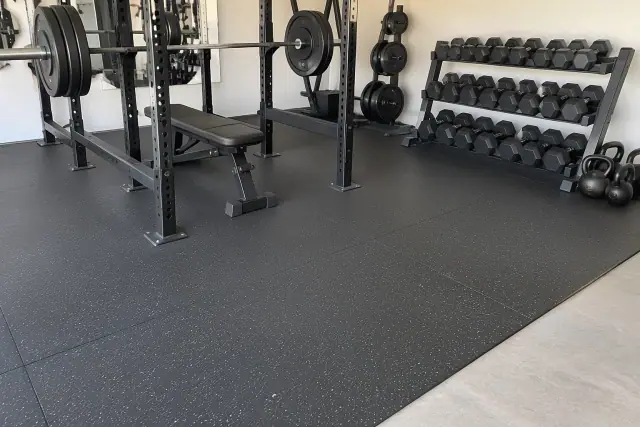
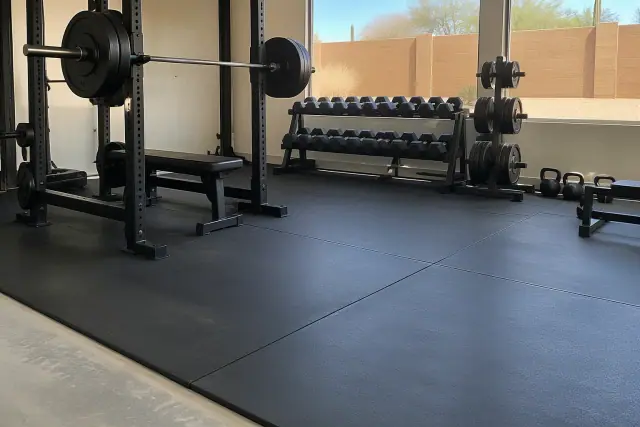
Gym & Home Gym Rubber Flooring

Rubber gym flooring installed over concrete in San Tan Valley, AZ.

We fit gym flooring for home lifting areas, CrossFit boxes, and personal training studios. Cardio zones may use 3/8-inch rubber, while Olympic lifting platforms can need 3/4-inch or heavier material. Equipment placement guides the layout. Explore Service

Explore Service

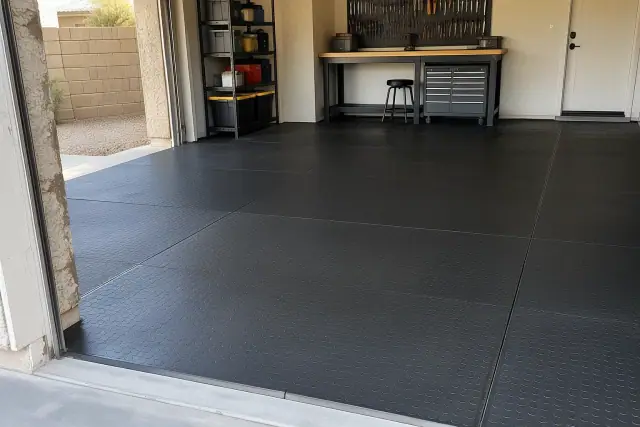
Garage Rubber Flooring

Heavy-duty rubber flooring installed in a garage in San Tan Valley, AZ.

A shared garage needs flooring selected for vehicle traffic, dropped tools, and workouts. We install rolled rubber and interlocking tiles rated for these conditions and the demands of 115-degree summer heat. Explore Service

Explore Service

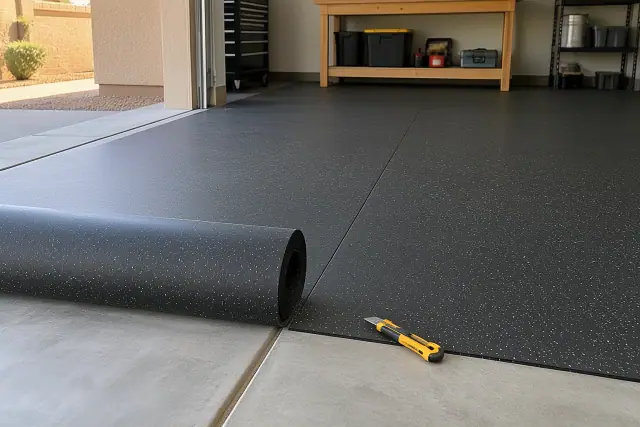
Rolled Rubber Flooring

Rolled rubber flooring installed on a concrete garage floor in San Tan Valley, AZ.

Rolled rubber minimizes seams across open weight rooms and garages. We stock rolls from 1/4 inch to 1/2 inch thick in black and color-flecked finishes, then cut and fit the material to the room. Explore Service

Explore Service

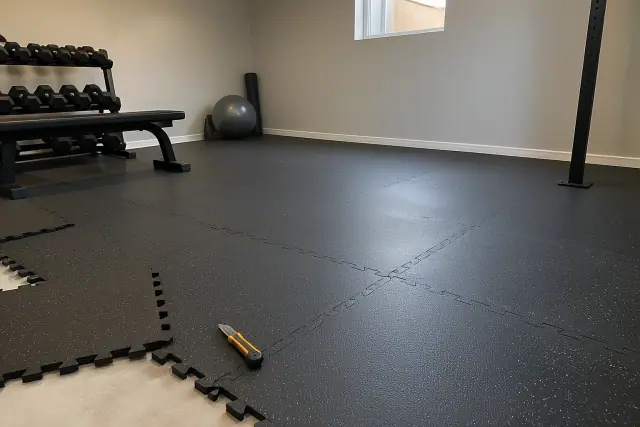
Rubber Floor Tile Installation

Rubber floor tile installation in a residential basement exercise space in San Tan Valley, AZ.

Interlocking tiles suit rooms where equipment may move or individual floor sections may need replacement. We align the tiles and fit them around fixed equipment, HVAC returns, and door thresholds for a stable, finished edge.

Commercial Rubber Flooring

Thick black rubber flooring installed in a gym in San Tan Valley, AZ, showing barbell racks and visible tile seams.

Commercial-grade rubber handles heavier daily use in gyms, retail back rooms, warehouses, and office fitness centers. We coordinate installation with property managers and general contractors around business hours and project requirements.

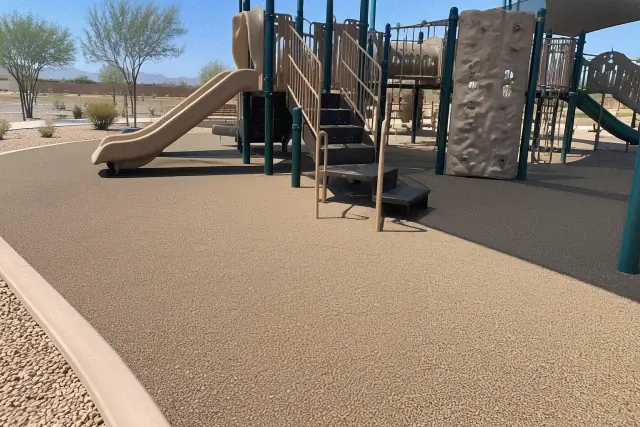
Playground Rubber Surfacing

Poured-in-place playground rubber safety surfacing at a park in San Tan Valley, AZ.

HOA playgrounds, schools, and daycare facilities need surfacing selected for the play equipment's critical fall height. We install poured-in-place and tile-based rubber surfacing with impact attenuation as a central part of the specification.

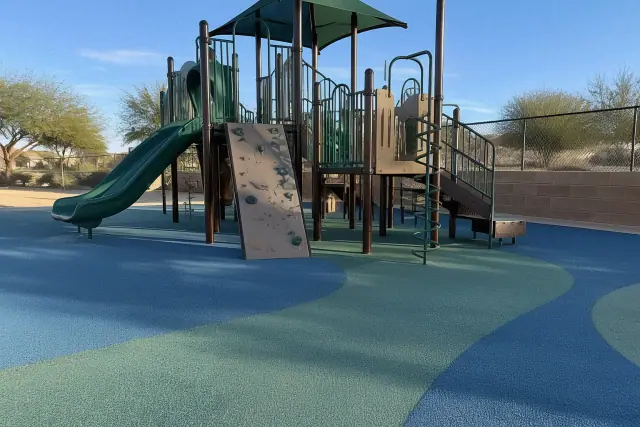
Poured-in-Place Rubber Flooring

Poured-in-place rubber safety surfacing beneath a playground climbing structure in San Tan Valley, AZ.

Poured-in-place rubber creates a continuous surface for playgrounds, pool decks, and commercial entries. We mix and trowel an EPDM top layer over a recycled rubber base on-site, then allow the surface to cure.

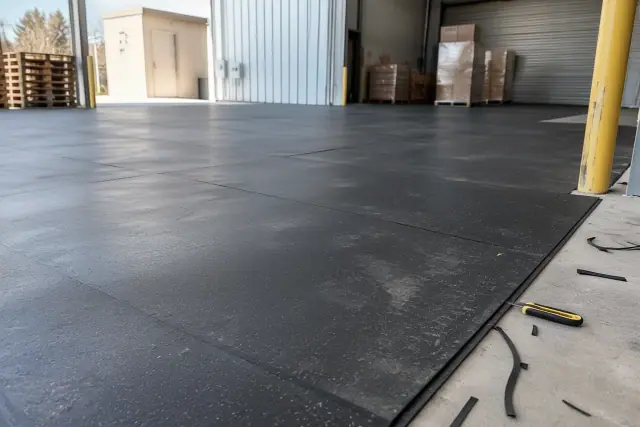
Industrial Rubber Flooring

Industrial rubber flooring installation with tight seams in a San Tan Valley, AZ warehouse.

Warehouses and light manufacturing spaces need material matched to forklift traffic, abrasion, and chemical exposure. We install heavy-duty rubber matting and rolled flooring rated for the loads and conditions of the work area.

Anti-Fatigue Rubber Flooring

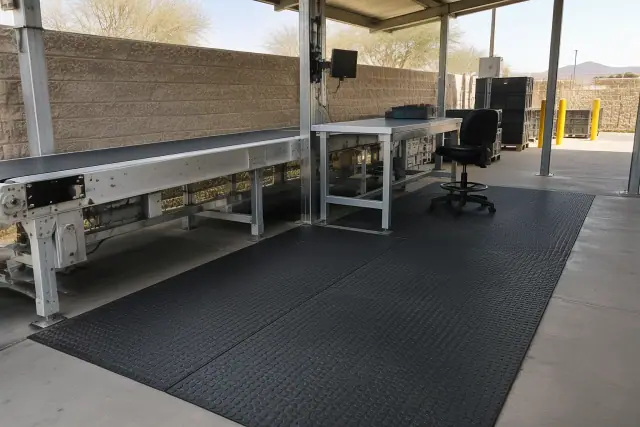
Anti-fatigue rubber flooring installed at a workstation in San Tan Valley, AZ.

Anti-fatigue matting adds cushioning at production lines, kitchens, and standing workstations during an 8-to-10-hour shift. We fit each station's dimensions and use beveled edges to reduce abrupt transitions underfoot.

Rubber Flooring Repair & Replacement

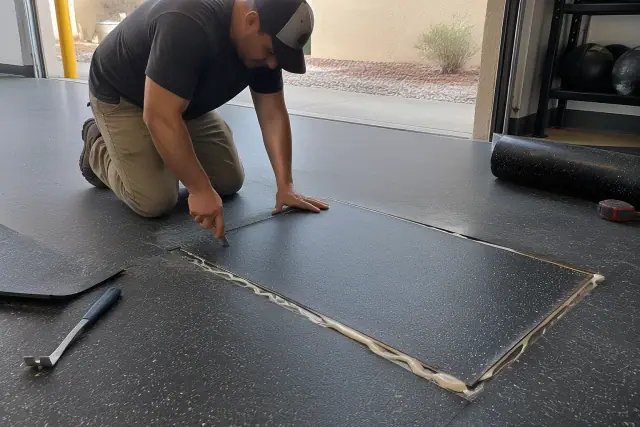
Technician repairing damaged rubber flooring with a freshly bonded patch seam in San Tan Valley, AZ.

Separated seams, curled tiles, and lifted sections do not always require replacing the whole floor. We repair seams, replace individual tiles, and re-adhere loose areas after assessing heat cycling, moisture, and the existing adhesive.

Material Selection

Choose Rubber Flooring Around Your Equipment

Start with the equipment load, room conditions, and how you use each area. Thickness, density, material format, and installation method all affect the finished floor; each deserves a place in the material walkthrough.

Match Thickness to Impact

For home lifting and equipment zones, rolled rubber between 1/2 inch and 3/4 inch thick is a common choice. Heavier free-weight areas may need 3/4-inch or thicker material or a double-layered layout, depending on impact.

Compare Density and Published Specs

Thickness alone does not tell you how a floor handles load. We select products with published density, thickness tolerance, and wear-layer specifications so the material choice reflects the equipment it must support.

Plan for Sun and Garage Heat

Sun exposure through windows or an open garage door changes the product requirements. We select heat-rated and UV-stabilized rubber for exposed spaces and account for thermal expansion at seams.

Choose Rolls or Modular Tiles

Large, open rooms benefit from fewer seams in rolled material. Interlocking tiles make a modular layout practical when you expect to rearrange equipment or want access to individual sections.

Use Different Materials by Zone

A lifting platform, treadmill area, and stretching corner place different demands on a floor. We can combine thicknesses, use contrasting colors for activity zones, and make custom cuts around fixed equipment.

Compare the Installed Cost

A typical two-car garage home gym conversion of around 400 to 500 square feet often falls between $1,600 and $5,000, depending on material choice. Compare the thickness, grade, and installation method alongside the total floor area.

San Tan Valley Floor Conditions

Common Rubber Flooring Problems

The visible damage is only part of the story. Slab condition, trapped moisture, material density, and heat exposure help explain why a floor shifts, curls, or wears out and what needs attention before new material goes down.

Request a Floor Assessment

Weight Impact and Shared-Wall Noise

Dropped weights on bare concrete transmit impact through the slab and adjoining rooms. Rubber adds shock absorption and sound dampening, with the material thickness and density selected for the lifting load.

Heat-Damaged Garage Flooring

Exposed concrete slabs can exceed 140°F in summer, and garage temperatures can exceed 120°F in July and August. Rubber unsuited to sustained heat may soften or warp, making the product's heat rating part of the selection.

Moisture Beneath Adhesive

A slab can look dry while retaining moisture beneath the surface. Trapped moisture can weaken an adhesive bond, so we test the slab before an adhesive-based installation and select the attachment method accordingly.

Hairline Cracks and Uneven Slabs

Caliche-heavy and expansive soils in Pinal County can contribute to slab movement and irregularities. We inspect hairline cracks and account for flexible adhesive systems and control joints where needed.

Curled Edges and Open Seams

Heat cycling, repeated loading, and moisture can leave tiles curled or rolled flooring lifted at the seams. We assess the cause before choosing a seam repair, individual tile replacement, or a wider tear-out.

Dust and Grit on the Surface

Arizona dust and haboob-season grit can collect on a workout floor, and black rubber may show it readily. Tight seams and an easy-clean surface help with routine care using a mop and mild detergent.

Our Installation Approach

Why Choose Mesa Rubber Flooring

A useful flooring recommendation starts with the room, the slab, and the equipment list. We combine site measurements with product specifications and a written quote so you can compare the proposed material and installation method.

Licensed, Bonded and Insured

Mesa Rubber Flooring operates as a licensed flooring contractor under Arizona Registrar of Contractors requirements. We carry bonded and insured status for installation work.

Moisture Checks Before Adhesive

We test slab moisture before an adhesive-based installation and check grade issues during the site inspection. These findings guide subfloor preparation and adhesive selection instead of relying on the surface appearance alone.

A Written Quote After Measurement

We measure the space and walk through material options before providing a written quote. Room size, thickness, material grade, and the installation method inform the scope you review before work starts.

From Measurement to Finished Floor

Our Rubber Flooring Installation Process

Measurement and subfloor inspection come first so material selection and preparation reflect the actual room. We confirm equipment placement, discuss the installation method, and finish seams and transitions as part of the work.

01.

Measure the Room and Equipment Layout

We measure the floor area and confirm where the power rack, treadmill, machines, and open workout space will sit. This helps identify material quantities and the transitions needed at doorways.

02.

Inspect the Slab and Test Moisture

We check for moisture, grade issues, and irregularities before ordering and installing the floor. The inspection helps identify the preparation needed for a slab affected by cracking or movement.

03.

Select the Material and Review the Quote

We compare rolls, tiles, or specialized surfacing against the equipment loads and room conditions. You receive a written quote after measurement, with the material choice and installation approach established before work begins.

04.

Prepare and Level the Subfloor

Our crews handle site preparation and subfloor leveling before laying the selected material. Where slab movement needs attention, preparation accounts for flexible adhesives and control joints rather than hiding the condition beneath the floor.

05.

Fit the Flooring and Finish Seams

We use the product's specified adhesive or loose-lay method and cut the material around fixed equipment. Seam finishing and transitions at door thresholds complete the fitted surface.

06.

Complete Edge Work and Cleanup

We finish the exposed edges and thresholds, then clean the work area and haul away old flooring material. Poured-in-place installations also need curing as part of the finishing process.

Practical Applications

Rubber Flooring for Different Spaces

Case Study 1: Garage home gyms: A power rack and lifting area need material selected for repeated impact, while cardio and stretching zones can use thinner rubber. A mixed layout helps put cushioning where the workout demands it.

Case Study 2: Shared fitness rooms: HOA, apartment, and corporate fitness rooms combine free weights, machines, and open exercise areas. Zoning by use and fitting around fixed equipment produces a layout suited to that mix.

Case Study 3: Sports training spaces: Batting cages, martial arts studios, and multi-sport facilities need shock absorption and consistent traction across the activity surface. Material selection follows the way athletes use the space.

Plan Your Flooring Project

Schedule a Rubber Flooring Walkthrough

Tell us about your room, equipment, and any damaged flooring already in place. Mesa Rubber Flooring can measure your San Tan Valley space, explain material options, and provide a written installation or repair quote.

Flooring Questions

Rubber Flooring FAQs for San Tan Valley, AZ

Compare material choices, installation costs, preparation, and care before choosing a floor. These answers cover the questions that matter for home gyms, garages, and commercial spaces.

Call Our Experts

Fitness retailers sell pre-cut rubber tiles and mats, while Mesa Rubber Flooring supplies and installs material fitted to your room. We review dimensions, subfloor conditions, equipment loads, and heat exposure before recommending rolls or tiles. That assessment helps avoid gaps, short orders, and a product unsuited to the room.

Installed rubber gym flooring in San Tan Valley typically runs $3 to $12 per square foot, including labor, depending on thickness and material grade. Commercial installations using heavier-duty products or poured-in-place surfaces can cost more because of material and preparation requirements. We provide a written quote after measuring the space and discussing the material choice.

The best fit depends on whether the room holds heavy free weights, cardio machines, or mostly open exercise space. Rolled rubber suits broad lifting areas with fewer seams, while interlocking tiles offer a modular layout. Density matters as much as thickness: a denser 1/2-inch mat can outperform a lower-density 3/4-inch product under heavy barbell work.

Rubber can have an initial odor that typically fades within a few weeks with ventilation. It is heavier and generally costs more up front than foam, and black surfaces can show dust readily. Products without suitable UV resistance may fade or become brittle with prolonged sun exposure.

Rubber is better suited to heavy equipment and repeated weight impact because it resists permanent compression and reduces noise transfer. Foam is lighter and less expensive, making it useful for low-impact yoga or stretching corners. Choose around the activity instead of using the same material for every zone.

For general fitness with dumbbells and machines, 3/8-inch rubber is usually sufficient. Barbell work and lifting platforms may need 1/2-inch to 3/4-inch material or a double-layered approach. We consider equipment, impact, and material density together before recommending a thickness.

Installation usually takes one to three days, depending on square footage and whether the material is glued down or loose-laid. We inspect the subfloor and confirm equipment placement before installation to identify preparation needs. Poured-in-place surfaces also require curing as part of the schedule.

Yes, with material rated for vehicle traffic, equipment loads, and garage heat. We install rolled rubber and interlocking tiles for shared garage spaces. The walkthrough considers how the parking and workout areas will be arranged.

Moisture trapped in a sealed slab can cause an adhesive bond to fail within months. Testing before an adhesive-based installation helps identify whether moisture is a concern. We use the slab findings and product requirements to guide preparation and adhesive selection.

Separated seams, isolated curled tiles, and lifted sections may be suitable for targeted repair. We can replace individual tiles or re-adhere sections after assessing the cause. If the original adhesive is unsuitable or damage is widespread, a partial or full tear-out may make more sense.

Rubber flooring can last 10 to 20 years with normal residential use. Heavy equipment, seam damage, heat cycling, and moisture can affect its condition over time. Repairing a damaged section may extend the usable life of the surrounding floor.

A mop and mild detergent can handle routine rubber-floor cleaning. Dust and grit are common concerns in Arizona, and black rubber may make them more visible. Tight seams and a stain-resistant surface help keep everyday cleaning manageable.

The play equipment's critical fall height guides the surfacing specification. Poured-in-place and tile-based playground surfaces are selected around ASTM F1292 impact attenuation standards and CPSC guidelines. For poured-in-place areas, the layout also needs to account for accessible routes and ADA requirements.

We serve Johnson Ranch, Circle Cross Ranch, Copper Basin, Ironwood Crossing, San Tan Heights, Skyline Ranch, and surrounding areas near the San Tan Mountains. Our service area also includes Queen Creek, Florence, Coolidge, and Apache Junction. Larger commercial and industrial projects can extend to Mesa, Chandler, and Gilbert, AZ, so include the property location when discussing the project.

Many of our recycled rubber products use reclaimed tire rubber. We compare their density and durability specifications with the equipment loads in the space. Recycled content is one material attribute to consider alongside thickness, heat tolerance, and the installation method.