Proudly serving Mesa, Gilbert, Chandler, Tempe, Scottsdale, Queen Creek & surrounding areasCall or Text 24/7: 480-319-7553
Aerial drone view of suburban neighborhoods and desert landscaping in Mesa, AZ.

Commercial Rubber Flooring Contractor in Mesa, AZ for Fitness Facilities & Warehouses

Mesa Rubber Flooring installs and repairs commercial rubber flooring in Mesa, AZ. We fit gym and home gym floors, warehouse surfaces, and anti-fatigue flooring to the way each space is used. Our installation options include rolled rubber, interlocking tile, and custom poured-in-place rubber for commercial spaces, playgrounds, and pool decks.

Mesa's intense sun, monsoon humidity, and windblown grit put commercial floors under pressure. Unshaded concrete and asphalt surface temperatures can climb well past 140°F in summer. In a metro area of over 504,000 people, busy facilities also face sustained foot and equipment traffic. We assess slab moisture, subfloor condition, and expected loads before recommending a material.

Our crews hold Arizona Registrar of Contractors licensing and obtain permits through the City of Mesa Building Safety Division when required. Your itemized quote separates material, labor, and subfloor preparation so you can review the scope before work begins.

Mesa Rubber Flooring installs commercial rubber flooring in Mesa and nearby Tempe, Chandler, Gilbert, Queen Creek, and Apache Junction.

★ ★ ★ ★ ★4.9/5 Customer Rating · 19 Years of Flooring Experience · 1,000+ Flooring Projects Completed · Licensed, Bonded & Insured · Residential & Commercial Flooring

Commercial Rubber Flooring Options & Benefits

What Is Commercial Rubber Flooring?

Commercial rubber flooring is a resilient surface used in spaces that need impact absorption, traction, and resistance to daily wear. Rolled goods, interlocking tile, and poured-in-place surfaces offer different ways to cover gyms, warehouses, retail floors, and healthcare spaces.

We work with vulcanized SBR rubber, recycled rubber crumb held together with polyurethane binders, and virgin EPDM top layers. Material grade, density, and thickness are selected around traffic, moisture exposure, and the demands of the room.

With proper installation and routine maintenance, commercial-grade rubber flooring commonly lasts 10 to 20 years. Heavy-duty industrial and poured-in-place surfaces can last longer with proper care, while regular grit removal and suitable cleaners help protect the surface.

Benefits for Busy Commercial Spaces

The right rubber floor supports the activities above it and protects the slab below it. We match these benefits to your facility's actual use.

  • Cushioning for training areas and repeated exercise impact.
  • Reduced noise and vibration between neighboring spaces.
  • Protection for concrete beneath dropped gym equipment.
  • Load resistance for carts, pallet jacks, and specified industrial traffic.
  • Standing comfort at packing stations and checkout counters.
  • Textured surface options for areas exposed to moisture.
  • Routine cleaning without periodic waxing or refinishing.
  • Color blends, wayfinding patterns, and defined training zones.
Installation and Repair

Commercial Rubber Flooring Services

From fitness studios off Power Road to warehouses near the Fiesta District, each floor has different demands. We install new surfaces and repair existing rubber, matching the work to equipment loads, cleaning routines, and building access.

Gym and Home Gym Rubber Flooring

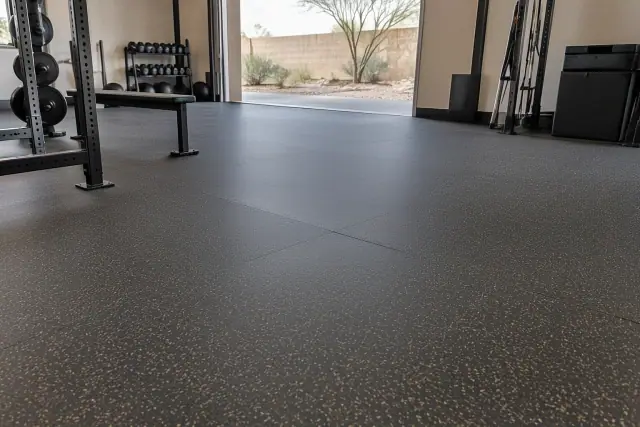
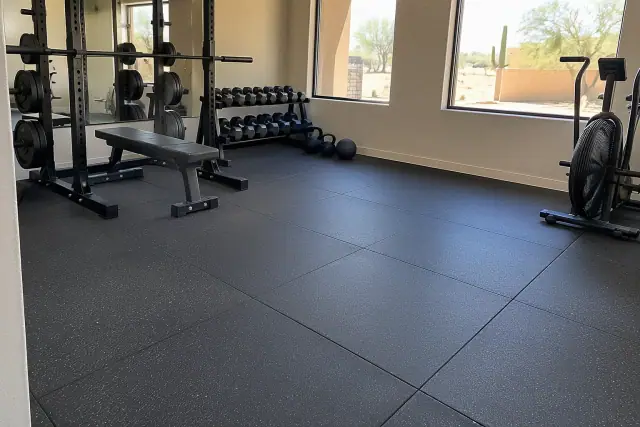
Gym and home gym rubber flooring installation in Mesa, AZ, showing heavy-duty impact tiles.

We install shock-absorbing surfaces for CrossFit facilities, functional training centers, and home gyms, including Superstition Springs garage conversions. Rolled rubber starts at 3/8 inch for general fitness and reaches 3/4 inch and greater for dedicated Olympic lifting platforms and drop zones. For CrossFit spaces, we typically recommend rolled rubber or interlocking tile in the 8mm to 20mm range based on lifting, bodyweight, and cardio use.

Request Estimate

Warehouse and Industrial Flooring

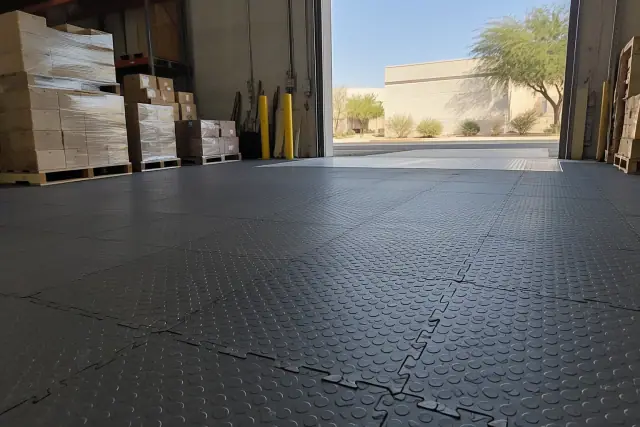
Commercial rubber flooring installed at a distribution facility in Mesa, AZ, showing heavy-duty texture.

Warehouse floors must handle more than foot traffic. We specify industrial-grade rubber for forklift and pallet-jack rolling loads, choosing thickness and durometer for repeated pressure. Facilities handling oils, solvents, or cleaning chemicals need compounds tested for those exposures.

Request Estimate

Anti-Fatigue Flooring for Standing Work

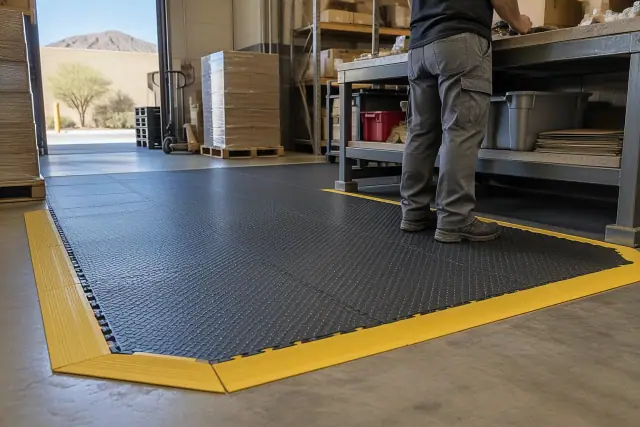
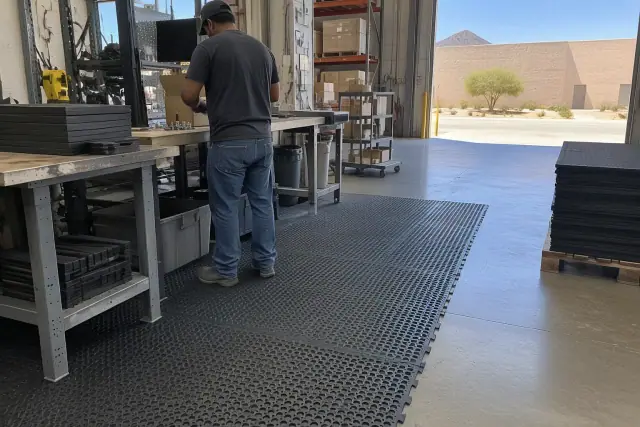
Anti-fatigue rubber flooring installed at a commercial warehouse in Mesa, AZ.

Packing stations, manufacturing lines, and retail counters benefit from cushioning where employees stand for long shifts. Anti-fatigue rubber flexes slightly underfoot to encourage small postural movements and ease static loading. We fit these surfaces to work areas across Mesa, including industrial corridors near the Phoenix-Mesa Gateway area.

Request Estimate

Retail, Healthcare, and School Flooring

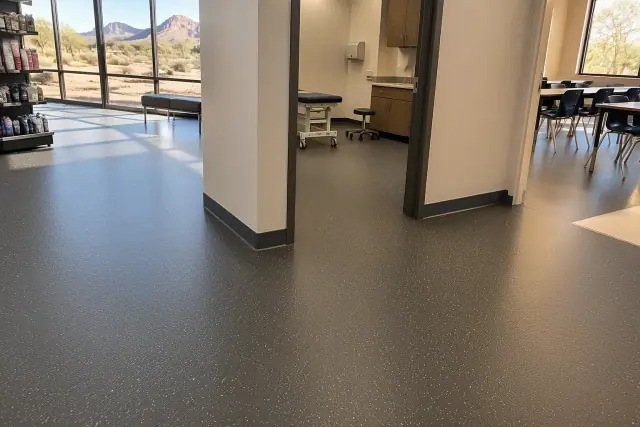
Contractor progress photo of commercial rubber flooring installation in Mesa, AZ.

Retail floors need a finished appearance that tolerates shopping carts and frequent cleaning. Healthcare spaces prioritize moisture resistance, low static generation, and compatibility with disinfecting routines, while schools and enclosed fitness rooms may prioritize low-emission materials. We select the surface around these needs and can phase work in occupied buildings.

Request Estimate

Playground and Pool Deck Surfacing

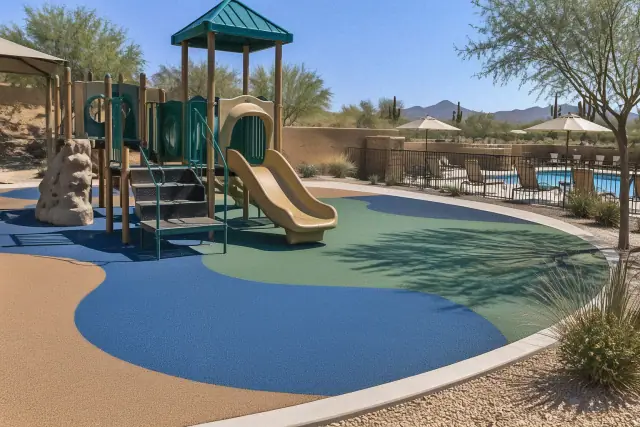
Completed commercial rubber playground and pool deck safety surfacing in Mesa, AZ.

Poured-in-place rubber creates a continuous surface for playgrounds, splash pads, and pool decks. We mix EPDM granules with polyurethane binder on site and trowel the material to the specified thickness. Custom colors, logos, and wayfinding patterns can be built into the surface.

Request Estimate

Rubber Flooring Repair and Replacement

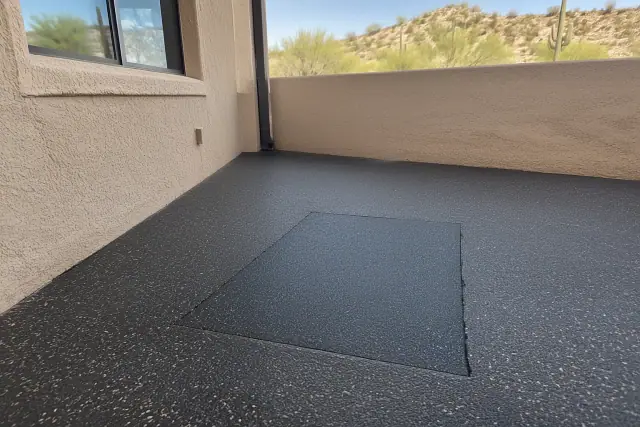
Fresh rubber patch in a commercial floor repair in Mesa, AZ, near a stucco wall.

Localized tears, separated seams, and damaged tiles may be repaired when the surrounding rubber remains sound. Widespread adhesive failure, hardened material, or a change in facility use may call for replacement. We remove old flooring and residual adhesive, then re-test the slab before installing new material.

Request Estimate
Materials and Formats

Commercial Rubber Flooring Options

Surface format affects seams, delivery access, replacement work, and appearance. Compound and cushioning choices determine how the floor responds to impact, standing work, and chemical exposure.

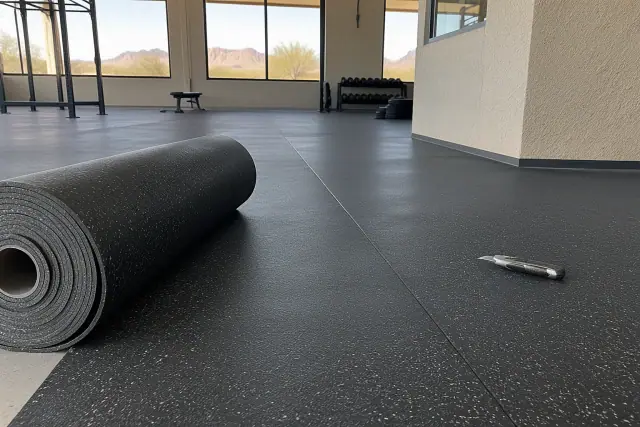
Rolled rubber flooring installation in Mesa, AZ, with seams and a utility knife.

Rolled Rubber Flooring

Wide rolls create long, continuous runs with fewer seams across large commercial floors. They suit gyms and warehouse areas where an even surface matters for rolling traffic.

  • Rolls are typically 4 feet wide.
  • Typical thickness ranges from 3/8 inch to 3/4 inch.
  • Fewer seams than a comparable tile layout.
  • Full glue-down or loose-lay installation, as traffic allows.
  • Delivery and access checked before bringing rolls inside.
Request Estimate
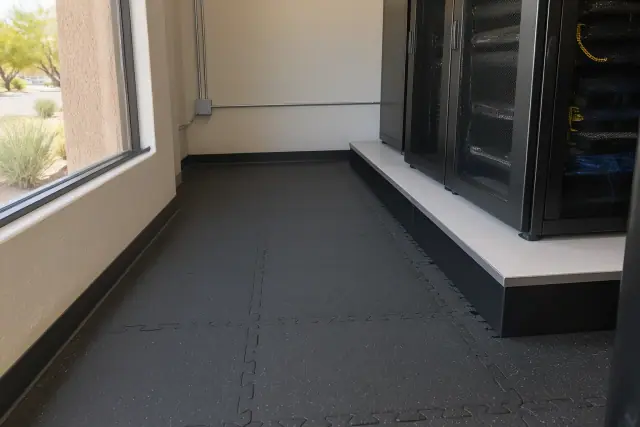
Interlocking rubber tile flooring in a commercial server room in Mesa, AZ.

Interlocking Rubber Tile

Interlocking tile offers modular coverage for home gyms, retail back rooms, and tight commercial units. Individual sections can be replaced without disturbing the entire floor.

  • Typical thickness ranges from 3/8 inch to 1 inch.
  • Modular pieces for upper floors and restricted access.
  • Practical for spot installation and later repairs.
  • More seams than rolled or poured-in-place surfaces.
  • Thickness and interlock quality matched to intended use.
Request Estimate
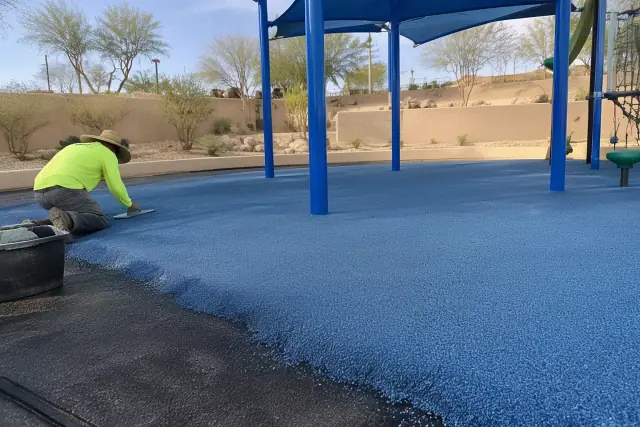
Poured-in-place rubber safety surfacing at a park in Mesa, AZ, with desert landscaping in the background.

Poured-in-Place Rubber

On-site mixing and troweling create a seamless surface with flexible color and pattern choices. Thickness depends on the application, including cushioning requirements for play areas.

  • Typical thickness ranges from 3/8 inch to 2 inches or more.
  • EPDM granules mixed with a polyurethane binder.
  • No tile edges or rolled-goods seams.
  • Custom color blends and integrated wayfinding.
  • Cure time included in the installation schedule.
Request Estimate
Textured rubber flooring installed at a commercial sports facility in Mesa, AZ.

Industrial Rubber Compounds

Industrial areas need a compound suited to equipment pressure and spill exposure. We prioritize load capacity and chemical resistance when selecting these surfaces.

  • Durometer selected for repeated point loads.
  • Grades rated for forklift and pallet-jack traffic.
  • Chemical resistance checked for oils and solvents.
  • Density chosen to limit permanent compression.
  • Textured options for demanding work areas.
Request Estimate
Anti-fatigue rubber flooring mats installed at a manufacturing facility in Mesa, AZ.

Anti-Fatigue Rubber Surfaces

Anti-fatigue flooring provides a cushioning layer where employees stand for extended periods. It serves a different purpose from the firmer compounds selected for heavy equipment loads.

  • Underfoot flexibility for stationary work.
  • Coverage for warehouse packing stations.
  • Cushioning at manufacturing work areas.
  • Standing comfort at retail checkout counters.
  • Options for office standing-desk zones.
Request Estimate
Built Around Your Facility

Choosing the Right Commercial Rubber Floor

A gym drop zone, a retail entrance, and a forklift route place different demands on rubber flooring. We weigh substrate conditions, daily use, and installation scope together before recommending a product.

Slab Testing Before Product Selection

We check concrete moisture, pH, ambient humidity, and flatness before specifying the floor. Elevated moisture readings may call for moisture-resistant adhesive or vapor barrier underlayment. Addressing the substrate first helps reduce the risk of early adhesive failure.

Material Choices for Mesa Conditions

Sun through storefront glass, evaporative cooling humidity, and monsoon dust all affect material selection. We consider those exposures alongside traffic and cleaning needs, especially near west-facing windows and loading dock doors.

Itemized Quotes and Phased Work

Your quote is based on measured square footage and separates material, labor, and subfloor preparation. For occupied facilities, we plan phases and off-hours work where needed so installation fits around business operations.

Repair and Replacement

Solving Commercial Rubber Flooring Problems

A damaged area does not always mean the entire floor needs replacement. We assess the failure, the condition of surrounding rubber, and the way the space is used before recommending a repair or new surface.

Request a Floor Assessment

Separated Seams and Loose Edges

Failed adhesive can leave seams open or edges lifting, giving water and debris a path beneath the floor. We assess whether a localized patch will hold or whether more extensive adhesive failure requires replacement.

Moisture Beneath the Floor

Excess slab moisture can become trapped beneath rubber and contribute to adhesive problems or mold growth. Ground-floor buildings without a proper slab vapor retarder need careful evaluation, especially when humidity rises during monsoon season.

Divots Under Heavy Equipment

Repeated point loads can leave compressed areas beneath squat racks, platforms, or fixed equipment legs. We review the rubber's density and load suitability before replacing a damaged section with material suited to the work.

Tears from Dragged Equipment

Dragging equipment across the floor or using unsuitable cleaning tools can tear the surface. Sound surrounding material may allow a tile replacement or a cut-in patch of rolled rubber. Keeping heavy equipment from dragging across seams helps prevent repeat damage.

UV Discoloration and Hardening

Rubber near sunlit windows and loading dock doors can discolor or harden with age and UV exposure. When the material has lost its cushioning properties across a broad area, replacement may be more appropriate than patching.

Wet or Greasy Walking Areas

Smooth rubber can become slippery when wet, so texture and product selection matter in entryways, locker rooms, and kitchens. We select products with ASTM D2047 static-friction ratings; several textured commercial lines also carry National Floor Safety Institute High Traction certification.

From Assessment to Finished Floor

Our Commercial Rubber Flooring Installation Process

Installation begins with the slab and ends with an inspection of the finished surface. We build preparation, material acclimation, installation, and curing needs into the scope before work starts.

01.

Assess the Space and Subfloor

We measure square footage, check moisture and pH, and review the equipment and traffic the floor must support. Subfloor flatness is typically within 3/16 inch over 10 feet for most rubber systems, so uneven areas are identified before installation.

02.

Choose Materials and Quote the Work

We recommend the format, thickness, density, and fastening method for the intended use. The quote includes material, labor, and any subfloor preparation, with delivery access, custom colors, and phasing considered before scheduling.

03.

Remove Old Flooring and Prepare the Slab

Where replacement is needed, we cut out old rubber and scrape or grind away residual adhesive. We re-test moisture levels and address preparation or mitigation needs before covering the slab.

04.

Acclimate the Rubber

Rubber materials acclimate in the space at the target temperature for 24 to 48 hours. This step helps the material adjust to the conditions it will experience after installation.

05.

Install and Allow for Curing

We use the selected adhesive, mechanical fastening, or loose-lay approach for the substrate and traffic. Poured-in-place work includes on-site mixing and troweling, with curing time included in the schedule.

06.

Inspect Seams and Review Care

The final inspection covers seams and transitions. We review routine care, including sweeping away grit, using pH-neutral cleaners, and avoiding harsh solvents or dragged equipment that can damage the surface.

Plan Your Flooring Project

Request a Commercial Rubber Flooring Estimate

Tell Mesa Rubber Flooring how your space is used, what equipment it holds, and whether the building will remain occupied during installation. We will assess the substrate and prepare an itemized quote for the flooring and preparation your project needs.

Planning, Pricing, and Care

Commercial Rubber Flooring FAQs

Compare materials, understand installation timing, and learn what affects flooring performance in Mesa commercial spaces.

Discuss Your Project

Rubber flooring can have a noticeable odor for the first several weeks, and large installations may take longer than some other resilient flooring types. Tile and rolled goods have seams that need careful installation to limit moisture entry. Smooth rubber can become slippery when wet, so textured or slip-rated options matter in damp areas.

Rolled rubber commonly costs $3 to $8 per square foot installed at standard commercial thickness, while interlocking tile installations often range from $4 to $10 per square foot depending on thickness and interlock quality. Poured-in-place surfaces typically run $8 to $15 per square foot, or more for added thickness and custom design. Playground surfacing can run roughly $10 to $20 per square foot when ASTM F1292 depth requirements are factored in. Subfloor preparation, moisture mitigation, delivery access, and material specifications affect the itemized quote.

Trapped moisture between the slab and flooring can support mold growth even though rubber itself does not feed mold. We test slab moisture and pH before installation and use moisture-resistant adhesives or vapor barrier underlayment when readings call for them. The underlying moisture condition needs attention before new flooring covers it.

The right choice depends on traffic, equipment, moisture, and employee activities. Rubber offers useful cushioning, noise reduction, and impact resistance for gyms, warehouses, and standing work areas. We evaluate the use case before choosing the material and installation method.

Properly cured rubber can accommodate temperature changes when correctly acclimated and installed with appropriate expansion gaps. Direct sun, evaporative cooling humidity, and monsoon-season grit still influence material selection and care. We consider those exposures when planning the floor and installation schedule.

A home gym or garage of a few hundred square feet often takes a single day. Commercial projects of 2,000 to 10,000 square feet typically take three to seven working days, depending on preparation, material type, adhesive curing, and seam finishing. Poured-in-place projects can take a week or more depending on thickness and area. We set the timeline around site conditions and phase occupied-building work where needed.

Many of our rubber floors contain recycled material, frequently reclaimed tire rubber, which can support LEED credits on qualifying projects. Several product lines carry FloorScore certification for low VOC emissions. We can review the recycled-content credentials and emission certifications of the specific materials under consideration.

Rolled rubber offers fewer seams across larger spaces and a more continuous surface for rolling traffic. Interlocking tile is easier to handle in tight units or on upper floors and allows individual damaged pieces to be replaced. We compare access, seam exposure, traffic, and repair needs before recommending either format.

We select depth around equipment fall height and ASTM F1292 impact attenuation requirements, with ASTM F1951 addressing surface accessibility under the Americans with Disabilities Act. A 6-foot play platform requires more cushioning depth than a 4-foot platform. We use the Consumer Product Safety Commission's Public Playground Safety Handbook guidance for critical fall height when sizing the pour.

Sweep away sand and grit before they are tracked across the floor. Use pH-neutral cleaners and avoid harsh solvents or cleaning tools that can tear the surface. Routine rubber-floor care does not require the periodic waxing, sealing, or refinishing associated with some other materials.

A localized tear, damaged tile, or failed seam may be patched when the surrounding material remains sound. Replacement makes more sense when adhesive failure is widespread, the rubber has hardened and lost cushioning, or the building needs a different thickness or compound. Before installing new rubber, we remove residual adhesive and re-test slab moisture.

Yes, we install garage rubber flooring and choose materials around tire residue, oil drips, dropped tools, and 100-plus-degree ambient heat. The compound needs to suit the expected fluids and equipment use. Garage and home gym projects often fall toward the lower end of the pricing ranges when they need less subfloor preparation than large commercial jobs.

Anti-fatigue rubber suits packing stations, manufacturing lines, checkout counters, and office standing-desk areas. Its cushioning flexes underfoot to encourage small postural movements during long periods of standing. Workplace surface planning also involves OSHA walking-working surface guidance (29 CFR 1910.22), while heavy rolling-load areas need rubber selected for load capacity and chemical resistance.