Proudly serving Mesa, Gilbert, Chandler, Tempe, Scottsdale, Queen Creek & surrounding areasCall or Text 24/7: 480-319-7553
Aerial drone view of suburban neighborhoods and desert landscaping in Mesa, AZ.

Playground Rubber Surfacing in Mesa, AZ for Schools, Parks & HOAs

Mesa Rubber Flooring installs playground rubber surfacing for homes, HOAs, schools, parks, and daycare operators in Mesa, AZ. We offer poured-in-place rubber, interlocking rubber tiles, and loose-fill rubber mulch. Our work covers new play areas, aging surface replacement, and localized repairs.

Mesa reaches 100 degrees or higher on more than 100 days a year, and intense sun puts outdoor surfacing materials under stress. Monsoon downpours also make drainage and base preparation important. We assess the subgrade, equipment fall height, and accessible routes before recommending a surface. Our crews manage preparation, installation, and final testing so the material choice fits the whole playground.

We use EPDM and recycled SBR rubber from IPEMA-affiliated suppliers and provide installation documentation for commercial projects. Request a site assessment to discuss your layout, material options, and written estimate.

Mesa Rubber Flooring installs playground rubber surfacing in Mesa and nearby Tempe, Chandler, Gilbert, Queen Creek, and Apache Junction.

★ ★ ★ ★ ★4.9/5 Customer Rating · 19 Years of Flooring Experience · 1,000+ Flooring Projects Completed · Licensed, Bonded & Insured · Residential & Commercial Flooring

Playground Rubber Surface Options & Benefits

What Is Playground Rubber Surfacing?

Playground rubber surfacing provides a cushioned play area beneath and around equipment. Poured rubber and tiles form continuous or modular surfaces, while rubber mulch is a loose-fill option. The appropriate material and depth depend on the equipment's fall height and the site's access needs.

Impact attenuation describes how a surface absorbs a fall. ASTM F1292 testing uses g-max and Head Injury Criterion (HIC) measurements to evaluate that performance. We match the surfacing specification to the tallest equipment platform and document the installation.

A complete installation includes the prepared ground and drainage beneath the rubber. Compaction, cushion depth, wear-layer condition, and routine maintenance all affect performance. Choosing a color is only one part of specifying a surface that suits the playground.

Benefits of a Well-Planned Rubber Play Area

The right surface balances cushioning, access, upkeep, and appearance. Each option offers different advantages, so we compare the material with the way your playground will be used.

  • Cushioning matched to equipment fall height
  • Seamless poured surfaces for accessible play routes
  • Individual tile replacement for localized wear
  • Lower material costs with loose-fill rubber mulch
  • Permeable surfaces supported by planned drainage
  • Colored EPDM borders, games, and play patterns
  • UV-stabilized wear layers for outdoor exposure
  • Inspection and repair options as the surface ages
From New Play Areas to Renovations

Playground Installation & Repair Services

We install and maintain rubber play surfaces from backyard play zones to school campuses and community parks. The scope can include old-surface removal, base preparation, drainage, material installation, and documentation.

Poured-in-Place Rubber Installation

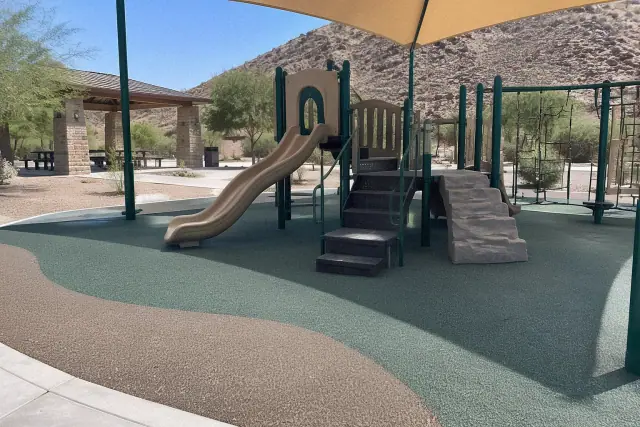
Poured-in-place rubber playground surfacing installation in Mesa, AZ, showing multi-colored safety rubber and concrete

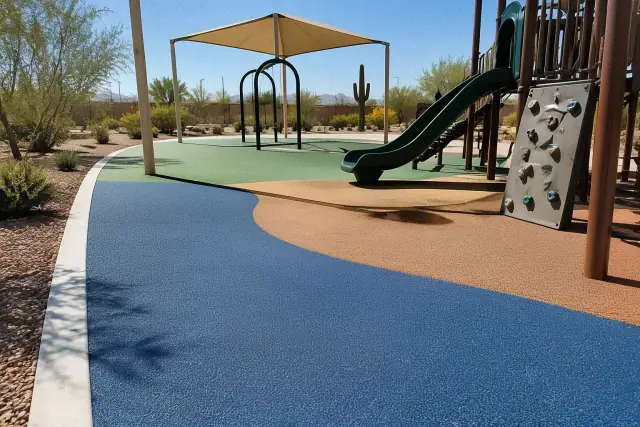
We trowel a recycled SBR cushion layer with urethane binder, then apply a colored EPDM wear course. This creates a seamless surface around equipment, ramps, and transfer areas. Custom borders and play graphics can be incorporated during installation.

Request Estimate

Rubber Playground Tile Installation

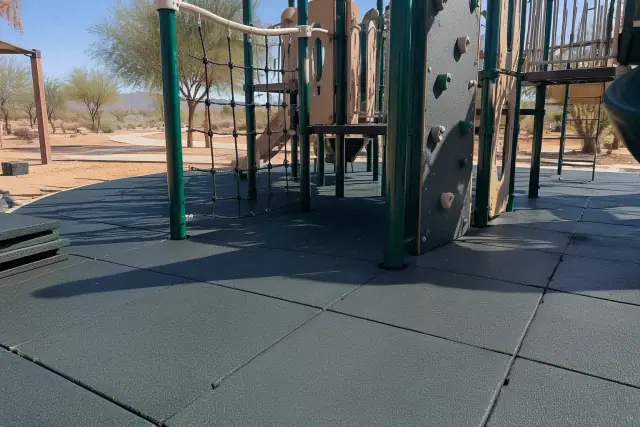
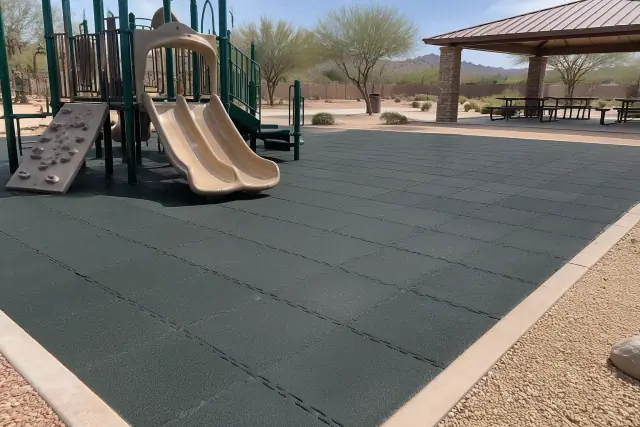
Interlocking rubber playground tiles installed under equipment at a community park in Mesa, AZ.

Interlocking rubber tiles provide a modular surface that can be replaced in individual sections when damage is localized. We prepare the substrate, install and fasten the tiles, and check their fit around the play area. Tiles install faster than poured rubber, although seams may become more visible with age.

Request Estimate

Loose-Fill Rubber Mulch Installation

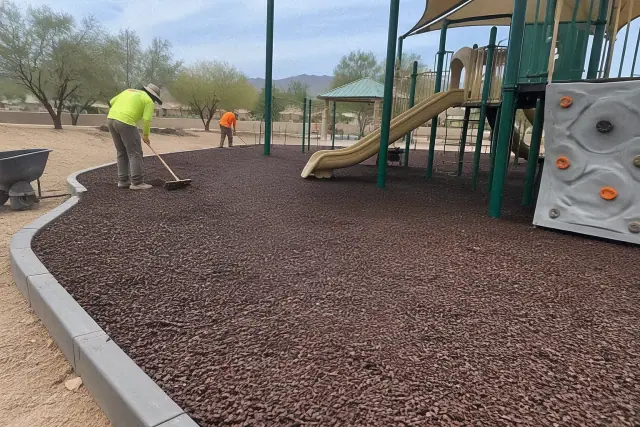
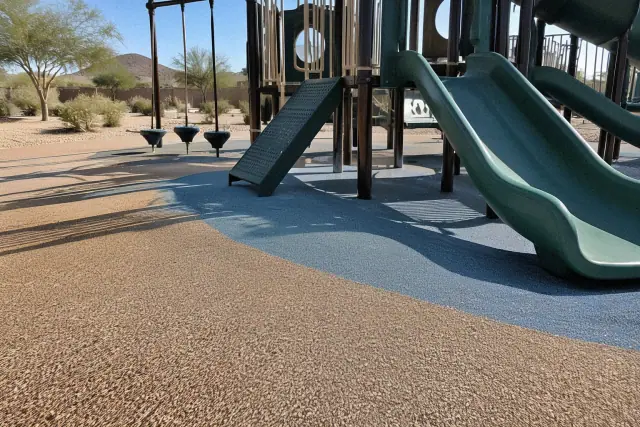
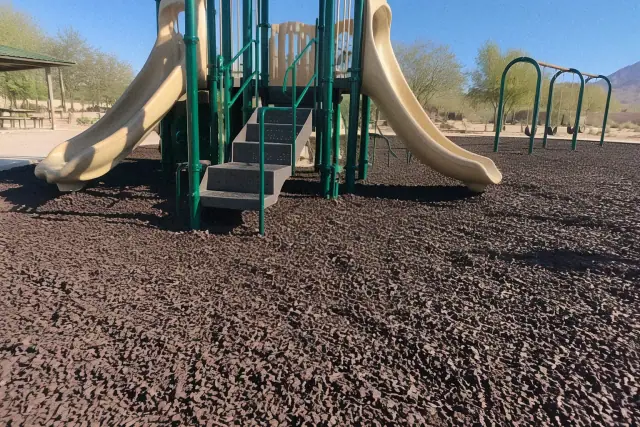
Loose-fill rubber mulch installed for a playground in Mesa, AZ.

We install recycled rubber mulch over compacted aggregate and a geotextile weed barrier. Depth is matched to the equipment and must remain consistent beneath swings and slide exits. This option has a lower material cost than poured or tile surfacing and requires periodic raking.

Request Estimate

Playground Surface Repair & Re-Coating

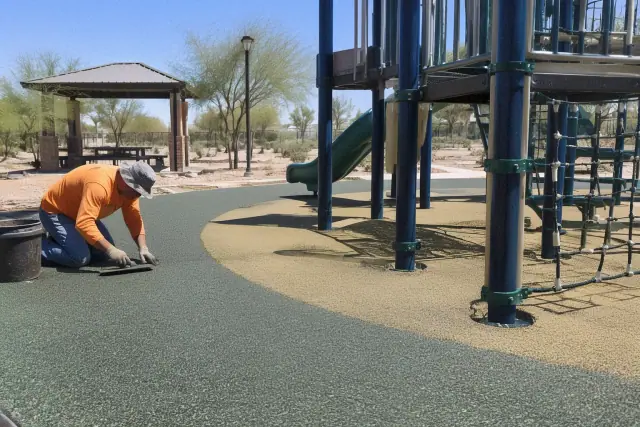
Playground rubber surface repair and recoating project in progress at an outdoor park in Mesa, AZ.

Localized damage can often be cut out and patched with matching material. We also repair seams and re-coat faded or thinning poured rubber. An assessment distinguishes a repairable wear spot from widespread deterioration that calls for resurfacing.

Request Estimate

Playground Resurfacing & Replacement

Playground rubber surfacing replacement in progress around steel equipment footings in Mesa, AZ.

We remove degraded mulch, cracked poured rubber, or worn tiles and inspect the exposed subgrade before rebuilding. Whether the project involves a thirty-year-old neighborhood playground or a newer surface with recurring problems, renovation can address drainage and accessible routes alongside the rubber itself.

Request Estimate

School, Park & HOA Playground Projects

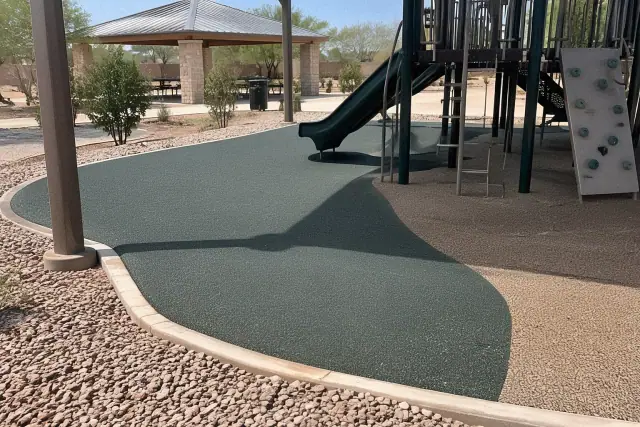
Poured-in-place rubber safety surfacing beneath a playground structure at a park in Mesa, AZ.

We coordinate playground surfacing for parks, HOA common areas, Mesa Public Schools, and charter campuses. Commercial projects include material selection, equipment-related fall-height review, and test documentation. We also work on recreation areas for churches, apartment communities, and community centers.

Request Estimate
Choose the Surface and Details

Compare Playground Materials & Design Options

Poured rubber, tiles, and mulch each serve different budgets and maintenance plans. Accessible routes and custom EPDM graphics add design choices within those materials. We review traffic, equipment height, and site conditions before recommending a combination.

Seamless poured-in-place rubber safety surfacing at an outdoor park in Mesa, AZ.

Seamless Poured-in-Place Rubber

A two-layer poured surface combines an SBR cushion course with a colored EPDM top layer. The wear layer is typically 3/8 to 1 inch thick, depending on the required critical fall height; the full surfacing specification also includes the cushion beneath it.

  • Recycled SBR rubber cushion layer
  • Urethane binder holds the granules together
  • Colored EPDM wear course
  • Permeable finish with planned subsurface drainage
  • No routine raking or loose-fill top-off
Request Estimate
Interlocking rubber playground tiles installed at a Mesa, AZ park with desert landscape in the background.

Interlocking Rubber Playground Tiles

Rubber tiles suit projects where modular replacement is a priority. Individual tiles run $20 to $44.50 each, while the installed project also includes preparation and labor. Substrate condition and seam maintenance remain part of the decision.

  • Modular sections fitted across the play area
  • Mechanical fastening during installation
  • Individual replacement of damaged sections
  • Faster installation than poured rubber
  • Visible seams to include in routine inspections
Request Estimate
Recycled rubber mulch spread around a playground in Mesa, AZ.

Recycled Rubber Mulch

Rubber mulch can support certified fall heights up to 16 feet at sufficient depth, depending on the material's tested performance. We use a minimum 6-inch depth for most play structures and adjust upward for taller equipment using CPSC guidance and the specified material requirements.

  • Compacted aggregate base
  • Geotextile weed barrier beneath the mulch
  • Depth matched to the equipment fall height
  • Containment edging to limit migration
  • Raking to restore depth in busy landing areas
Request Estimate
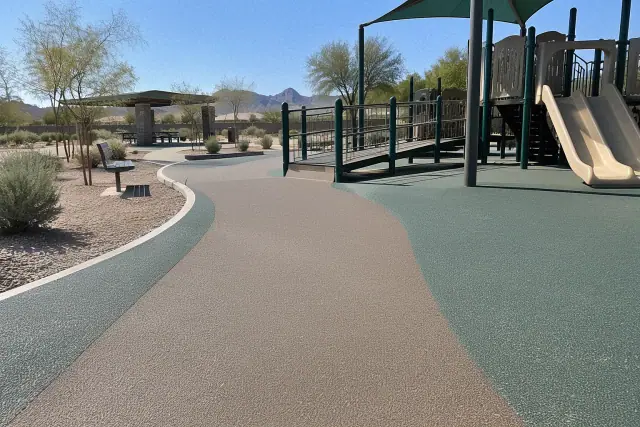
Accessible poured-in-place rubber safety surface playground route in a desert park in Mesa, AZ.

Accessible Playground Routes

Poured rubber and properly installed tile systems can meet ASTM F1951 accessibility requirements. We consider the route through the playground along with ramps and transfer platforms. Loose-fill mulch requires particular attention to an even, compacted surface.

  • Firm routes for wheelchairs and mobility devices
  • Surface selection around transfer platforms
  • Ramp connections included in the layout
  • Seams and low spots checked during inspection
  • Access improvements during playground renovation
Request Estimate
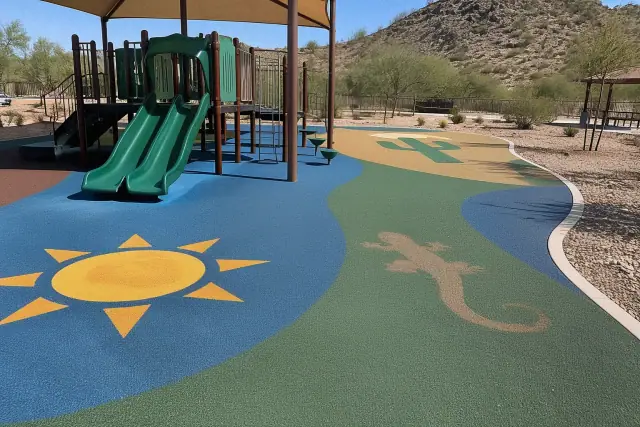
Custom EPDM colors and play graphics on a playground rubber surface in Mesa, AZ.

Custom EPDM Colors & Play Graphics

Pigmented EPDM lets us incorporate play activities and visual boundaries directly into poured surfacing. UV-stabilized top layers suit outdoor installations exposed to Mesa's intense sunlight. Design complexity is considered with the installation budget.

  • Hopscotch grids built into the surface
  • School or community mascot designs
  • Game boards within the play area
  • Multi-color perimeter borders
  • UV-resistant colored wear-layer materials
Request Estimate
Match the Surface to the Site

Plan the Right Playground Surfacing Approach

Equipment height, access requirements, foot traffic, and upkeep determine which material fits. We bring those details together with the condition of your existing ground and your budget before specifying the work.

Testing Matched to Your Equipment

We evaluate impact attenuation against ASTM F1292 and accessibility against ASTM F1951. Equipment height guides the installed depth, and commercial projects receive test documentation. Our installers follow material-handling and testing protocols for the selected surface.

Experience Across Mesa Play Areas

Our projects include backyard play areas, HOA common grounds, and recreation spaces from Dobson Ranch to Eastmark. We account for Sonoran Desert sun exposure and monsoon runoff when planning the surface and base. The layout also reflects how each property uses its playground.

One Contact from Survey to Handover

We coordinate permitting, material ordering, subsurface work, installation, and final documentation. Your written estimate follows a site walkthrough, so the proposed scope reflects the actual layout. This keeps excavation and surfacing decisions within the same project plan.

Problems We Assess

Address Playground Surface Wear & Drainage

Surface damage can start with the rubber, the base, or the way the playground is maintained. We inspect the cause before recommending a patch, re-coating, or full replacement. These are common conditions we look for during a site visit.

Request a Site Assessment

UV Wear & Binder Breakdown

Intense sunlight and summer heat accelerate binder breakdown and can leave poured rubber faded or thin. We assess the wear course and specify UV-stabilized EPDM for outdoor work. Localized wear may suit re-coating; widespread degradation needs a broader repair plan.

Standing Water After Monsoon Storms

Repeated pooling can signal drainage or subgrade problems beneath the play surface. Covering the area with new rubber alone may leave that cause unresolved. We inspect slope, compaction, and the drainage layer when planning repairs or replacement.

Displaced Mulch Beneath Swings & Slides

Swing landings and slide exits can lose loose-fill depth as material moves out of busy zones. Raking restores an even layer, while top-off replaces material that is missing. Containment edging also needs attention when mulch migrates beyond the play area.

Separated Seams & Cracked Rubber

Tile seams and cracks in poured rubber need inspection before wear spreads. A damaged tile or isolated poured section may be replaceable on its own. Widespread cracking requires an assessment of the surrounding surface and underlying base.

Bubbling, Delamination & Low Spots

Lifting layers and low-density areas need more than a cosmetic touch-up. We inspect the bond, surface depth, and drainage and evaluate the affected cushioning. Those findings determine whether a localized patch or complete resurfacing is appropriate.

Aging Surfaces with Uncertain Performance

A surface approaching 8 to 10 years old warrants an on-site evaluation, particularly if it is cracking or due for an inspection. We check depth loss, drainage failure, and impact performance. An assessment helps establish whether the remaining surface supports repair or needs replacement.

From Ground Preparation to Handover

Our Playground Surfacing Installation Process

The work progresses through a site survey, excavation, base compaction, drainage, and the selected rubber surface. Testing and documentation complete the installation. We plan the schedule around preparation needs, material curing, and local weather.

01.

Survey the Playground & Equipment

We inspect the layout, existing surface, site access, and equipment fall heights. Accessible routes and maintenance priorities are part of the assessment. The resulting written estimate identifies the material and preparation work for your site.

02.

Coordinate Permits & Remove Old Material

For public and school sites, we coordinate scheduling with review through the City of Mesa Building Safety Division. We excavate worn surfacing as needed and dispose of degraded material. Removing the old surface allows the subgrade to be assessed directly.

03.

Compact the Base & Set the Grade

We test soil compaction and prepare a consistent slope, typically 1-2 percent, to help water move off the play area. Base corrections happen before the rubber is installed. This step addresses ground conditions that can undermine the finished surface.

04.

Prepare Drainage & the Cushion Layer

We build drainage into the subsurface and prepare the cushion course required by the selected material. Poured rubber uses recycled SBR beneath the wear layer. Mulch installations receive a compacted aggregate base and geotextile barrier before loose fill is placed.

05.

Install the Selected Rubber Surface

We trowel the EPDM wear course, install and fasten rubber tiles, or spread and compact rubber mulch to the specified depth. Borders and play graphics are incorporated where included in the plan. Poured rubber needs suitable conditions for curing before final handover.

06.

Test, Document & Explain Upkeep

We complete impact and accessibility checks and provide the project documentation. Commercial handover includes manufacturer material information and applicable product warranty paperwork. We also explain cleaning, inspections, and the wear areas to watch.

Plan Your Installation or Repair

Schedule a Playground Surface Assessment

Tell us about your playground, its current surface, and the work you are considering. Mesa Rubber Flooring can assess preparation needs, compare rubber materials, and provide an itemized estimate for installation, repair, or resurfacing.

Costs, Materials and Maintenance

Playground Rubber Surfacing FAQs

Find answers about project costs, surface lifespan, access, and ongoing care. Your site assessment brings these choices together with the equipment and ground conditions at your playground.

Call About Your Playground

Poured-in-place rubber generally runs $9 to $18 per square foot installed for larger playgrounds, while rubber tile installations average $10 to $15 per square foot. Rubber mulch has a lower material cost but still needs a compacted aggregate base, typically $3 to $6 per square foot. Small sites can cost more per square foot because setup and mobilization are spread over less area. We provide an itemized quote after assessing your layout and subgrade.

Smaller residential play areas often total roughly $2,450 to $4,150, depending on size and material choice. Demolition, drainage work, required fall height, and custom graphics can change the total. A site walkthrough lets us prepare a written estimate for the actual scope.

Poured-in-place rubber generally lasts about 10 years and can reach 12 to 15 years with proper maintenance. Rubber tiles and well-maintained mulch beds can perform for 10 to 15 years or longer under similar conditions. UV exposure, traffic, drainage, and repair frequency affect longevity. In Mesa, UV-resistant materials and drainage help address the local conditions that shorten surface life.

The seamless, trowel-applied surface is called poured-in-place, or PIP, rubber. Loose-fill material is known as rubber mulch or rubber nuggets. Modular sections are rubber playground tiles or interlocking rubber pavers.

ASTM F1292 evaluates impact attenuation in relation to the equipment's critical fall height, while ASTM F1951 evaluates surface accessibility. The U.S. Consumer Product Safety Commission's Public Playground Safety Handbook also provides guidance on surfacing depth and use zones. We match the surface specification to the playground and provide testing documentation for commercial installations.

Rubber mulch can provide up to 2.5 times more critical fall-height cushioning than some comparable loose-fill materials, depending on tested performance and depth. It also typically delivers up to 59 percent savings compared with replacing wood mulch on the same cycle. It needs regular raking in busy landing areas and attention to edging where material migrates. The maintenance commitment should be considered alongside its lower material cost.

Most residential playground surfacing projects take one to three days, depending on size and material. Larger commercial or municipal installations with extensive subgrade work can take one to two weeks. Poured rubber needs stable curing conditions, so Mesa's summer heat and monsoon storm windows influence scheduling.

Poured rubber and properly installed tile systems can meet ASTM F1951 accessibility standards. We plan firm routes, ramps, and transfer-platform connections as part of the playground layout. Loose-fill mulch is less consistently accessible unless its compacted depth and evenness are maintained.

We recommend quarterly visual inspections for seam separation, low spots, and debris buildup. Pay attention to swing landings, slide exits, and entrances, where wear develops fastest. Periodic pressure washing helps porous surfaces drain, while loose-fill areas need raking and depth top-off as necessary.

Isolated damage beneath a swing or slide can often be cut out and patched with matching material. Individual worn tiles can also be replaced, and thinning poured areas may suit re-coating. Widespread cracking, UV degradation, or recurring flooding calls for a full assessment before deciding on resurfacing.

We survey the site, inspect the subgrade, and plan excavation, compaction, and drainage before placing the rubber. The surface specification includes equipment fall height and access requirements. During replacement, we remove worn material and check the exposed ground for problems that would affect the new installation.

We install playground rubber surfacing throughout Mesa and the greater East Valley, including Tempe, Chandler, Gilbert, Queen Creek, and Apache Junction. Our Mesa work includes residential and community play areas in Dobson Ranch and Eastmark. Contact us to discuss the scope and access needs at your site.

We provide project testing documentation along with manufacturer material information. Applicable product warranty paperwork is included with commercial installations. These records support future inspections, maintenance planning, and insurance review.