Proudly serving Mesa, Gilbert, Chandler, Tempe, Scottsdale, Queen Creek & surrounding areasCall or Text 24/7: 480-319-7553
Aerial drone view of suburban neighborhoods and desert landscaping in Mesa, AZ.

Rolled Rubber Flooring in Mesa, AZ for Home Gyms & Commercial Training Facilities

Mesa Rubber Flooring installs rolled rubber flooring for homes and businesses in Mesa, Arizona. We fit home gym floors, garage workout areas, and commercial training spaces around the equipment and traffic they need to support. Our services also include rubber tiles, poured-in-place surfacing, and repairs when another approach better suits the space.

Mesa's triple-digit summers and concrete slabs make floor preparation especially important. We test slab moisture and match the adhesive to the substrate before installing bonded rolls. Careful seam cutting and room layout help prevent lifting edges around equipment and busy walkways. Tell us how you use the room so we can recommend an appropriate thickness and finish.

Our crews work with vulcanized recycled rubber, SBR compounds, and virgin rubber rolls in 3/8-inch and 1/2-inch profiles. We size the material and installation method to the load, the space, and the budget.

Mesa Rubber Flooring installs rolled rubber flooring in Mesa, Gilbert, Chandler, Tempe, Queen Creek, and Apache Junction.

★ ★ ★ ★ ★4.9/5 Customer Rating · 19 Years of Flooring Experience · 1,000+ Flooring Projects Completed · Licensed, Bonded & Insured · Residential & Commercial Flooring

Rolled Rubber Flooring Options and Benefits

What Is Rolled Rubber Flooring?

Rolled rubber is sheet flooring cut to fit a room and joined at the seams. It adds cushioning over concrete in home gyms, garages, fitness studios, and commercial spaces.

Rolls can float under their own weight in suitable residential rooms or bond to the slab with adhesive. Traffic, room size, and rolling equipment determine which installation method makes sense.

Finish choices include flat black commercial rubber, colored rolls, and flecked surfaces. We plan roll widths around the room so joints avoid the busiest areas where possible.

Benefits of a Properly Fitted Rubber Floor

Rubber flooring combines a cushioned surface with practical protection for the slab beneath it. The right material and fit help it perform under the way your room is actually used.

  • Shock absorption beneath weights and workout equipment
  • Cushioning for standing and bodyweight training
  • Reduced impact noise in shared spaces
  • Grip for busy indoor walking areas
  • Flexibility over slabs subject to seasonal movement
  • A low-maintenance surface for dust and daily grit
  • Black, colored, and flecked finish choices
  • Repair options for localized tears and separated seams
Spaces We Fit

Rubber Flooring Installation and Repairs

From a garage gym to a warehouse, the load on a rubber floor changes what it needs underneath. We choose the material, thickness, and bonding method around each application, with repairs available for existing floors.

Home Gym Rubber Flooring

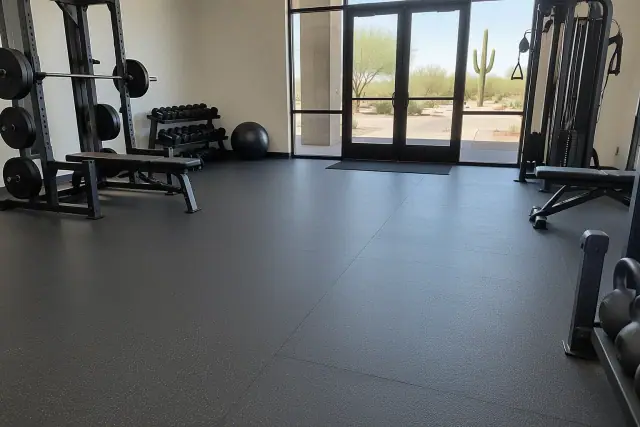
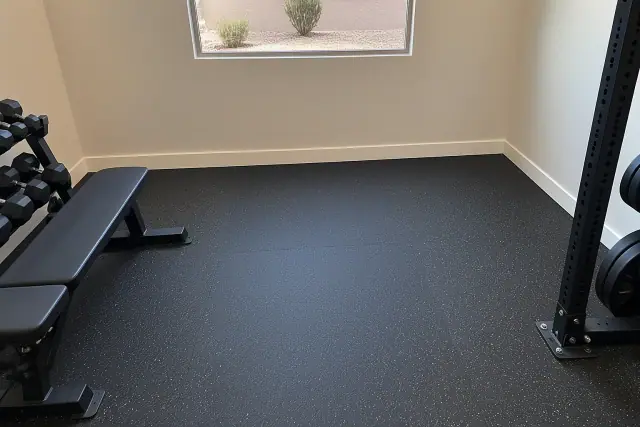
Contractor photo of heavy-duty rolled rubber flooring installed in a home gym in Mesa, AZ.

We plan home gym floors around cardio equipment, bodyweight exercise, and lifting areas. In homes across Dobson Ranch, Red Mountain Ranch, and Eastmark, roll layouts account for door swings and equipment footprints so the floor fits the room.

Request Estimate

Garage Rubber Flooring

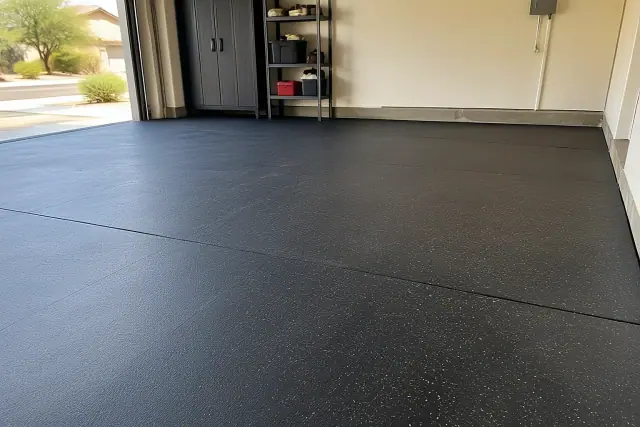
Heavy-duty rolled rubber flooring installed in a garage in Mesa, AZ.

Garage floors need a plan for tracked-in monsoon mud, dropped tools, and areas exposed to sunlight. We consider vehicle use when the room doubles as a gym and recommend thicker material or a removable tile layout where appropriate.

Request Estimate

Commercial Rubber Flooring

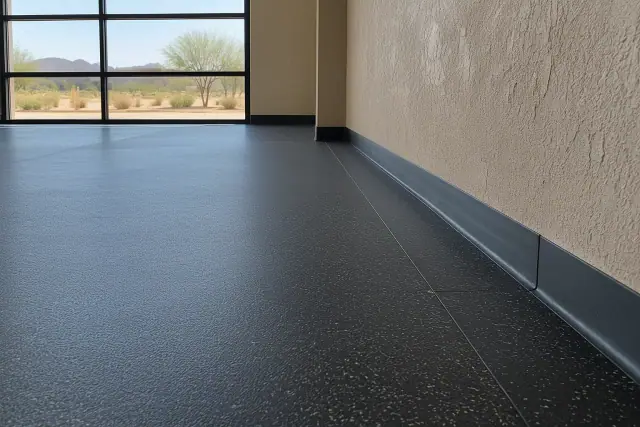
Commercial rubber flooring with tight seams and clean edges in a gym in Mesa, AZ.

Retail spaces, restaurants, schools, and office buildings can put daily foot traffic in the thousands across a floor. We match commercial rubber to those traffic patterns, including rolling carts in lobbies and office parks along the Loop 202 corridor.

Request Estimate

Industrial Rubber Flooring

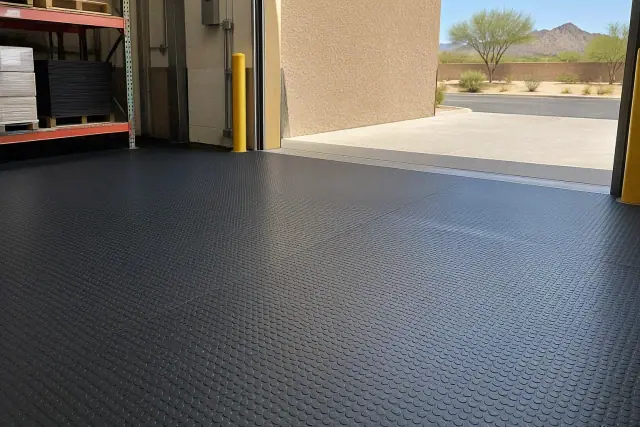
Industrial rubber flooring rolled out and fitted against a stucco wall in a Mesa, AZ warehouse.

Warehouses and manufacturing spaces near Falcon Field and the Elliot Road Technology Corridor need materials chosen for machinery point loads, forklift traffic, and chemical exposure. We match rubber compounds to the solvents or oils used on-site and evaluate the substrate before installation.

Request Estimate

Anti-Fatigue Rubber Flooring

Anti-fatigue rubber flooring installed inside a commercial facility in Mesa, AZ.

Cushioned rubber helps reduce leg and back fatigue during standing work at checkout counters, assembly lines, and workstations. It can also reduce the equipment noise that bare concrete reflects through production spaces.

Request Estimate

Rubber Flooring Repair and Replacement

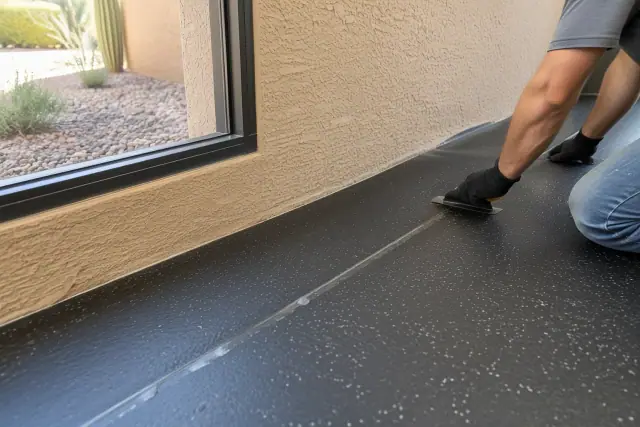
Fresh urethane adhesive squeeze-out along a newly fitted rolled rubber flooring seam in Mesa, AZ.

Separated seams, minor tears, and concentrated wear may be repaired with renewed adhesive or a matched patch. We inspect the subfloor bond first; widespread adhesive failure, brittle rubber, or moisture damage may call for replacement.

Request Estimate
Choose the Material

Rubber Roll Profiles and Surface Options

The floor covering should match the activity, room shape, and exposure. Rolled goods suit many indoor spaces, while modular tiles and poured surfaces address different layout and surfacing needs.

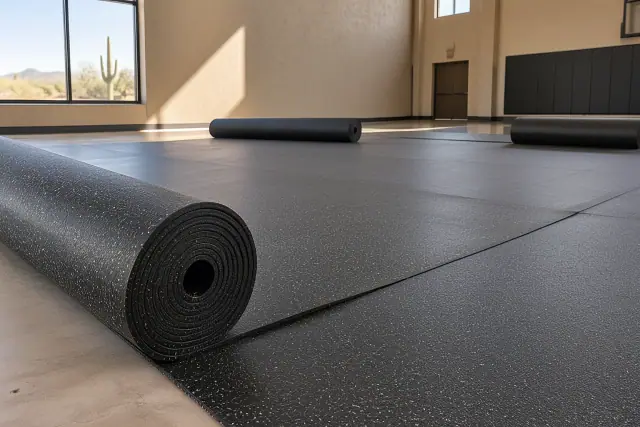
Standard rubber rolls installed on an athletic facility subfloor in Mesa, AZ.

Standard Rubber Rolls

Standard rolls provide a continuous-looking surface for cardio zones and bodyweight training. Thickness, finish, and the number of seams help shape the final choice.

  • 3/8-inch rubber for cardio and bodyweight areas
  • Vulcanized recycled rubber and SBR options
  • Virgin rubber rolls where the application calls for them
  • Flat black, colored, or flecked finishes
  • Roll widths selected to reduce seams in busy zones
Request Estimate
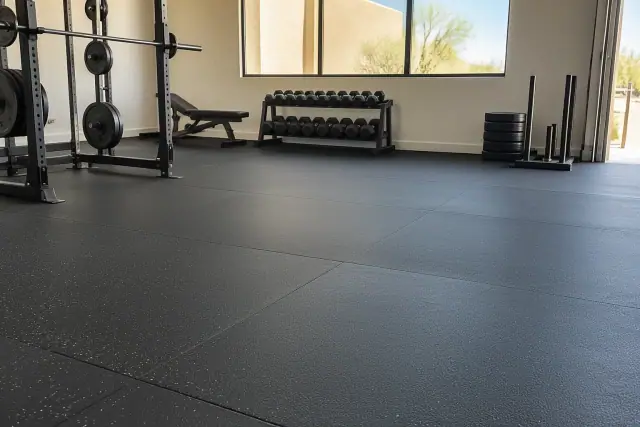
Rolled rubber flooring with thick lifting areas installed in a fitness facility in Mesa, AZ.

Thicker Rubber for Lifting Areas

Olympic lifting and dropped barbells need more protection than a cardio floor. We recommend 3/4-inch to 1-inch rolled rubber or stall mats for these activities, selected around the actual lifting setup.

  • Thickness matched to dumbbell weight ranges
  • Barbell drop height considered before material selection
  • Added slab protection beneath impact zones
  • Equipment footprints included in the floor plan
  • Impact noise considered for rooms and tenants below
Request Estimate
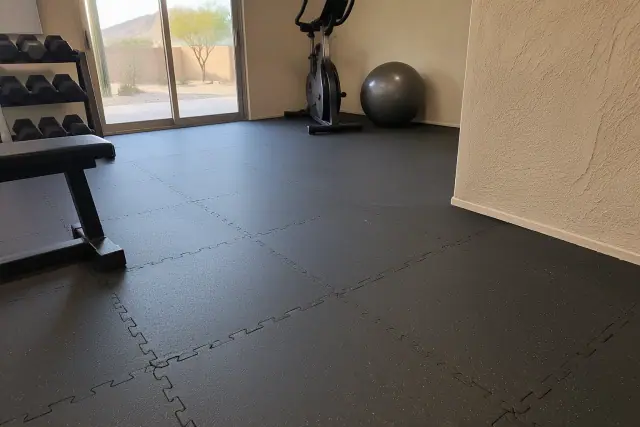
Interlocking rubber tiles installed on a residential basement floor in Mesa, AZ.

Interlocking Rubber Tiles

Modular tiles are useful around columns, odd angles, and equipment that moves. A damaged section can be replaced individually without cutting into a full roll.

  • Snap-together edges for modular layouts
  • Adhesive-free fitting in many residential applications
  • Individual tile replacement for localized damage
  • Flexible layouts around fixed obstacles
  • An option for garages that need removable flooring
Request Estimate
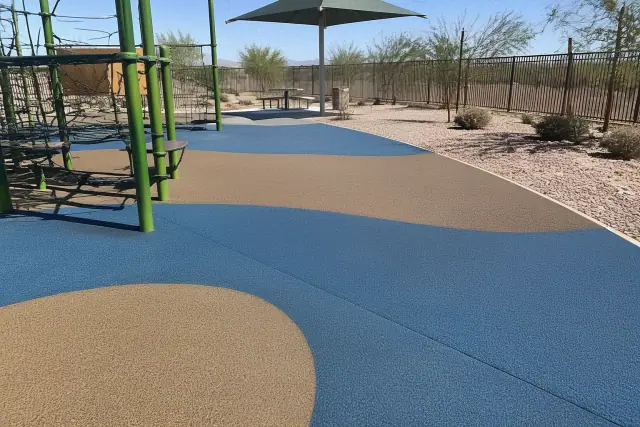
Poured-in-place EPDM rubber flooring at a sunny park in Mesa, AZ, showing multi-colored textured granules.

Poured-in-Place EPDM Rubber

EPDM granules mixed with a polyurethane binder create a surface that is troweled and cured on-site. The result has no roll joints and offers color choices for lobbies, walkways, and other continuous surfaces.

  • A seamless alternative to rolled goods
  • Custom color blending
  • Graphics formed within the surface
  • A flat surface for accessible walkway planning
  • No roll seams to create moisture entry points
Request Estimate
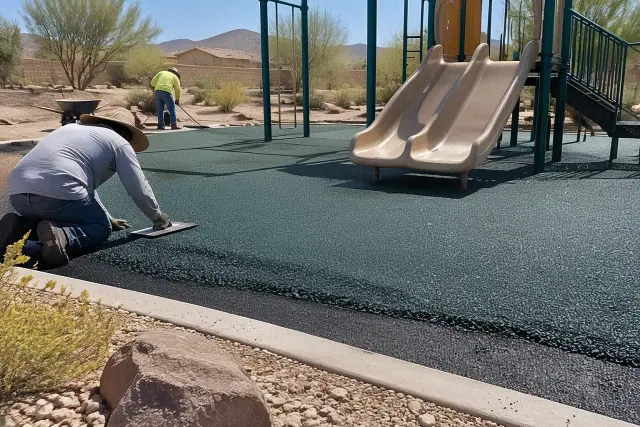
Playground rubber surfacing progress photo at a jobsite in Mesa, AZ.

Playground Rubber Surfacing

Playgrounds use a separate surfacing specification based on equipment fall height. Poured-in-place and tile options require the right impact performance and installed depth for the site.

  • ASTM F1292 impact attenuation specifications
  • ASTM F1951 accessibility specifications
  • Depth typically 2 to 3.5 inches depending on fall height
  • Consumer Product Safety Commission fall-height guidance
  • UV-stabilized EPDM for Arizona sun exposure
Request Estimate
Built Around Your Space

Choosing the Right Rolled Rubber Flooring

A home gym in Las Sendas and a warehouse near the Mesa Gateway corridor place different demands on the same slab covering. We review moisture conditions, equipment loads, and room layout before recommending a floor.

Moisture Testing Before Adhesive

We test concrete with calcium chloride testing or an in-situ relative humidity probe. Those readings guide adhesive selection and help identify when the slab needs moisture mitigation before it is covered.

Thickness Matched to Equipment

We ask about dropped weights, rolling loads, and stationary equipment instead of choosing rubber by appearance alone. The recommended profile reflects the load and impact the floor will receive.

Seam Layout Planned for the Room

Room shape, equipment placement, and door clearances guide the roll layout. We minimize joints in high-traffic zones where possible and fit edges so they sit flush.

What We Check

Addressing Common Rubber Flooring Problems

Installation quality can separate a floor that serves for 20 years from one that fails in two. Our approach addresses moisture, surface preparation, movement, and seam fit before those issues undermine the finished floor.

Request a Floor Assessment

Moisture Beneath the Rubber

Vapor from a slab can weaken adhesive and leave moisture trapped beneath the covering. Mesa caliche soil and irrigation conditions make moisture testing a useful part of the installation assessment.

Lifting Edges and Open Seams

Poorly fitted or bonded seams can curl under foot traffic and rolling equipment. We assess the bond and refit affected edges, using the seam treatment appropriate to the material.

Impact from Dropped Weights

An under-specified gym floor may not provide enough cushioning for repeated barbell drops. We use the lifting activity and drop height to choose material that better protects the slab and reduces transmitted impact.

Sun Exposure at Garage Doors

West-facing garage openings can expose rubber to strong direct sunlight. We specify UV-stabilized compounds where exposure is significant, helping address the hardening and brittleness that affect unsuitable material.

Movement at Walls and Transitions

Summer slab heat and cooler winter mornings can move rubber across a large room. Expansion allowances at walls and transitions help accommodate that movement instead of forcing the edges upward.

Wear Beneath Equipment

Equipment feet and repeated traffic can concentrate wear in a small area while the surrounding floor remains usable. We check whether a matched patch or tile replacement can address the damage before recommending a full replacement.

From Slab to Finished Floor

Our Rolled Rubber Installation Process

We work from room use and slab condition through material selection, preparation, fitting, and seam finishing. Each step informs the next so the covering and its installation method suit the space.

01.

Measure the Room and Review Use

We measure the floor, door swings, and equipment footprints. We also review lifting activities, vehicle use, or rolling traffic to understand the load the new floor needs to handle.

02.

Test Slab Moisture

Calcium chloride testing or an in-situ RH probe helps assess moisture before installation. Where readings indicate a concern, the plan may include moisture mitigation coatings and a compatible adhesive.

03.

Prepare the Concrete Surface

We clean and prepare the slab to the appropriate ICRI concrete surface profile guidance. Grinding or shot-blasting opens the surface for bonding when the installation requires adhesive.

04.

Select the Material and Layout

We choose the rubber profile, finish, and roll width around the project requirements. The layout allows for equipment clearances and keeps seams out of busy zones where the room permits.

05.

Fit and Bond the Rolls

Rolls are trimmed to the room and either floated or adhered as specified for the application. Bonded installations use urethane or acrylic adhesive applied to manufacturer trowel-notch and coverage requirements.

06.

Finish Seams and Transitions

We double-cut overlapping rolled edges for a flush fit and finish seams with the method suited to the selected product. Taping, bonding, or welding depends on the material and traffic, with movement allowances at walls and transitions.

Plan Your Floor

Request a Rolled Rubber Flooring Estimate

Share your room dimensions, equipment needs, and preferred finish with Mesa Rubber Flooring. We can explain the material, adhesive, and slab preparation involved in your project so you can compare the full scope.

Rolled Rubber Questions

Rolled Rubber Flooring FAQs

These answers cover material costs, installation methods, floor life, and practical choices for Mesa homes and commercial spaces. Your room layout and slab condition help determine the final recommendation.

Discuss Your Floor

A 3/8-inch commercial-grade pre-cut roll typically costs $160 to $500 depending on its length and width. Rolled rubber material runs roughly $1.19 to $3 per square foot depending on thickness and grade. Installation adds labor, adhesive, and substrate preparation, so a quote should reflect the complete project.

New rubber can have a noticeable odor, particularly with recycled content, that fades over several weeks in a ventilated space. Thicker rolls are heavy and harder to handle, and poor installation can leave curling seams or trapped moisture. Depending on grade, rubber can cost more than basic vinyl or carpet tile.

Mesa Rubber Flooring offers waterproof-rated rolled rubber, but the product needs to match the type of moisture exposure. Closed-cell compounds resist water absorption, while seams and wall transitions still need attention. We help distinguish occasional moisture from standing water when selecting the material and edge details.

Yes, trapped moisture between the rubber and subfloor can allow mold to develop. High slab vapor emissions and inadequate drainage can contribute to that condition. We test the slab and address moisture concerns before installation rather than relying on the covering alone.

Some residential floors can float, held by the weight and friction of the rubber. Commercial spaces, busy areas, and rooms with rolling equipment typically need full adhesive bonding to control shifting and seam separation. Room size and traffic help determine the installation method.

We assess moisture, clean and prepare the slab, then lay out and trim the rolls to fit. Depending on the application, the rubber floats or bonds with trowel-applied urethane or acrylic adhesive. Seams are fitted tightly and finished using the method appropriate to the product and traffic.

Properly installed rolled rubber commonly lasts 15 to 20 years or longer in residential settings. Commercial-grade rubber with proper maintenance often exceeds 20 years, while a properly installed garage floor can perform for well over a decade. Preparation, UV exposure, and ongoing care affect service life.

Cardio and bodyweight areas can use 3/8-inch rolled rubber. Olympic lifting and dropped barbells call for 3/4-inch to 1-inch rolled rubber or stall mats. We consider dumbbell weights, drop height, and the slab beneath the lifting area before recommending the profile.

Substrate condition, moisture mitigation, thickness, room shape, and seam count all affect the scope. Colored and flecked finishes can change material cost, while poured-in-place surfacing generally costs more upfront than rolled goods. Rubber flooring often exceeds 20 years with proper installation and maintenance. That service life can offer value compared with flooring that needs replacement every 5 to 7 years.

Yes, vehicle use should be part of the flooring assessment when a garage doubles as a gym. We consider tire traffic, dropped tools, and exposure to oil, coolant, or brake fluid when choosing the compound. Thicker material or a removable hybrid tile layout may suit the space better than a standard gym roll.

Tiles suit rooms with columns, unusual angles, or equipment that is rearranged often, and individual damaged pieces can be replaced. Poured-in-place EPDM provides a seamless surface with custom color blending and graphics. Playgrounds and accessible walkways need their own surface specification rather than simply reusing an indoor gym floor design.

Localized separation may be repaired by re-adhering the affected area and treating the seam again. Larger tears may need a matched rubber patch. We check the subfloor bond because widespread adhesive failure or moisture damage can make replacement more appropriate.

We review foot traffic, rolling equipment, concentrated machinery loads, and any solvents or oils used in the space. Commercial material selection includes rubber tested to ASTM D2047 for slip resistance. Industrial floor planning also considers OSHA 1910.22 walking-working surface requirements and chemical-resistant compounds rated for the actual exposure.