Proudly serving Mesa, Gilbert, Chandler, Tempe, Scottsdale, Queen Creek & surrounding areasCall or Text 24/7: 480-319-7553
Aerial drone view of suburban neighborhoods and desert landscaping in Mesa, AZ.

Gym & Home Gym Rubber Flooring in Scottsdale, AZ for Home Gyms & Garages

Mesa Rubber Flooring installs and repairs rubber flooring for gyms, home workout rooms, and garages in Scottsdale, AZ. We fit rolled rubber and interlocking tile to weightlifting areas, cardio zones, and converted casitas. Our services also include commercial and industrial flooring, anti-fatigue surfaces, and poured-in-place rubber for playgrounds and specialty spaces.

Desert heat, slab movement, and monsoon moisture all affect how a rubber floor performs. Summer slab temperatures in garages and detached gyms can climb past 140 degrees, making material choice and expansion allowance important. We start with a site visit, moisture testing, and a review of your equipment layout before recommending flooring. Request a free on-site consultation to discuss the space and receive a written estimate.

Our crews work throughout Scottsdale, from Old Town lofts and South Scottsdale ranch homes to DC Ranch, Grayhawk, Gainey Ranch, McCormick Ranch, and Troon North.

★ ★ ★ ★ ★4.9/5 Customer Rating - 19 Years of Flooring Experience - 1,000+ Flooring Projects Completed - Licensed, Bonded & Insured - Residential & Commercial Flooring
Installation & Repair

Rubber Flooring Services in Scottsdale, AZ

Choose flooring around the room's equipment, traffic, and exposure to moisture. We install rubber surfaces for private workout spaces, commercial fitness facilities, workshops, and play areas, with repair and replacement options for worn floors. For another nearby service area, see Queen Creek, AZ .

Gym & Home Gym Rubber Flooring
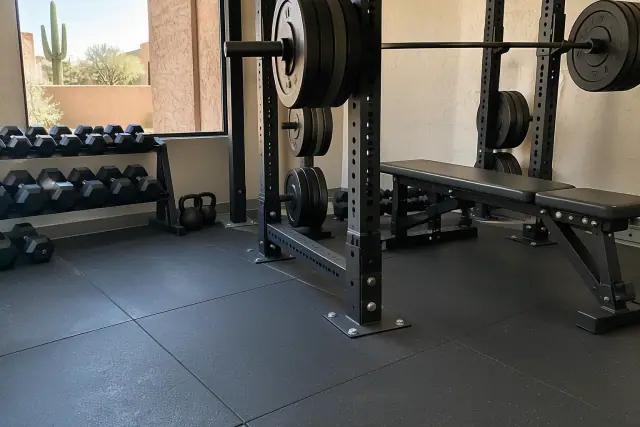
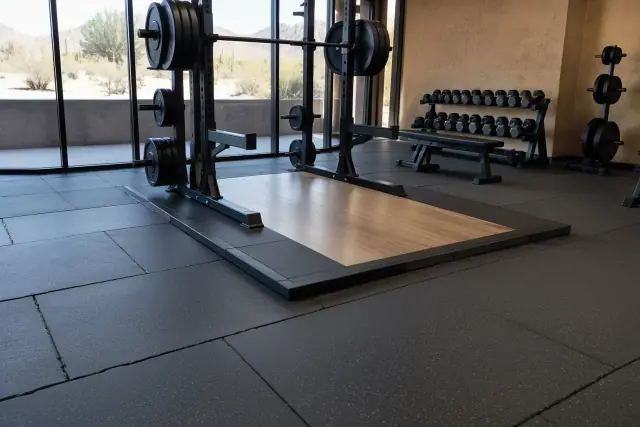
Thick black rubber gym flooring installed under heavy barbell racks in a Scottsdale, AZ home gym.

Build lifting, cardio, and functional-training areas around your equipment footprint. We install rolled rubber, interlocking tiles, and poured surfaces, selecting 3/8-inch to 3/4-inch rubber for commercial lifting zones according to drop-weight demands.

Explore Service
Garage Rubber Flooring

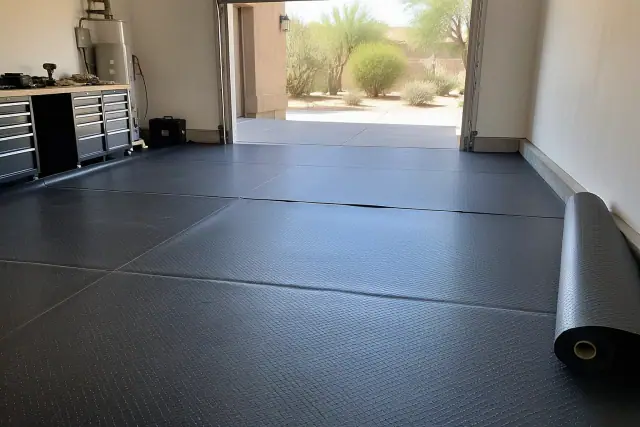
Thick black textured rubber flooring roll installed in a garage in Scottsdale, AZ.

Turn a bare slab into a practical workout or workshop surface with interlocking tile or rolled rubber. We allow for slab movement with expansion gaps and match the material to the garage's use and exposure.

Explore Service

Rolled Rubber Flooring

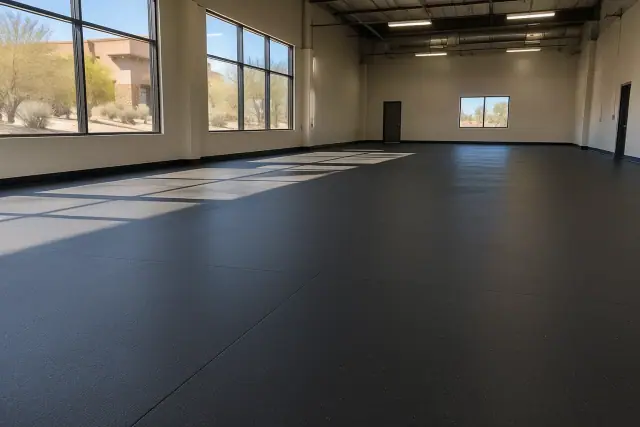
Black rolled rubber flooring installed in an indoor sports facility in Scottsdale, AZ.

Cover large weight rooms and warehouse gyms with fewer seams. We install black and flecked rolls from 1/4-inch to 1/2-inch thick, double-cutting seams and choosing glued or loose-laid installation to suit the subfloor and traffic.

Explore Service

Rubber Floor Tile Installation

Rubber floor tile installation around barbell platforms in Scottsdale, AZ.

Interlocking rubber tiles fit odd-shaped rooms and let you separate lifting platforms from open training areas by color. Modular construction also allows a damaged tile to be replaced without removing the whole floor.

Commercial Rubber Flooring

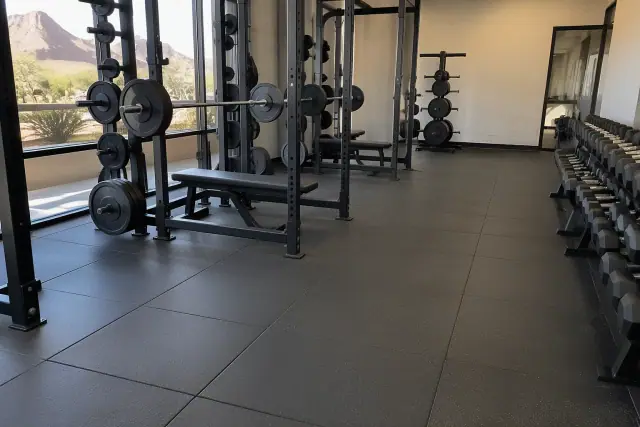
Commercial rubber flooring installed in a fitness weightlifting zone in Scottsdale, AZ.

Equip hotel fitness centers, corporate wellness rooms, physical therapy clinics, and multifamily gyms for daily use. We plan transitions, adhesive selection, and slip-resistance needs around the facility and coordinate work with its operating schedule.

Playground Rubber Surfacing

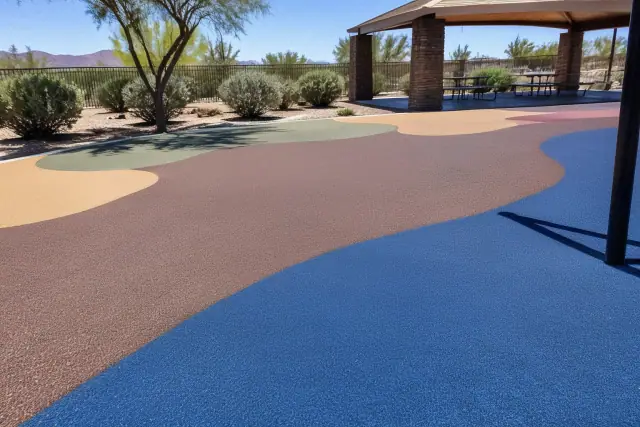
Seamless poured rubber safety surfacing installed on the ground at a park in Scottsdale, AZ.

Create a continuous rubber surface around the shape of a community play area. Poured-in-place EPDM granules and polyurethane binder allow custom layouts and color blending without the joints of rolled or tiled flooring.

Poured-in-Place Rubber Flooring

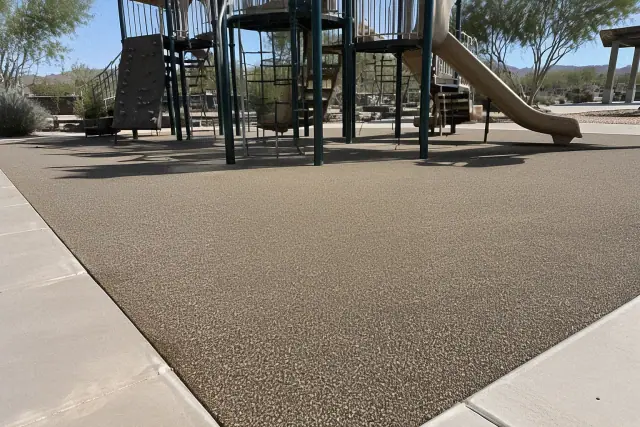
Poured-in-place rubber safety flooring at a recreation park play structure in Scottsdale, AZ.

Form a seamless surface on site for specialty gyms and other spaces with custom shapes, logos, or blended colors. EPDM granules bond with polyurethane binder, and the finished surface needs a curing window before use.

Industrial Rubber Flooring

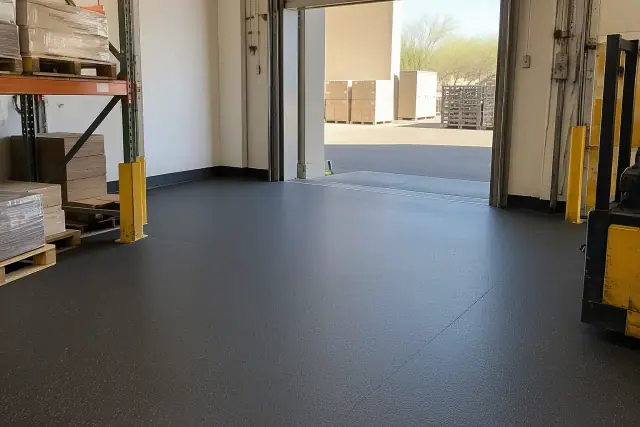
Industrial rubber flooring installed in a shipping zone in Scottsdale, AZ.

Fit warehouses, workshops, and light manufacturing spaces with heavier-gauge rubber sheeting. We select material rated for the application's abrasion, oil exposure, and forklift traffic where those demands apply.

Anti-Fatigue Rubber Flooring

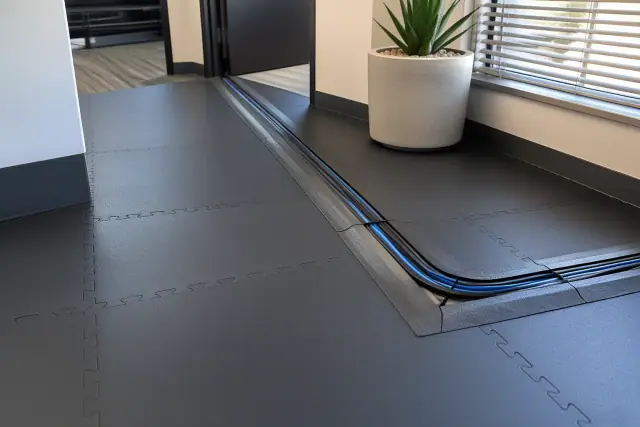
Interlocking anti-static puzzle-edge rubber flooring tiles installed in a Scottsdale, AZ technology office.

Reduce standing strain at workstations, garage benches, and commercial kitchen work areas. We size closed-cell rubber matting to the working footprint and select oil- and chemical-resistant material where needed.

Rubber Flooring Repair & Replacement

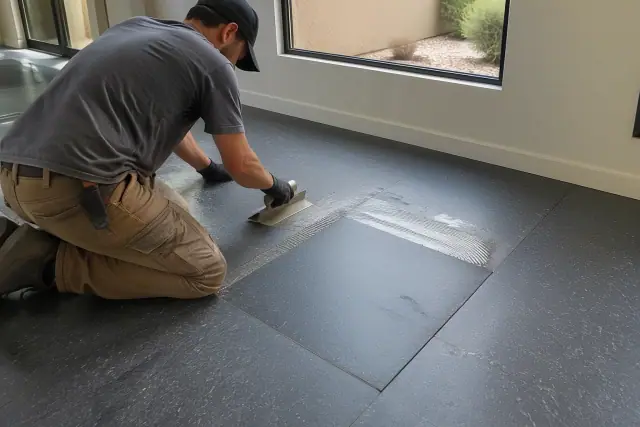
Technician repairing rubber flooring with a precise seam and fresh adhesive in Scottsdale, AZ.

Address torn seams, adhesive failure, or localized weight damage with patching and re-seaming where practical. For widespread deterioration, we remove the old rubber, correct subfloor moisture issues, and install a surface suited to current use.

Material Selection

Choose Rubber Flooring for Your Space

A heavy lifting platform, a condo workout room, and a workshop place different demands on rubber. Compare equipment loads, sound transmission, room shape, exposure, and future repairs before choosing a format or thickness.

Match Thickness to Training

Most home gyms suit 3/8-inch to 1/2-inch rubber, while frequent heavy drops may need a thicker lifting zone. We review your dumbbells, kettlebells, barbell work, and equipment footprint rather than giving every part of the room the same specification.

Plan for Shared Walls & Floors

Rubber absorbs impact and helps reduce sound transmission in condos and rooms beside living space. Equipment placement and the building's acoustic demands guide the choice of flooring for a bonus room, casita, or shared fitness area.

Choose Rolls, Tiles, or Poured Rubber

Rolls reduce seams across large rooms, tiles adapt to irregular footprints, and poured rubber allows continuous custom shapes. Match the format to the layout and the way you want to divide training zones.

Account for Sun & Heat

West-facing windows and open garage doors expose rubber to direct sunlight. We consider material grade, color, and expansion allowance so the selection reflects the room's heat and UV exposure.

Balance Material & Preparation Costs

Nationally, installed rubber gym flooring runs roughly $3 to $12 per square foot, depending on thickness and grade. Recycled rolls sit toward the lower end and virgin-rubber colored tiles toward the higher end; slab preparation also affects the written project quote.

Consider Future Repairs

Modular tiles make individual damaged sections easier to replace, while matching roll repairs depends on product availability. Keeping the installed material and adhesive details on record helps future repairs match the original floor.

Scottsdale Floor Conditions

Common Rubber Flooring Problems

Curling edges, bubbles, discoloration, and soft spots can point to different underlying problems. We examine the rubber and the slab so a repair addresses the cause as well as the visible damage.

Request a Floor Assessment

Buckling & Open Gaps

Slab heave or settling over caliche and expansive clay can strain a tightly fitted floor. Without suitable expansion allowance, rubber may buckle or pull apart as conditions change.

Moisture Beneath the Rubber

Monsoon humidity and an inadequately prepared slab can leave moisture trapped below the surface. A spongy feel or failing adhesive calls for a closer look beneath the mat before new rubber goes down.

UV Fading & Surface Tackiness

Direct sun can fade and break down lower-grade rubber near garage doors and large windows. Professional-grade EPDM and SBR compounds resist this exposure longer, making material selection important in sunny rooms.

Curling Seams & Raised Edges

Loose mat edges can curl or shift beneath a squat rack and along traffic routes. We inspect the seam fit and fastening method, then re-seam or replace the affected section where practical.

Weight Damage & Compression

Dropped weights can tear a surface that does not suit the training load, while racks place sustained pressure on flooring. We match thickness and grade to lifting areas and replace localized damage when the surrounding floor remains usable.

Widespread Wear

A floor with damage across most of its surface may be a better candidate for replacement. Extensive deterioration can appear after 10 to 20 years of heavy commercial use, or result from improper original installation.

Local Installation Experience

Rubber Flooring Experience in Scottsdale, AZ

Mesa Rubber Flooring focuses on rubber installation and repair for residential and commercial spaces. Scottsdale's population grew from 217,385 in 2010 to 241,361 at the 2020 census, alongside demand for home gyms and shared fitness facilities. Experience in Old Town properties and North Scottsdale homes informs our approach to subfloors, materials, and project coordination.

Understand Local Slab Conditions

From clay along the Camelback corridor to North Scottsdale caliche, subfloor conditions influence installation choices. Our site assessment considers the property's slab, exposure, and intended use before materials are ordered.

Test Before Installation

Moisture testing and subfloor preparation guide adhesive selection and installation method. We use the site visit to identify grinding, patching, or moisture issues that should be addressed before covering the concrete.

Keep the Project Scope Clear

We measure the space and provide a written estimate before ordering materials. Installation records track the rubber and adhesive used, giving future repair work a clearer starting point.

Installation Process

From Slab Assessment to Finished Floor

The installation plan begins with the room's condition and intended use. We review equipment, material options, preparation work, and access before fitting the floor and checking the finished edges with you.

01.

Inspect & Test the Slab

We begin with a site visit and concrete moisture testing, typically using calcium chloride or relative humidity testing. Subfloor preparation follows ASTM F710 guidance for resilient flooring substrates.

02.

Measure the Equipment Layout

We measure the space and review rack positions, lifting platforms, and cardio zones. Load, budget, and noise requirements guide the choice of rolled rubber, interlocking tile, or poured-in-place flooring.

03.

Prepare the Concrete

Grinding or patching addresses subfloor conditions identified during the assessment. Moisture issues are corrected before the installation proceeds so the new floor starts on a properly prepared base.

04.

Fit, Fasten & Finish Seams

We install the selected rubber with adhesive or mechanical fastening suited to the application and Arizona's temperature swings. Seam work and tight-fit tiling keep adjoining sections aligned with the planned layout.

05.

Allow the Surface to Cure

Poured-in-place rubber usually needs 24 to 48 hours to cure, depending on temperature and humidity. We account for this window before returning foot traffic or equipment to the finished area.

06.

Walk Through the Finished Floor

We check seams, transitions, and edge trim with you before considering the project complete. The walkthrough brings attention to the details where flooring meets doors, adjacent materials, and equipment areas.

Practical Flooring Outcomes

Flooring Goals for Homes & Facilities

Case Study 1: Garage workout rooms: Fitted mats, rolls, or tiles create a stable training surface around racks and platforms. Careful seaming addresses edges that could otherwise curl or shift during use.

Case Study 2: Commercial fitness spaces: Color-zoned rubber separates lifting stations from open functional-training areas. Selecting thickness by activity supports daily use while scheduling work around the facility's operations.

Case Study 3: Standing work areas: Closed-cell rubber matting fits the footprint of a garage bench or commercial workstation. Material rated for the relevant oil and chemical exposure combines standing comfort with the demands of the work.

Plan Your Project

Schedule Your Rubber Flooring Consultation

Tell us about the room, its current floor, and the equipment you plan to use. A free on-site consultation includes measuring the space, discussing materials, and preparing a written estimate before anything is ordered.

Gym & Home Gym Flooring Help

Rubber Flooring FAQs for Scottsdale, AZ

Find answers about material choices, thickness, installation timing, and local project planning. We can discuss the details of your slab and equipment during the on-site consultation.

Discuss Your Flooring

Flooring suppliers and fitness equipment retailers sell rolled rubber, interlocking tiles, and stall mats. Mesa Rubber Flooring sources commercial-grade material and handles installation, including subfloor assessment, seam work, and adhesive selection. Buying material separately still leaves those site-specific decisions to resolve.

Thickness, material grade, and installation format drive the cost, along with any grinding or moisture work the slab needs. A basic garage using 3/8-inch rolls generally costs less than a commercial space needing 3/4-inch impact-rated material and custom colors. Poured-in-place rubber usually costs more than rolls or tiles because of the labor and curing involved. We provide a written quote after measuring the space.

Interlocking tiles work well in smaller or irregular rooms and let you replace individual damaged pieces. Rolled rubber suits larger open workout areas with fewer seams, while dense stall mats are an option for dedicated lifting platforms. We compare the room layout, equipment, budget, and sound transmission before recommending a format.

Most home gyms do well with 3/8-inch to 1/2-inch rubber for dumbbells, kettlebells, and moderate barbell use. Regular overhead Olympic lifting drops may call for 3/4-inch rubber or dedicated stall mats beneath the platform. Lighter cardio and functional-training spaces can use 1/4-inch tile; options under 1/4 inch are generally better suited to light use than heavy strength work.

New rubber, particularly recycled material, can have an odor that fades over several days to a few weeks with ventilation. Lower-grade products can fade in direct sunlight, and dark rubber can retain heat in an unconditioned garage. Rubber is also heavier and harder to remove than foam tile, so grade, color, and future room changes deserve consideration.

A typical home gym or garage installation using rolls or interlocking tiles takes one to two days, depending on size and subfloor condition. Poured-in-place work takes longer overall because of curing before traffic or equipment returns. Commercial projects scale with square footage and may be phased around facility use. We give you a project-specific timeline during the estimate.

Yes. The process starts with a site visit and concrete moisture testing before choosing the installation method. This helps identify conditions that could leave moisture trapped under rubber or weaken the adhesive bond, particularly during monsoon humidity swings.

Localized tears, seam damage, or adhesive failure can often be patched or re-seamed. We match the existing color and thickness where the product remains available and assess moisture beneath the affected area. Widespread degradation may make full replacement more practical, and we work on floors installed by other contractors as well as our own.

Rubber absorbs impact and helps reduce sound transmission through floors and shared walls. Thickness and equipment layout should reflect the training activity and the building's acoustic demands. We review whether the room adjoins living space before recommending flooring.

Yes. Dense rubber stall mats offer an affordable option for garage gyms and platform lifting areas. We fit and secure the mats so adjoining edges stay flat during barbell work and heavy sled use.

Turf installation is outside our service scope. We install the rubber perimeter and transition flooring around existing or planned turf strips. The goal is to keep the junction between materials flush for the training area's use.

We coordinate commercial work around business hours and may schedule larger installations in phases. CrossFit boxes, personal training studios, and multifamily fitness rooms can have different access and downtime requirements. We discuss those limits when planning the installation.

Hotel gyms, therapy clinics, and multifamily facilities need flooring selected for traffic, equipment loads, and slip-resistance expectations. Transition design and adhesive requirements also matter, including ADA-compliant transitions and fire-rated adhesive systems where required. We review these needs as part of the commercial project scope.

Communities such as DC Ranch, Grayhawk, and Gainey Ranch may have architectural guidelines for garage and casita conversions. We coordinate with property managers and HOA committees when a project needs sign-off. Poured-in-place work tied to structural modifications may also need review by the City of Scottsdale Building Development Services division.

We cover Old Town, the Arts District, the Miller Road and Shea Boulevard corridors, Scottsdale Ranch, the Airpark business district, and North Scottsdale near Pinnacle Peak. We also work in Paradise Valley, Fountain Hills, Cave Creek, Carefree, Tempe, and Mesa, with commercial projects elsewhere in Maricopa County considered by scope. If you are planning spaces in both Scottsdale and Queen Creek, AZ, compare the equipment loads and slab conditions at each property before choosing one flooring specification for both.