Proudly serving Mesa, Gilbert, Chandler, Tempe, Scottsdale, Queen Creek & surrounding areasCall or Text 24/7: 480-319-7553
Guides

What Are the Downsides of Rubber Flooring?

Mesa Rubber Flooring installs and repairs rubber surfaces across Mesa and the East Valley, where upfront cost, new-rubber odor, stains, and limited design options can affect whether the material fits a room. This guide explains those tradeoffs and the subfloor checks that matter before choosing rubber for a home gym, garage, or commercial floor.

Quick Summary

  • Installed rubber flooring typically costs $3.50 to $16 per square foot, depending on thickness, format, and application.
  • New rubber can have a noticeable odor for several days to a few weeks, especially in a garage with little airflow.
  • Oil, gasoline, and some shoe soles can stain rubber; direct sunlight can fade its color over time.
  • Moisture trapped beneath rubber can support mold, and poor subfloor preparation can contribute to separating seams.

Rubber Flooring Tradeoffs

Heavy Rolls and Installation Cost

A 500 square foot home gym in rolled rubber can cost $2,000 to $6,000, depending on gauge. A single 4x10 foot roll of 3/8 inch rubber can weigh over 100 pounds, adding handling labor and sometimes equipment to the job.

Odor in Enclosed Garages

New-rubber odor is strongest in the first 48 to 72 hours and tapers over two to four weeks with adequate ventilation. Enclosed Mesa garages can exceed 120 degrees in summer, making airflow an important installation consideration.

Test the Subfloor First

Check slab moisture before covering concrete with rubber. A clean, dry slab within the flooring's moisture tolerance, suitable adhesive, and adequate curing time help reduce the risk of moisture trapped underneath.

Rubber Flooring Details to Inspect

Oil Stains on Light-Colored Garage Rubber

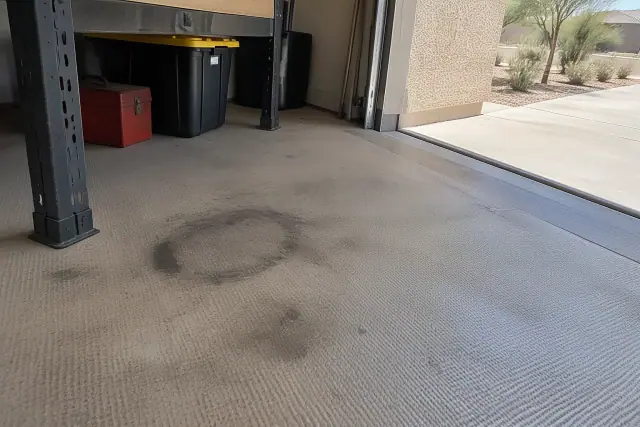
Oil stains on light-colored garage rubber flooring in Mesa, AZ.

Motor oil and gasoline can leave marks that are difficult to remove. Light-colored rubber shows stains more readily than dark or flecked flooring.

Rolled Rubber and Interlocking Gym Floor Tiles

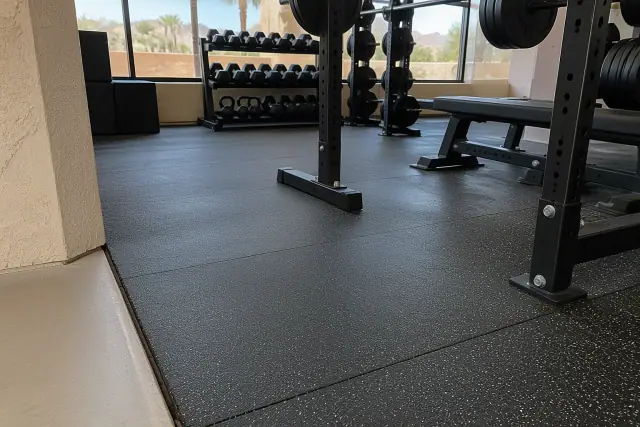
Rolled rubber and interlocking gym floor tiles installed in Mesa, AZ.

Rolls create fewer seams, while tiles allow a damaged area to be replaced individually. Compare those tradeoffs before choosing a format for a home gym.

Moisture Testing a Concrete Slab Before Rubber Flooring

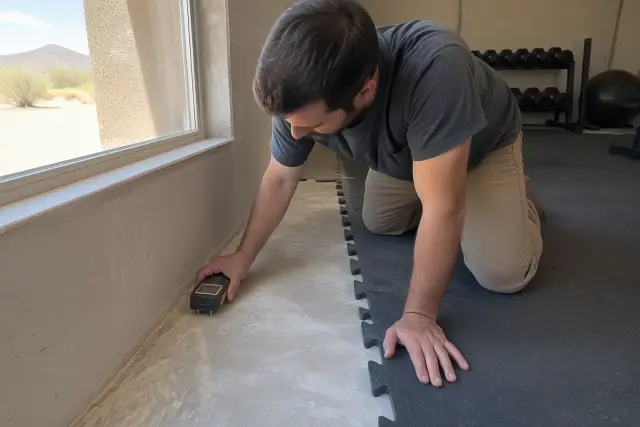
Digital moisture meter testing raw concrete in a Mesa, AZ basement before rubber flooring installation.

Testing the exposed slab helps identify moisture concerns before rubber covers it. Monsoon-season water intrusion also needs attention before installation.

Rubber Flooring Format Comparison

Rolled Rubber

Fewer seams can help with moisture resistance in garages and industrial spaces. The tradeoff is handling heavy material and replacing a larger area when damage cannot be repaired locally.

Rubber Floor Tiles

Individual tiles make spot replacement easier. Subfloor preparation still matters: poorly prepared surfaces can contribute to gaps or separating seams.

Poured-in-Place Rubber

Longer cure times affect scheduling, and mixing ratio and trowel technique influence the finished surface. Compare the installation scope and material grade when reviewing its higher upfront cost.

Decorative Finishes

Flecked, marbled, and solid colors are common. Rubber offers fewer wood-grain or stone-look choices than other flooring materials, which can limit its appeal in living spaces.

Match Each Drawback to a Check

Rubber Flooring Drawbacks and Pre-Installation Checks

DrawbackWhere It MattersWhat to Check
Higher upfront costThicker rolls and poured-in-place systems can raise the installed price.Compare material grade, subfloor preparation, and labor in an itemized estimate.
New-rubber odorEnclosed rooms can hold odor during the initial period after installation.Plan airflow before installation and account for the room's ventilation.
Stains and cleaner residueOil, gasoline, and unsuitable cleaners can leave marks or a hazy film.Consider likely spills and use a pH-neutral cleaning routine.
Sun fadingDirect sun through west-facing windows or open garage doors can change the surface over time.Review where the floor receives prolonged sunlight before choosing the material.
Moisture underneathAn uncured slab or water intrusion can leave moisture beneath rubber.Test slab moisture and address water intrusion before covering the floor.
Concentrated trafficRepeated forklift lanes and heavy casters can compress or abrade the surface.Match the product and thickness to traffic load and equipment use.

Wear, Lifespan, and Routine Care

With proper cleaning and maintenance, residential rubber flooring typically lasts 20 to 30 years; heavy commercial or industrial use generally brings that range to 10 to 15 years before resurfacing or replacement. That durability does not make rubber immune to damage: repeated forklift lanes can compress the surface, while heavy equipment casters can cause abrasion. Direct Arizona sun can also fade rubber and leave some formulations brittle at the surface over time. Use pH-neutral cleaners, since ammonia-based or citrus-based products can damage the finish. Unsuitable products can also leave wax buildup and a hazy film that attracts dirt.

Moisture and Installation Risks

Rubber's resistance to moisture does not prevent water from becoming trapped between the flooring and concrete. An insufficiently cured slab or water intrusion can create conditions for mold underneath, so preparation matters as much as material choice. Skipping acclimation, choosing an adhesive that does not suit the substrate, or overlooking expansion during Arizona's temperature swings can contribute to installation problems. Surface texture matters too: smooth rubber can be slippery when wet, while textured or studded profiles reduce that concern.

Common Follow-Up Questions

Is rubber flooring a good choice for a Mesa garage? It can suit dropped tools and vehicle traffic, but oil exposure and enclosed-air odor need attention. Can mold grow underneath? Yes, trapped moisture can support mold beneath the floor; a musty smell calls for checking the underlying moisture problem. Will stains come out? Oil, gasoline, newsprint, and some shoe soles can leave marks that are difficult to remove completely, although prompt cleanup with a pH-neutral cleaner helps.
Plan Your Flooring

Review Options for Your Space

Share the room's intended use, existing floor condition, and any moisture or sunlight concerns. Ask for an itemized estimate covering material grade, subfloor preparation, and labor so you can compare rubber's cost with the maintenance and appearance you expect.