Proudly serving Mesa, Gilbert, Chandler, Tempe, Scottsdale, Queen Creek & surrounding areasCall or Text 24/7: 480-319-7553
Guides

Is Rubber Flooring Good for a Garage in Mesa, AZ?

Yes, rubber flooring can be a good fit for a Mesa garage when the product matches how you use the space; Mesa Rubber Flooring installs rolled rubber, interlocking tiles, and poured-in-place surfaces for these different needs. Rubber cushions dropped tools and makes standing or exercising more comfortable. Parking, heavy weights, slab moisture, and direct sunlight all affect which surface belongs in your garage.

Quick Summary

  • Rubber is useful for garage gyms, workshops, and parking areas when its compound and thickness suit the load; vehicle use calls for a vehicle-rated surface.
  • Thicknesses from 3/8 inch to 3/4 inch cover different garage uses, with thicker gym rubber suited to heavy free weights.
  • Rolled rubber and interlocking tiles cost roughly $1.50 to $5.00 per square foot installed, depending on thickness and whether the surface serves a gym or vehicles.
  • Concrete needs cleaning and moisture checks first. Rubber adds impact cushioning, but seams, direct-sun fading, and rolling-tool resistance are tradeoffs.

Why Rubber Works in a Garage

Cushion Dropped Tools and Weights

Rubber absorbs impacts from socket wrenches and dumbbells and provides a more comfortable standing surface than a rigid coating. Those benefits are especially useful in a garage that doubles as a workshop or workout space.

Match Thickness to Garage Use

General residential garage use commonly calls for 3/8-inch to 1/2-inch rubber, while heavy free weights can call for up to 3/4 inch. Thickness and compound quality both matter when comparing flooring for parking or exercise.

Check Moisture Before Covering Concrete

Clean the slab, check moisture, and patch spalling before laying rubber. The installation process includes vapor testing consistent with ASTM F1869, followed by a review of seams, transition strips, and expansion gaps.

Garage Rubber Flooring Details to Inspect

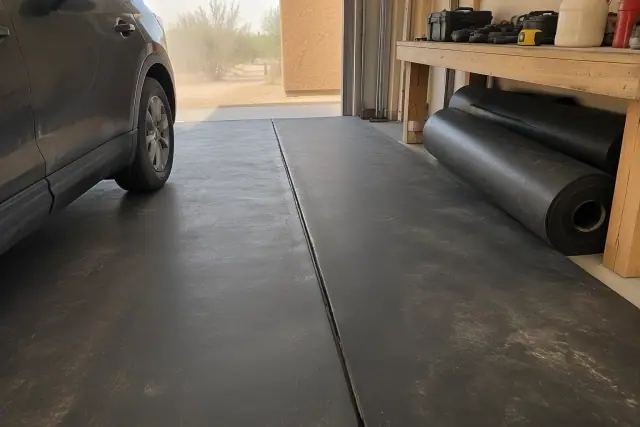
Rolled Rubber Seams Beside a Parked Car

Rolled rubber flooring seams and parked car inside a garage in Mesa, AZ.

Full-width rolls leave fewer seams than tiles across a parking area. Tight joins help keep grit from collecting between adjacent sheets.

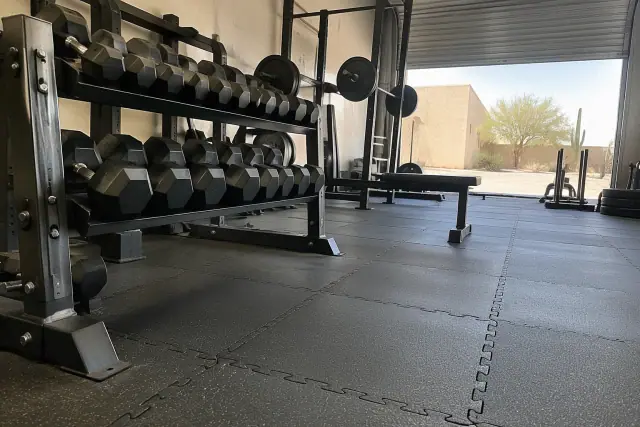
Interlocking Rubber Tiles Beneath Garage Gym Weights

Interlocking rubber floor tiles and heavy dumbbell racks in a Mesa, AZ gym.

Interlocking tiles can be lifted and relocated as a workout area changes. Thicker gym rubber cushions dropped barbells and helps reduce noise reaching adjoining rooms.

Concrete Slab Prep Before Garage Rubber Installation

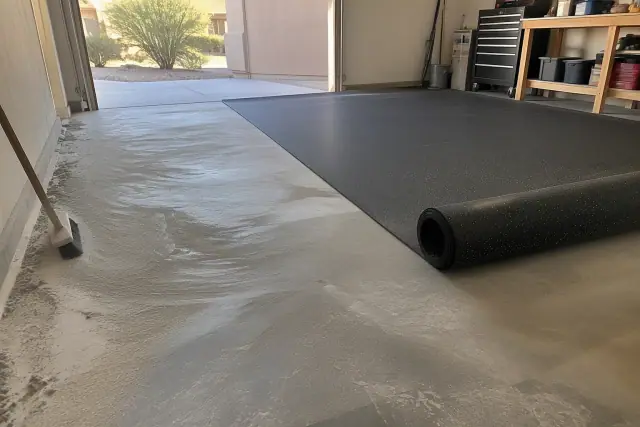
Raw concrete surface grinding dust and swept debris during garage floor prep in Mesa, AZ.

Cracks, spalling, and peeling paint need attention before rubber covers the slab. An intact epoxy coating may remain beneath an overlay after the surface is checked.

Garage Conditions That Affect Rubber Flooring

Heat and Open-Door Sun

Mesa's 110°F-plus summer heat makes compound selection important. Heat-rated, UV-stabilized rubber is worth considering where south- or west-facing garage doors admit prolonged direct sunlight.

Monsoon Moisture Under Mats

Check for trapped moisture during the June-through-September monsoon season. Older Mesa homes built before the 1990s may lack a slab vapor barrier, making the moisture-control plan especially important.

Rolling Toolboxes and Jacks

Softer rubber can make rolling toolboxes or jacks harder to move than on a rigid coating. Compare that tradeoff with the cushioning you want for standing, tools, and weights.

Odor, Tire Marks, and Cleaning

New rubber can have a faint odor that fades within a few weeks, and lighter colors show tire marks more readily. Sweep and mop with mild detergent; avoid petroleum-based and citrus solvent cleaners.

Choose Rubber by Garage Use

Which Rubber Surface Fits Your Garage?

Garage useRubber optionBenefit and tradeoff
Daily parking and full-floor coverageVehicle-rated rolled rubberFewer seams simplify cleaning; confirm the compound suits vehicle loads and automotive exposure.
A workout area you may rearrangeInterlocking rubber tiles or gym matsSections can be lifted and relocated; choose gym-grade thickness for the weights in use.
A permanent, seamless garage surfacePoured-in-place rubberA fully bonded finish avoids tile joints; professional installation and a longer cure time are required.
A workshop with rolling tool storageA suitable heavy-duty rubber compoundImpact cushioning helps with dropped tools; softer surfaces can resist rolling equipment more than rigid coatings.

Rubber Garage Flooring Costs and Preparation

Light-duty rolled rubber installation in Mesa typically runs $1.50 to $1.70 per square foot, with heavy-duty gym-grade rubber or poured-in-place systems reaching $3.00 to $5.00 per square foot. A standard two-car garage is roughly 400 to 500 square feet, placing rolled-rubber projects around $600 to $2,500 before labor variables. Square footage, thickness, custom cuts around drains or support columns, grinding, and crack repair affect the final total. Cleaning and moisture testing come before installation; flaking paint needs attention instead of simply being covered. Most residential rolled-rubber installations rely on the material's weight and friction, while poured-in-place surfaces use a concrete-compatible bonding system.

Rubber, Epoxy, and Long-Term Wear

Rubber offers more impact cushioning and standing comfort than epoxy, but it costs more upfront than basic epoxy paint. Its flexibility helps with temperature changes: Mesa garage slabs can swing from 60°F overnight lows to well over 120°F surface temperatures in July and August. Heavy-duty rubber in the 1/2-inch to 3/4-inch range can suit demanding garage uses, though the compound must also match the load and expected oil or coolant exposure. Direct sunlight through an open door can fade or yellow some rubber over years. Most rubber garage floors last 10 to 20 years before wear calls for repair or replacement; keeping debris out of seams and maintaining the moisture-control layer beneath the floor support long-term care. Check whether the concrete needs resealing every several years as part of that upkeep.

Common Follow-Up Questions

Can mold grow under garage rubber? Yes: moisture trapped against the concrete can allow mold beneath the mat even though closed-cell rubber does not itself support mold growth. Sealing the slab or using a suitable moisture barrier, along with airflow and drainage or ventilated backing where appropriate, helps address that concern. Can rubber go over concrete or epoxy? Yes, after checking the slab for moisture and damage; an epoxy overlay needs an intact coating that is not peeling. Which type fits a garage gym? Gym-grade rolls or interlocking tiles provide cushioning for weights, while a parking area needs rubber suited to vehicle traffic.
Plan Your Garage Floor

Need Help Choosing Garage Rubber?

Share the garage's square footage, existing floor condition, and whether you use it for parking, tools, or workouts. Include moisture concerns and direct-sun exposure so the estimate can address the right compound, thickness, and slab preparation.