Plan Around Daily Use
Quality rubber flooring generally lasts 10 to 25 years. A home gym used for a few hours daily wears more slowly than a commercial facility with back-to-back classes, heavy sled work, and dropped weights.
At Mesa Rubber Flooring, we help homeowners and businesses across the East Valley understand how use, installation, and desert conditions affect their floors. Rubber flooring typically lasts 5 to 25+ years, so matching the material and maintenance to your space matters when planning repairs or replacement.
Quality rubber flooring generally lasts 10 to 25 years. A home gym used for a few hours daily wears more slowly than a commercial facility with back-to-back classes, heavy sled work, and dropped weights.
Virgin rubber often outlasts recycled rubber by 5 to 10 years because its density is more consistent. High-quality recycled rubber tile can still deliver 10 to 20 years of service, particularly under lighter residential use.
Check for cracking, curling edges, separated seams, and permanent compression. A musty odor, tackiness, or discoloration near seams can point to moisture or separation beneath the floor and warrants a closer inspection.
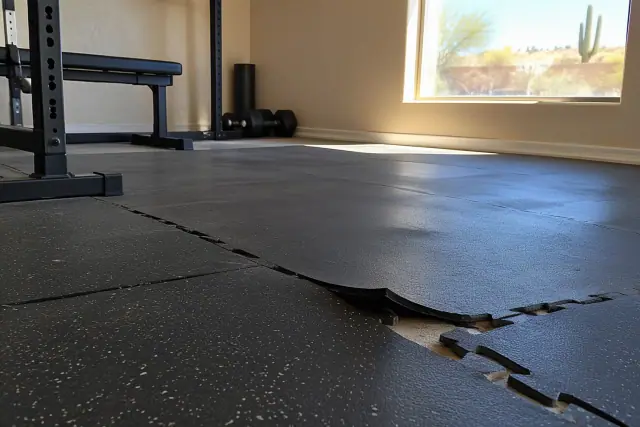
Lifted edges and widening seams reveal changes that floor age alone cannot explain. Check these areas when deciding whether repair or replacement is needed.
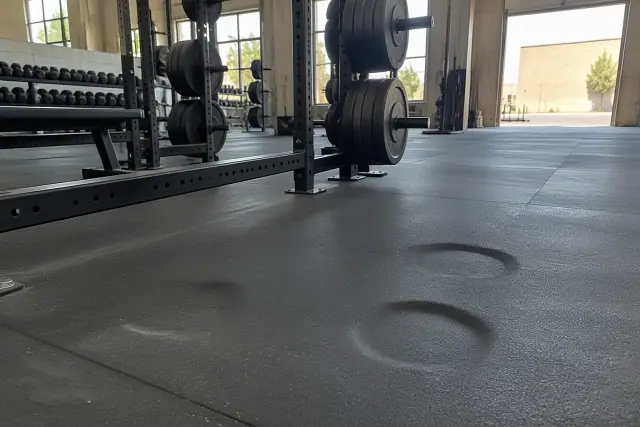
Compression beneath equipment shows where repeated loads have affected the rubber. Compare those dents with nearby flooring that carries less weight.
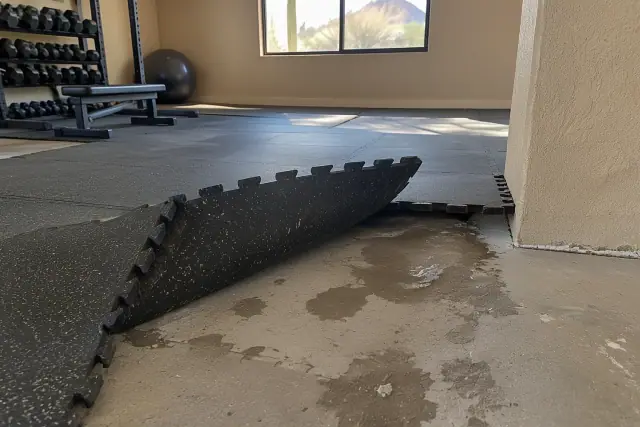
Moisture testing helps identify conditions that can weaken adhesive beneath rubber flooring. Addressing the slab before installation helps prevent premature failure.
Sweep or dust mop daily to remove abrasive grit. Use pH-neutral cleaners; harsh solvents can damage the rubber's surface and accelerate wear.
Garage floors need formulations that resist oil, coolant, and de-icing residue. Forklift traffic and heavy machinery call for higher-density rubber rated for point-load resistance to limit compression and cracking.
Monsoon humidity can trap moisture beneath poorly sealed flooring and weaken adhesive. Subfloor moisture testing, appropriate underlayment or sealants, and adequate concrete curing matter before rubber is installed.
Unshaded concrete can exceed 150 degrees in direct sun, and Mesa averages over 300 sunny days a year. Rubber without UV-stabilized additives can fade, harden, and crack early in exposed garages and patios.
These ranges depend on installation, traffic, and maintenance. Poured and playground surfaces may need resurfacing at the end of their service interval.
| Flooring type | Typical lifespan | What affects longevity |
|---|---|---|
| Gym and home gym rubber | 10 to 20 years residential; 5 to 10 years commercial | Heavy sled work, dropped weights, and continuous classes increase wear. |
| Rubber floor tiles | 10 to 20 years | Tile density and traffic affect the range; inspect joints for separation. |
| Rolled rubber flooring | 10 to 15 years | Thicker gauges of 3/8 inch or greater can last longer. |
| Poured-in-place rubber | 15 to 20 years | Common in commercial entryways and accessible playground areas; plan for resurfacing as wear develops. |
| Anti-fatigue rubber flooring | 8 to 15 years | Industrial and standing-workstation conditions influence wear. |
| Playground rubber surfacing | 15 to 20 years | Impact performance must meet ASTM F1292, with inspections per IPEMA guidelines; age alone does not establish condition. |
Vulcanization produces denser, more chemically stable rubber than uncured or bonded recycled material. Vulcanized rolled rubber can outlast basic interlocking tiles by a decade or more, while premium virgin rubber systems can exceed 20 years with proper maintenance. Thickness and fewer seams also help explain why some rolled and poured floors last longer. Poor subfloor preparation, weak seam work, or skipped adhesive curing can undermine those advantages. Upfront price is only part of the value: a rubber floor lasting 15 to 25 years spreads its cost over more use than carpet or laminate needing replacement every 5 to 10 years.
Reevaluate commercial and gym flooring every 5 to 10 years and residential or garage flooring every 15 to 25 years, with earlier inspection when damage appears. For sun-exposed surfaces, suitable UV-protective coatings reapplied every few years help slow fading and hardening. Avoid standing water and maintain ventilation to limit moisture problems. Manufacturer warranties commonly run 10 to 15 years and cover specified material defects, rather than misuse, improper cleaning, or installation errors. A warranty term is different from expected service life, so check the product terms alongside the actual floor condition.
Can rubber flooring last 20 years? Yes, quality virgin or high-density vulcanized rubber can reach 20 years or more with proper installation and care. Can mold grow underneath? Yes, trapped moisture over a concrete slab can allow mold to grow; a musty odor deserves investigation. New rubber can also have a distinct odor that takes days to weeks to dissipate. What does rubber flooring cost? Basic mats and rolled goods range from $2 to $3 per square foot, while interlocking tiles and premium poured systems range from $3 to $10 per square foot. Total installed costs average around $10 per square foot, including labor and subfloor preparation, with thickness, color, demolition, and on-site curing affecting the price.
Share the floor type, approximate age, daily use, and any cracks, dents, or seam changes. Our team installs and repairs rubber surfaces in Mesa and can help assess the condition and subfloor before you decide on replacement.