Proudly serving Mesa, Gilbert, Chandler, Tempe, Scottsdale, Queen Creek & surrounding areasCall or Text 24/7: 480-319-7553
Guides

How Long Does Playground Rubber Surfacing Last?

Mesa Rubber Flooring helps schools, HOAs, churches, and municipal parks across the East Valley plan for playground rubber surfacing that typically lasts 10 to 15 years with correct installation and regular upkeep. Mesa sun and heavy foot traffic can shorten that range, so surface condition matters as much as age when deciding whether to patch, resurface, or replace.

Quick Summary

  • Poured-in-place playground rubber generally lasts 10 to 15 years with routine maintenance; some well-cared-for installations last longer.
  • Rubber tiles typically last eight to ten years. Loose rubber mulch needs topping off every few years to maintain depth.
  • Mesa UV exposure and summer heat accelerate binder wear, while swing zones and slide exits can deteriorate before the surrounding surface.
  • Regular inspections and prompt patching help extend useful life. Check damaged areas rather than waiting for the whole playground to wear out.

What Determines Playground Rubber Lifespan

Wear Layer and Base Condition

Poured-in-place rubber generally needs significant repair after 10 to 12 years, while well-maintained installations can reach 15. The colored wear layer takes the abrasion; the condition of the underlying base helps determine whether resurfacing is practical.

Sun Exposure and Concentrated Traffic

UV exposure weakens polyurethane binder, while shoes and tricycle wheels abrade the wear layer. Swing bays, slide exits, and monkey bar landing zones concentrate wear before open areas do.

Inspect Before and After Monsoons

Visually inspect depth, tile seams, and drainage at least twice a year, ideally before and after monsoon season. Periodic impact testing helps check protection that surface appearance alone cannot confirm.

Playground Rubber Wear to Inspect

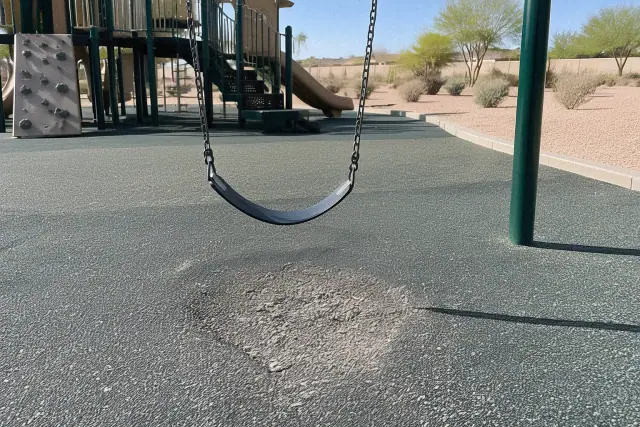
Thinned Playground Rubber Beneath a Swing

Worn rubber safety surfacing showing reduced thickness beneath a swing in Mesa, AZ.

Compare the rubber beneath a swing with the surrounding surface. Localized thinning or exposed base material needs inspection even when most of the playground still looks intact.

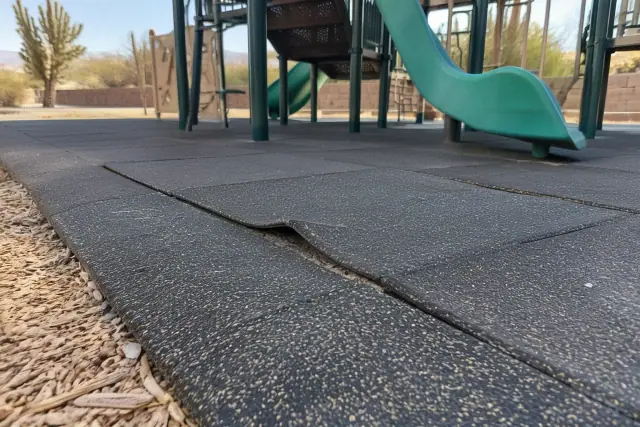
Lifted Seams Between Playground Rubber Tiles

Playground rubber tiles with lifted and separating seams in Mesa, AZ.

Raised or separated tile seams can create trip hazards. Check these edges as temperature changes repeatedly expand and contract the rubber.

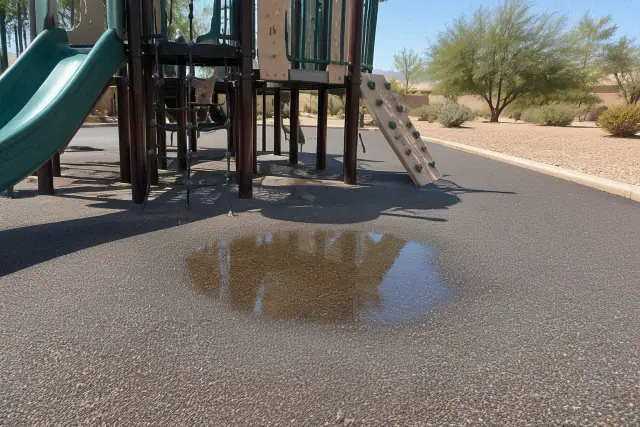
Standing Water on Poured Playground Rubber

Standing water pooling on poured rubber playground surfacing at a jobsite in Mesa, AZ.

Water remaining in a low spot after rain can point to drainage or sub-base trouble. Record where it collects before deciding whether a surface repair will address the cause.

Playground Rubber Wear Timeline

Years 3 to 5: Color Fading

Surface color may fade by years three to five. Fading alone does not establish a safety problem, but it is a reason to watch for binder deterioration.

Years 7 to 10: Surface Cracking

Minor cracking may appear by years seven to ten, especially with deferred maintenance. Patch small tears promptly so water does not widen the damage.

Years 10 to 15: Deeper Wear

With deferred maintenance, base exposure or significant cushioning loss can appear by years ten to fifteen. Arrange an inspection when either develops instead of relying on the installation date.

Resurfacing: Another 5 to 8 Years

When wear is localized and the base remains sound, a new wear course can add another five to eight years. Base and drainage problems need evaluation before resurfacing.

Rubber Playground Surface Lifespan Comparison

Service Life and Upkeep by Rubber Surface Type

Playground surfaceTypical service lifeWhat needs attention
Poured-in-place rubber10 to 15 years with correct installation and routine maintenance.Inspect thinning wear layers, cracks, and concentrated wear beneath play equipment. A sound base may allow resurfacing.
Rubber tilesEight to ten years before significant seam, edge, or color wear.Watch for lifting and separation at joints as temperatures change.
Loose rubber mulchMaterial can remain functional for a decade or more if depth is maintained; top-offs are needed every few years.Rake displaced material and replenish compacted areas. Material age alone does not show whether protective depth remains.

These ranges depend on use, exposure, installation, and care. Visible condition and periodic impact testing help determine what an aging playground needs.

Installation and Care That Extend Lifespan

A lasting poured surface starts with excavation, aggregate-base compaction, edge restraints, and rubber depth matched to the equipment's critical fall height. A rubber base mat supports the colored EPDM or TPV granules bonded with polyurethane; the binder mix and curing conditions also matter in Arizona heat. Pouring, troweling, and curing typically take one to three days, depending on area and weather. After installation, rinse away dust and debris, clear leaves that trap moisture, and address standing water. Avoid directing high-pressure washing at seams. Patching small tears early helps keep a localized repair from becoming a wider problem.

How Mesa Conditions Change Surface Life

Mesa's more than 300 sunny days a year expose rubber binder to sustained UV stress. Dark rubber or asphalt can sometimes exceed 150 degrees F on peak July afternoons, while July and August monsoon downpours add wetting and drying cycles. Swing bays and slide exits can wear three to five years sooner than open areas, so daily school or park use changes the outlook compared with a church playground used only a few hours a week. Commercial poured-rubber installations with regular inspections and maintenance can reach 12 to 15 years; lower-traffic backyard installations can exceed 15 years, although sun exposure still matters. Treat these ranges as context for an inspection, not a replacement deadline.

Common Follow-Up Questions

Does fading mean the rubber needs replacement? Fading alone does not; exposed base, lost cushioning, lifted edges, and persistent pooling deserve closer inspection. What does new surfacing cost? Poured-in-place rubber typically costs $9 to $18 per square foot installed. Aggregate-base work alone often costs $3 to $6 per square foot; confirm how site preparation is covered in the quote. Rubber tiles generally cost $20 to $44 per square foot depending on gauge and thickness. Area, required depth, and existing base condition affect the total. Is poured rubber always the right choice? Its seamless surface avoids tile joints, but budget, traffic, and equipment fall height still guide the choice. Mulch costs less upfront and needs raking and replenishment. Does rubber automatically provide accessible play space? No. Poured rubber accessibility depends on correct installation and surface testing, rather than material choice alone.
Playground Surface Assessment

Unsure Whether to Repair or Replace?

Share the surface type, approximate age, and where cracks, lifted edges, or pooling appear. Mesa Rubber Flooring installs and repairs poured-in-place and rubber tile surfacing, and evaluates base condition before recommending resurfacing. Site measurements and equipment fall height help define the work needed.