Proudly serving Mesa, Gilbert, Chandler, Tempe, Scottsdale, Queen Creek & surrounding areasCall or Text 24/7: 480-319-7553
Guides

How Expensive Is Rubber Flooring?

Mesa Rubber Flooring prices each job by material grade, subfloor condition, and square footage, because a material price alone does not tell you what a finished floor will cost. Rubber flooring in the Mesa area typically ranges from $1 to $18 per square foot depending on the product and installation method, with most residential and light commercial jobs landing between $3 and $10 installed. This guide separates product prices from installed costs so you can compare the options for your space.

Quick Summary

  • Basic rolled rubber and interlocking tiles run $1 to $5 per square foot in material cost.
  • Poured-in-place rubber costs $9 to $18 per square foot installed, placing it at the expensive end of the range.
  • A standard 144-square-foot tile installation averages around $720 installed, according to industry cost data.
  • Rubber floors commonly last 20 to 30 years with proper maintenance, so replacement frequency matters alongside the initial price.

Rubber Flooring Cost Drivers

Material Grade

Thin recycled rolls and basic tiles start around $1 to $2 per square foot in materials. Mid-range vulcanized tiles and thicker rolls run $2 to $5, while premium virgin rubber, color-flecked, or custom-thickness products reach $4 to $8 per square foot.

Installation Labor

Labor typically accounts for 30 to 50 percent of the installed cost. Subfloor preparation, moisture barriers, seam welding, and custom cutting all affect how much installation work the floor needs.

An Itemized Quote

Start with the square footage, intended use, and existing floor condition. Ask for a material and labor breakdown, including preparation and removal, so each quote covers the same work.

Rubber Flooring Materials and Site Preparation

Rolled Rubber and Interlocking Tiles for a Home Gym

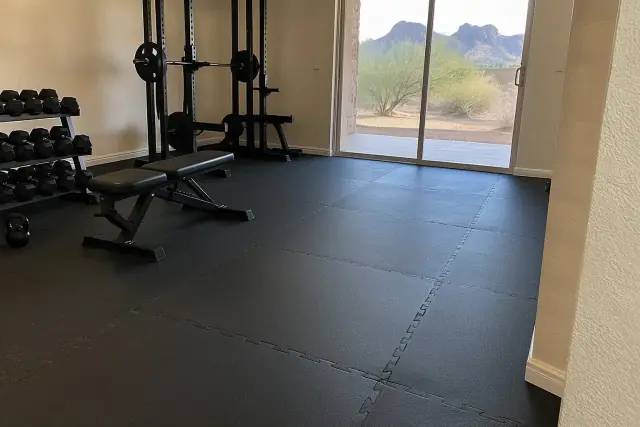
Rolled rubber and interlocking tiles installed in a residential home gym in Mesa, AZ.

Thin rolled rubber is the lowest-cost product option described here. Comparing it with interlocking tiles helps you weigh material thickness and visible seams against price.

Poured-in-Place Rubber Being Troweled on a Playground

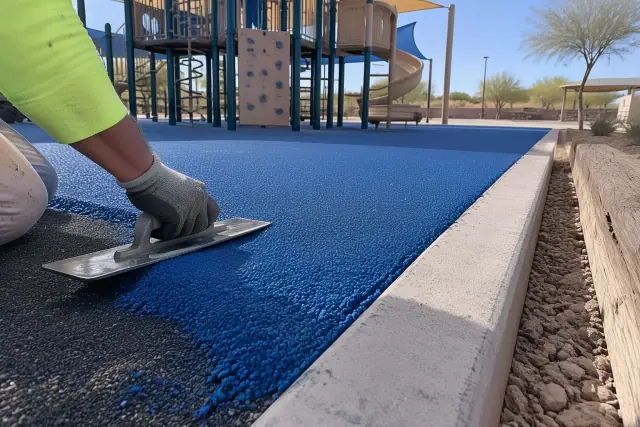
Contractor hand troweling fresh poured-in-place rubber safety surfacing on a playground in Mesa, AZ.

On-site mixing and troweling help explain the higher installed cost of poured-in-place rubber. Playground surfacing uses this more labor-intensive approach.

Moisture Testing a Garage Slab Before Rubber Flooring

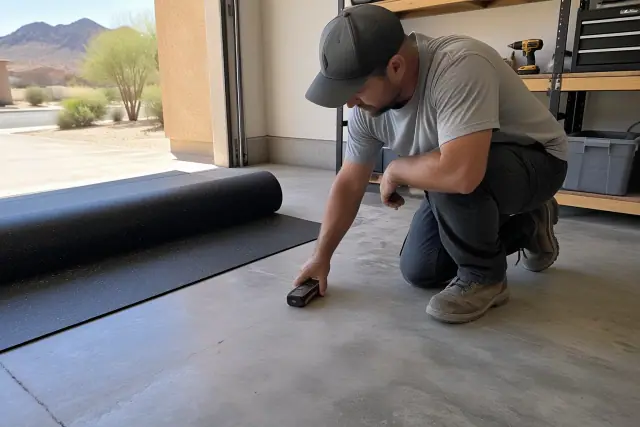
Digital moisture meter testing a concrete garage slab before rubber flooring in Mesa, AZ.

Moisture testing helps identify whether a concrete garage slab needs mitigation before the rubber goes down. That preparation can change the installed total.

Rubber Flooring Cost and Lifespan Snapshot

Residential Installed Cost

Most residential customers fall between $3 and $8 per square foot installed. Product grade and the condition of the existing floor determine where a home project lands.

Full Facility Flooring

Full gym or weight-room rubber flooring for facilities typically totals $45,000 to $220,000. Square footage and thickness drive this whole-project range.

Repair or Replace

A localized seam repair, patch, or tile swap typically costs a few hundred dollars, depending on material match and access. Full replacement follows new-installation pricing, so confirm whether a localized repair will hold.

Service Life by Setting

High-traffic commercial floors typically last 10 to 15 years before replacement becomes more economical than patching. Poured-in-place playground surfacing generally lasts 15 to 20 years, depending on sun exposure and use.

Rubber Flooring Price Comparison

Rubber flooring prices by application

Compare the pricing scope as well as the number. Where a range is not labeled installed, confirm labor and preparation separately.

ApplicationCost rangeWhat to Review
Gym and home gym$2 to $8 per square foot in materials; $3 to $12 installedThickness and material grade for the intended equipment and use.
Garage rubber flooring$1.50 to $5 per square footProduct thickness, slab condition, and any moisture preparation.
Rolled rubber flooring$1 to $4 per square footRoll thickness, seam treatment, and custom cutting.
Rubber floor tiles$1.75 to $5 per square footTile grade and subfloor preparation; confirm the installed total.
Commercial rubber flooring$3 to $10 per square foot installedMaterial density, floor removal, and site access.
Poured-in-place rubber$9 to $18 per square foot installedOn-site mixing, troweling, and custom color work.
Anti-fatigue rubber flooring$2 to $6 per square footMaterial grade and thickness; confirm installation separately.
Playground rubber surfacing$9 to $18 per square foot installedSurfacing thickness, sun exposure, and fall-height requirements.
Industrial rubber flooring$4 to $10 per square foot for heavy-duty, chemical-resistant productProduct specification and the preparation needed for installation.

Is Rubber Flooring Worth the Cost?

Rubber flooring is generally mid-range to affordable compared with hardwood or natural stone, but it costs more upfront than basic carpet or vinyl sheet. Maintenance is a major part of that comparison: flooring industry cost studies put it at 75 to 90 percent of a flooring product's total lifetime cost. Rubber's low maintenance demands can improve its value over 20 years when compared with cheaper materials that need replacement every 7 to 10 years. Routine cleaning, avoiding harsh solvents, and prompt seam repairs help extend its service life. Match the grade to the room's use before paying for extra thickness or custom finishes.

What Changes Installation Costs in Mesa?

Thickness, density, existing floor removal, access, color blending, custom logos, and seam welding all affect the price. Mesa's summer heat, which regularly exceeds 110 degrees, also affects rubber expansion and adhesive cure times; direct sun makes UV-stable formulations worth discussing. Monsoon humidity and irrigation-related slab moisture can add preparation needs in garages and slab-on-grade commercial spaces. Commercial work may require permits through the City of Mesa Building Safety Division, while playground surfacing typically needs to meet ASTM F1292 impact attenuation standards for the relevant fall height. Confirm these project requirements when reviewing the scope and installed total.

Common Follow-Up Questions

Is rubber cheaper than vinyl? Basic vinyl can cost as little as $1 to $3 per square foot upfront, while premium vinyl can overlap with mid-range rubber; compare grade, expected wear, and installation scope. What are rubber flooring's downsides? Sustained point loads can leave indentations, new rubber may have an odor for a few days, rolls can show seams, and dark colors may fade with prolonged direct sun. Can mold grow underneath? Trapped moisture against a concrete slab can allow mold beneath the flooring. Slab moisture testing, appropriate adhesives, and moisture mitigation help address that risk before installation.
Plan Your Flooring Budget

Request a Rubber Flooring Cost Breakdown

Share the room size, intended use, and existing floor condition. Whether you are planning a home gym in Dobson Ranch or a commercial space near Mesa Riverview, ask for material, preparation, and labor costs to be clearly identified before approving work.