Interlocking Tiles Can Stay Removable
Interlocking rubber tiles connect at their edges without adhesive. They suit renters and temporary home gyms where lifting and relocating the floor matters.
At Mesa Rubber Flooring, the glue-down decision starts with how your Mesa floor will be used. Rubber flooring does not always need adhesive: some home gyms can use taped rolls or interlocking tiles, while rolling loads, outdoor exposure, and commercial traffic usually call for bonding. The goal is to keep seams and edges stable without making a temporary floor permanent.
Interlocking rubber tiles connect at their edges without adhesive. They suit renters and temporary home gyms where lifting and relocating the floor matters.
Equipment casters, rolling carts, and forklift traffic can pull at loose seams. A full adhesive bond helps hold rubber flooring in place under repeated movement.
Residual slab moisture can undermine adhesive and cause bubbling. Clean the concrete, patch cracks, and check moisture before choosing a glue-down method.
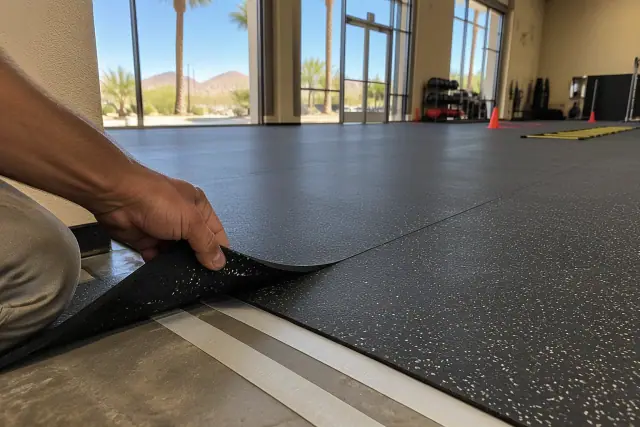
Tape beneath a clean seam holds adjoining rolls flat without coating the whole slab. Perimeter taping also helps control edge curling in light-use rooms.
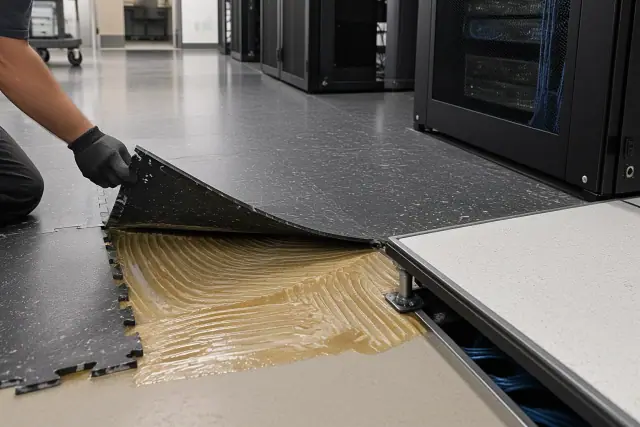
Full-spread adhesive bonds rubber across the subfloor to resist movement under busy gym or retail traffic. This permanent method takes more work to remove later.
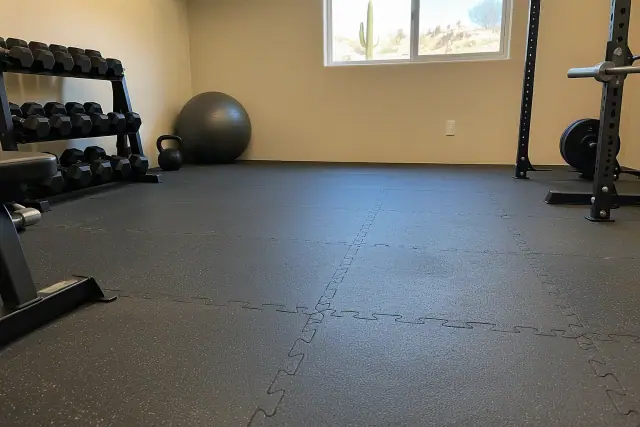
Interlocking edges hold neighboring tiles together without glue. Individual tiles can be lifted for relocation or replacement.
A 200-square-foot home gym with 3/8-inch rolled rubber behaves differently from a 5,000-square-foot commercial fitness floor. Compare traffic and room layout along with thickness.
Direct sunlight, summer heat, monsoon runoff, and temperature swings make outdoor rubber harder to keep flat without bonding. Indoor seam tape is not an outdoor installation method.
Shifting mats, buckled seams, and curled edges need attention. Check the fit and bond; seam sealer can close gaps against debris and moisture, but loose edges still need securing.
For a rental or temporary setup, favor interlocking tiles or removable taped rolls. Avoid full-spread glue when you intend to reuse the rubber after moving.
| Flooring and use | Usual method | What decides it |
|---|---|---|
| Contained home gym under 400 square feet with 1/2-inch or thicker rolls | Seam tape with the field left loose can work. | Light traffic and stable edges matter; rolling equipment changes the recommendation. |
| Two-car or three-car garage with vehicle traffic or heavy tool chests | Full adhesive coverage. | Tire drag and equipment movement can shift unbonded rubber. |
| Commercial gym, retail floor, or industrial workspace | Full-spread adhesive. | Heavy traffic, carts, and repeated point loads favor a permanent bond. |
| Outdoor rubber tiles or playground surfacing | Adhesive bonding appropriate to the surface. | Sun exposure, runoff, and temperature changes increase the risk of lifting. |
| Poured-in-place rubber surface | Mixed and troweled onto a prepared, primed substrate. | Bonding is part of the installation; this is not a loose-laid roll or tile. |
| Interlocking tiles for a rental or temporary home gym | Mechanical edge connections without adhesive. | Tiles can be lifted when the layout changes or the floor needs to move. |
Check the flooring product, subfloor condition, and traffic together before choosing the installation method.
Glue bonds the rubber to the subfloor; tape secures seams and perimeter edges; loose-lay depends on the material's weight and a contained fit. Heavy rolls generally 3/8 inch or thicker can sometimes stay loose where walls contain the edges, but doorways, transitions, and traffic crossing multiple mats need more restraint. Rolls under 3/8 inch may suit taping in a low-traffic home gym, so thickness alone does not decide the method. Anti-fatigue mats at standing workstations often remain loose or taped for repositioning. Concrete steps and sloped surfaces need full bonding to resist movement.
Concrete preparation includes cleaning, crack patching, and calcium chloride moisture testing. Commercial subfloor preparation follows ASTM F710 guidance. Rolled rubber on concrete commonly uses moisture-cured urethane; tile installations may use pressure-sensitive or epoxy adhesive depending on thickness, traffic, and moisture conditions. Installed rubber flooring typically runs $3 to $15 per square foot for material and labor, while gym-grade rolls often cost $2 to $5 per square foot for material alone. Large commercial gym floors can range from $45,000 to $220,000 depending on area and thickness. Glue-down adds preparation, adhesive curing, and seam-finishing work compared with tape.
Can rubber go over concrete? Yes, once the slab is clean, cured, patched, and moisture-tested; trapped moisture can allow mold beneath the floor. Can you move it later? Taped and loose-laid rubber can be relocated, while glued material is generally difficult to recover for reuse. How long does it last? Residential rubber typically lasts 20 to 30 years, compared with 10 to 15 years under heavy commercial or industrial traffic, depending on material grade, installation, and maintenance. What are the downsides? New rubber can smell for the first few weeks, large rolls are heavy to handle, and light colors show scuffs.
Share the room dimensions, rubber product, and how equipment will move across the floor. For a project in Mesa, Tempe, or the Phoenix area, a site visit and subfloor test can help confirm the method that fits the space and budget.