Dry Slab, Minimal Layers
Rubber already provides cushioning and sound dampening. On sound, dry concrete, a separate cushioned layer is often unnecessary; craft paper can provide surface protection where appropriate.
At Mesa Rubber Flooring, the answer starts with the surface beneath your rubber: a dry, level concrete slab often needs no cushioned underlayment. Tile, wood, moisture exposure and gym impact loads can change that answer. Choosing the right layer helps protect the subfloor and avoid moisture or adhesive problems in Mesa homes and facilities.
Rubber already provides cushioning and sound dampening. On sound, dry concrete, a separate cushioned layer is often unnecessary; craft paper can provide surface protection where appropriate.
A soft pad does not solve moisture coming through concrete. Below-grade conditions, irrigated landscaping and past flooding call for a moisture assessment before choosing the floor assembly.
Before glue-down work, check slab moisture using a calcium chloride test per ASTM F1869 or an in-slab relative humidity test per ASTM F2170. Inspect flatness and any sealers or curing compounds that could affect adhesion.
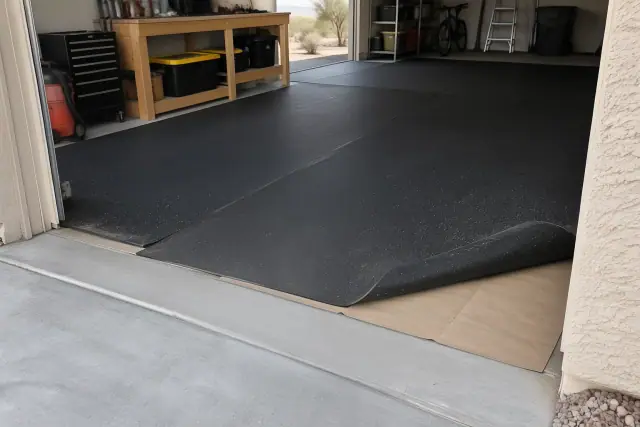
A thin craft paper layer helps keep rubber's black plasticizers from staining the surface underneath. It serves a different purpose from a cushioned pad.
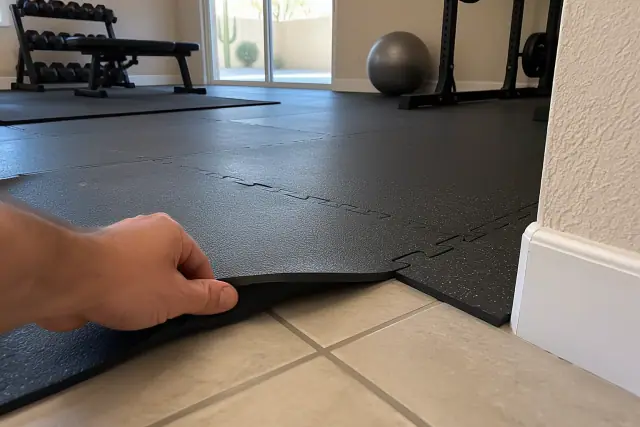
Grout joints interrupt an otherwise smooth tile surface. Assessing those joints helps determine how to prepare and support the rubber above them.
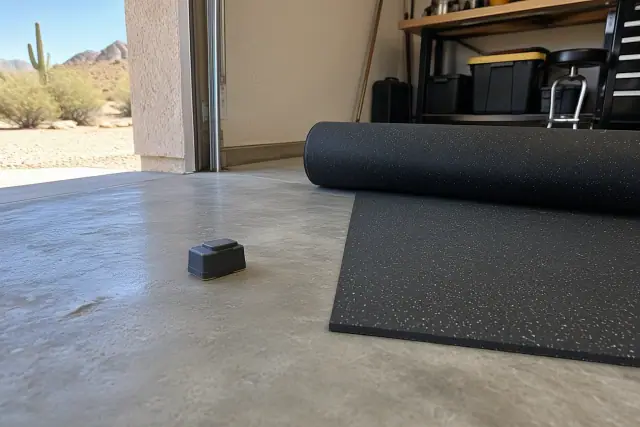
A concrete surface can look dry without settling the moisture question. Testing helps determine whether the slab is ready for rubber and adhesive.
Allow the slab to cure at least 30 days, then check flatness and moisture. Maintain 65-85°F and controlled humidity during acclimation, giving exposed garages extra attention.
A home gym, commercial weight area and standing workstation place different demands on the floor. Choose cushioning for the actual impact and noise problem, rather than adding thickness by default.
Musty odors, white mineral deposits and condensation beneath taped plastic call for closer investigation. A Mesa garage that takes on water during monsoon storms needs the moisture issue addressed before rubber goes down.
Remove old carpet and pad, and resolve uneven or damaged substrates first. Active hydrostatic pressure or a surface that cannot be leveled calls for remediation or a different flooring approach.
| Existing surface | Layer to consider | Preparation that still matters |
|---|---|---|
| Dry, flat interior concrete | Often no cushioned underlayment; craft paper for surface protection where appropriate. | Confirm the slab is sound, dry and ready for the chosen installation method. |
| Ceramic tile | Foam or rubber underlayment may help bridge grout lines. | Assess grout joints, tile condition and point loads before covering. |
| Finished hardwood | Craft paper or thin foam may protect the surface. | Check finish protection and any cushioning need. |
| Plywood or OSB subfloor | Craft paper may provide a protective interface. | Set subfloor screws and correct uneven areas before installation. |
| Old carpet or pad | Remove both before selecting an underlayment. | Rubber flooring should not be installed over carpet. |
| Basement concrete | Moisture protection plus any needed underlayment. | Evaluate below-grade moisture and seasonal changes before choosing the assembly. |
Underlayment sits between the subfloor and finished rubber, but each type has a different job. Foam or rubber underlayment can add cushioning and reduce impact noise; craft paper protects the surface below from staining. A vapor barrier addresses moisture instead of comfort: 6-mil polyethylene with taped, sealed seams is one layer described for moisture protection. Below-grade slabs deserve attention because conditions can change seasonally. Confirm the moisture-control approach and its compatibility with a glue-down or loose-laid installation before choosing layers. Skipping needed preparation can leave moisture trapped beneath the rubber or allow cracks and high spots to show through, contributing to odor, adhesive breakdown and premature wear.
Home gym cushioning may use 1/4 to 3/8 inch foam when impact noise is a concern. Commercial weight areas need higher-density rubber underlayment suited to repeated impact, often paired with 3/8 to 1/2 inch top rubber at platforms. Underlayment of 3/8 inch or more is generally recommended where heavy equipment repeatedly strikes the same spot; this is a different measurement from the finished rubber layer. A Downtown Mesa fitness studio can therefore need a different assembly from a home garage. Anti-fatigue mats rarely need extra cushioning. Stall mats use compacted road base or a leveling layer of sand, while poured-in-place and playground rubber use engineered aggregate or asphalt bases, with ASTM F1292 relevant to impact performance. Industrial washdown areas also need moisture protection considered alongside traffic and chemical exposure.
Can rubber go directly on concrete? Often yes, once the slab is cured, clean, flat and within an acceptable moisture range. What if a needed layer is skipped? Moisture can become trapped and damage the adhesive, while uneven spots can accelerate wear. Does new-rubber odor mean the underlayment is wrong? Not necessarily: recycled rubber can have an initial odor that typically fades with one to two weeks of ventilation, while persistent mustiness warrants a moisture check. How long can the finished floor last? With proper maintenance, commercial-grade rubber typically lasts 20 years or more; residential gym and garage floors often perform well for 10 to 20 years, depending on traffic and impact. Poured-in-place playground rubber generally needs resurfacing after 8 to 12 years, depending on UV exposure and use. Preparation and moisture protection help support those service lives.
Share the existing surface, any moisture or flooding history, and how the room will be used. A subfloor evaluation before quoting can clarify the preparation, underlayment and moisture protection your rubber flooring project needs.